Show notes
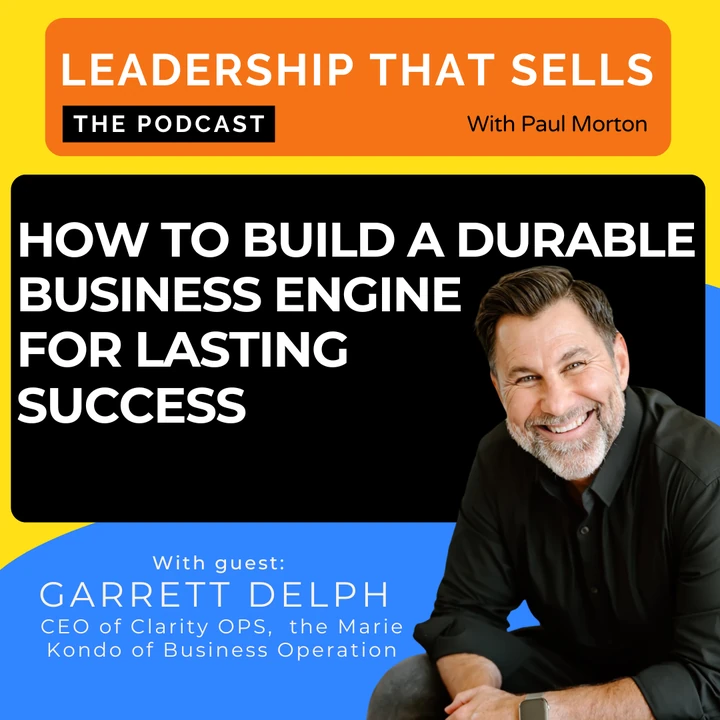
In this episode, I sit down with Garrett Delph, CEO of Clarity OPS, who’s spent 25 years streamlining global businesses, turning chaos into clarity, and building systems that empower people to thrive. Garrett shares his philosophy on simplifying the “operational engine room” of business and how sturdy systems and aligned teams drive growth.
We dive into the synergy between leadership and systems, exploring why even the best leaders need robust frameworks to ensure clarity and alignment. Garrett shares actionable insights on spotting operational inefficiencies, crafting clear job descriptions, and understanding the critical role humans play in tech-driven workflows. We even riff on the perfect analogy for business operations—spoiler: it involves baking cakes and aligning bolts on classic cars!
Whether you’re scaling a company, troubleshooting operational gaps, or pondering the future of tech in business, this episode is packed with practical advice and big ideas. Garrett’s vision for “Convergent Leadership 360” ties it all together, creating a roadmap for leaders looking to harness the power of systems and people.
Timeline Summary
- [00:01] – Garrett’s journey and philosophy: simplifying chaos and building durable business systems.
- [02:20] – The “operational engine room” and its impact on breaking through the 9 out of 10 business failure stat.
- [06:00] – Why a lack of clarity and communication often derails businesses—and how to fix it.
- [10:20] – The DNA of job descriptions: aligning roles with outcomes for seamless teamwork.
- [14:00] – Diagnosing business problems through organizational alignment and decision-making clarity.
- [20:00] – Humans vs. technology: balancing tech stacks with the irreplaceable power of people.
- [27:05] – Convergent Leadership 360: the marriage of leadership and systems for holistic business success.
Links & Resources
- Connect with Garrett Delph on LinkedIn: Garrett Delph
- Learn more about Clarity OPS: clarityops.co
- Follow Garrett’s articles on Medium: Garrett’s Medium
If you enjoyed this episode, please rate, follow, and share the podcast! Your support helps us bring more insightful conversations to leaders and entrepreneurs like you
Transcript
Automated transcript. Speaker labels and spellings may contain errors.
Paul
With 25 years of building scalable global businesses, he's been simplifying complexity, eliminating chaos, amplifying growth by focusing on technical systems managed by humans. Garrett Duff, CEO and generally all-round good egg, welcome, welcome to the show. Welcome to the Leadership That Sells podcast, where we help you lead first and sell more with great insights and tactics from the best minds we can find. Every leader is in sales, whether you're selling products, ideas, a mission or a vision, and great sales team in particular need great sales leaders. When managers bring out the best in their teams, targets get hit on time every time without stress. But most sales leaders never learn how to lead. They wing it or they repeat bad habits, and the cycle continues. Sales leaders need practical real-world ideas that fit their busy schedules, and that's why we created the Leadership That Sells Playbook course.
Nine short weeks changes your world. Check it out at the Practical Leadership Academy. And now, on with the show.
Garrett Delph
Hey, Paul. Thanks so much. Really great to be here.
Paul
That was far too concise and condensed. Would you mind elaborating slightly?
Garrett Delph
[laughs] Well, sure. Sure. Uh, at the end of the day, um, I'm in this season of life now with, with my current business Clarity Ops, um, because I have ultimately determined, in, in my humble opinion, that, um, the differentiator in business, that the catalyst for success, uh, the, the, the key to, um, to, to breaking through the good old stat nine out of 10 businesses fail, is to get into the engine room of business, which is classically operations, and architect it for sturdiness and durability. It's, it's even a foundational principle so that people, 'cause in business it's all about people, um, are clear about what to do and how to do it and where to go.
Paul
Yeah.
Garrett Delph
And I've found that, again, in my opinion, in building business and working with lots of people, that, uh, that that's, that's where, that's where the magic happens, you know? And if you get that right, typically, uh, all of the, the dependencies on that, uh, get more aligned, unified, accurate and strong. And that, that's, you know, maybe a 90-second unpack of everything that's going on.
Paul
And that was great having you on the show. Thank you very much indeed. Good night. Uh, well, hang on.
Garrett Delph
[laughs]
Paul
The operational engine room, right?
Garrett Delph
Yeah.
Paul
The engine room of success. Um, there's the, the idea that an average idea expertly executed will outweigh a great idea poorly executed.
Garrett Delph
Mm-hmm.
Paul
So the challenge I think sometimes is building something that you think is overly complicated or building, building this engine room and keeping it simple, keeping it functional, keeping it doing-
Garrett Delph
Yeah
Paul
... what it needs to do.
Garrett Delph
That's good.
Paul
But then this link that you just made between whatever that engine is and the people who are making it work-
Garrett Delph
Yeah
Paul
... has to be crystal clear. The clue's in the name of your business, Clarity Operations, Clarity Ops, right?
Garrett Delph
That's right.
Paul
And I would imagine nine times out of 10 business problems are down to communication. It's down to a lack of communication or inexpert communication or poorly understood objectives through communication, lack of clarity.
Garrett Delph
There you go.
Paul
Lack of clarity, right?
Garrett Delph
There you go. Yeah. I, I have a ... Paul, I have a quick comment on that.
Paul
Go on.
Garrett Delph
Um, I, I agree w- by the way with your statement about the, the communication portion. Um, but, but maybe a, a good synonym at least for, um, my, my focus for communication is guidelines and instructions. You know? Um, I, I really believe that for the success businesses want, there's been a, a tremendous amount of, uh, energy and focus on leadership, rightly so, uh, because, you know, we ... Leadership is cr- a critical path. Um, but a almost ignored or heavily de-emphasized, uh, um, focus on systems. And so when, when ... I'm gonna tie this to communication. I think that great leadership needs great system, and great system needs great leadership. They are one. And so if you have great communication from leaders to the people they lead in the businesses they lead, but you have systems that are either nonexistent
or poorly defined, the best communication in the world has no chance. Because at the end of the day, those leaders still lead their people into a world of chaos, of, uh, you know, lack of definition, lack of clarity. And so that suddenly that great communication dissolves and disappears and gets, uh, you know, slurped up by this, this black hole of, of no ingredients, no instructions.
Paul
It's a symbiotic relationship, isn't it? It's-
Garrett Delph
It is
Paul
... great systems need great leadership, which needs great systems, which needs w- You know, that, that's the thing, right?
Garrett Delph
It is.
Paul
So my, my, my... The thing I just scribbled down here, you were talking about guidelines and instructions, was what to communicate. Communicate about what they're supposed to be doing, communicate the, the, the, the rules, the, the edges of where they should be, what the overall goal is. Let people do their jobs, make sure the system... All these are good things. And you're talking about ... I'm trying to extend an analogy here, and I should have probably made one up, but-
Garrett Delph
Yeah
Paul
... ingredients. Maybe there's something about you're trying to bake a cake. Uh-
Garrett Delph
That's a great... I think it's a great analogy, actually.
Paul
Trying to bake a cake.
Garrett Delph
Very, very simple.
Paul
You've got the ingredients in front of you. No, sorry. You've got the recipe in front of you, but you're missing some of the ingredients. Ain't gonna work. You got all the ingredients, but you're missing the recipe. Mm, you can wing it, but it's probably not gonna work, you know?
Garrett Delph
Yeah. Yeah. And that recipe often includes things like, um, specifics about how you stir-
Paul
Mm
Garrett Delph
... when you stir, how long you bake, how long you allow things to sit, when you mix, when you don't mix, how you mix-
Paul
Mm
Garrett Delph
... what things get mixed together, what things should not get mixed. Uh, like, right? If you're trying to build a great business around a great cake, you cannot afford variance once you've come up with the perfect recipe.
Paul
Yeah. Yeah.
Garrett Delph
You can't. Uh, otherwise, you, you lose quality, you lose speed, and then you lose control.
Paul
Absolutely. If this clarity of purpose, clarity of execution, of guidelines, of instructions is what's needed from good leaders, the, my, my question, my challenge, I think, is that sometimes, most of the time, when I'm advising or working with people, I'm being asked to deliver that clarity.
Garrett Delph
Uh-
Paul
Where do I get it from? Where do I start?
Garrett Delph
As a, um, [clears throat] Paul, so I understand the question, you get asked as a hired consultant to bring the clarity for them. Is, is that-
Paul
Yeah
Garrett Delph
... the question?
Paul
Yeah. To try and understand what the problems are. I think this is partly ... It's kind of what, uh, I understand Clarity Ops is, is really good at.
Garrett Delph
Right.
Paul
You go in, you determine what the challenges are, and turn them into-
Garrett Delph
Yeah
Paul
... the opportunities because you bring clarity.
Garrett Delph
That's right.
Paul
Yeah?
Garrett Delph
Yeah. Yeah. Um, so it's twofold. Uh, and w- we both understand this, the, the discovery process to identify, um, problems. [clears throat] I always, uh, like to go in expecting that business owners or C-suite think they know what the problem is. Usually they understand symptoms, but they don't understand the root of the problem.
Paul
Yeah.
Garrett Delph
Um, so I always go in kind of remembering that. First thing I like to do is figure out what are the outcomes they're looking for.
Paul
Mm-hmm.
Garrett Delph
You know? What, what product or service are they ultimately w- wanting to deliver, and what does that look like? And then I like to back into that, uh, and figure out what is it they're doing to get those, um, you know, dream outcomes or to, you know, sort of successful deliverables. Um, and, uh, y- you know, maybe just to cut to the chase, here's w- where, um, it always leads to. It typically leads to lack of control in the people, process, and performance requirements to deliver that outcome. Um, and, uh, I, I think those are three core pillars to any business that if you align those correctly and, uh, organize them [clears throat] uh, structurally, uh, they will always, in my opinion, if you put the right elbow grease into it, deliver the outcomes for
the business. Uh, the root of all of that, in, in my humble opinion, is living in the DNA of the job description. When you assemble all of the people in a business who are hired to collectively do their roles for a unified outcome, really inside of there is the DNA of the instructions for each role and title. Which, as it turns out, is where most businesses pay no attention to. They hire for title-
Paul
Mm-hmm
Garrett Delph
... but they don't define what those people should do and how those key focus areas collectively unify and align to the outcome of the business.
Paul
Okay.
Garrett Delph
And kind of the-
Paul
If, if you're, if you're listening on the pod- Sorry, I have to interrupt you. But if you're listening on the podcast and you're not watching my confused, tortured face right now-
Garrett Delph
[laughs]
Paul
... about to say, "Garrett, go back and say that again in words of one syllable." I think we just hit something really interesting. Cool. Right?
Garrett Delph
You want me to re- reshare?
Paul
No, I want you to recap that. Recap that-
Garrett Delph
Okay
Paul
... one more time, just for my own ...
Garrett Delph
Okay. Okay, sure. Uh, at the end of the day, the, what I see time and time again is the root of the problem is generally, uh, related to what it, what I call the, the DNA of the job description. It is w- uh, y- you know, if, if we think about a, um, a fruit seed and all of the DNA inside of that fruit seed, it's all of those micro instructions that produce the fruit. And, um, I, I believe that, that in a business it is the job description and all of its instructions, uh, correctly aligned with and unified with the rest of the job descriptions that work together for the collective output of the business. Which is why I was-- we were talking earlier about-
Paul
Mm
Garrett Delph
... the engine. You know, you got all these hundred moving parts and those are built to synchronize together as one when they, when they all unite for its strong, accurate momentum forward. And if they're not synchronized and they're not designed to work together, you have a broken down vehicle.
Paul
Right. Right. Um, I have a 1972 MG Midget. It's bright red, and it's-- because it's been loved by many, many different people.
Garrett Delph
Yeah.
Paul
It's been repaired and, and, and enhanced in many different ways over the last 50 years, 52 years.
Garrett Delph
Sure.
Paul
To the extent where s- many of the original bolts and nuts and screws and things are what we call in this country imperial dimensions, so inches and sixteenths.
Garrett Delph
Okay.
Paul
And quite a few of them are metric.
Garrett Delph
Okay. [laughs]
Paul
Almost on the same thing.
Garrett Delph
[laughs]
Paul
So you try and take the bonnet off, the hood off of the car, half of the bolts are, you have to use an inch-based spanner and the other half you're on millimeters. And it does my head in.
Garrett Delph
Mm.
Paul
So the, the two things just, they can come-- they can coexist, but not healthily. And I think your point is if you've got lots of different things, lots of different moving parts-
Garrett Delph
Yeah
Paul
... and they're not aligned, they're not aware of each other to a greater or lesser extent, they're not coordinated and unified-
Garrett Delph
That's right
Paul
... you're gonna have some crunched gears and some bits of mechanical wonder left in the road behind you as you're turning the corner onto the highway. How do you go about lining these up then? What's your first step in saying you've identified it, but now what do we do?
Garrett Delph
Yeah. Well, [clears throat] um, it's, uh, one, one thing I mentioned earlier is, um, the business needs to r-really be clear about what it's trying to deliver, I think. You know? Uh, typically, um, you know, at least f- on my side when I get involved, um, uh, businesses already have established product market fit. So they, they understand their market, they understand the personas they're serving, and, um, you know, have a, a general sense of the thing that they're, they're producing, right? Um, along the way, stuff broke down. A-and so but I always like to start there again and make sure everybody is unified. That is what we're trying to produce. That's what we want. And then from there, back in and start understanding, okay, what are the symptoms of, of, uh, what's currently not working? Are you slow to market? You have quality issues? You know, you start looking at customer success, um, CSAT numbers.
Uh, are people complaining? Uh, do you have defects? Um, are you-- do you have variance in your deliverables? Um, the-these sorts of things, uh, typically will lead us and guide us to where, uh, things are-- you have gaps, things that are missing. Uh, a lot of times early on businesses, uh, get to where they're at without having classic benchmarks, you know, to control speed and quality, uh, for all of the different executables. That takes some time to fix, but once you fix it, it's pretty amazing what happens.
Paul
Mm.
Garrett Delph
Uh, the, the amount of control that you get for whatever it is, your service or product that you're delivering. Um, a-another s-thing that I-- usually is kind of a no-brainer go-to is looking at the org chart and, um, understanding wh-what, you know, w-we know as, uh, decisions rights. Um, you know, who is making what decisions, who reports to who, who owns what. And typically, um, especially for businesses that have had some growth, that is horribly imbalanced, um, and missing, and needs a, a, uh, right-sizing and load-balancing mechanism to get realigned, uh, for, uh, you know, uh, people in, in the org vertically and horizontally. That, that is a, a really, really healthy exercise I've found.
Like, uh, we-- I just finished, um, an engagement about an hour and a half north of here for a construction business. They're doing $65 million a year and bleeding two million bucks a quarter, and they, they couldn't figure out, they couldn't figure out why. And within a week, I was able to demonstrate to them how their leadership was horribly upside down. They had, you know, um, uh, they have regions, right, within the state, and, um, those regions essentially should be operating exactly the same because they pretty much have the same work going to them. But you had one leader with the same type of job had 22 people reporting to him directly. In the other region, he had seven.
Paul
Mm.
Garrett Delph
Um, same work, same demands, but the business, the board, and the CEO were only paying attention to the finances-
Paul
Mm
Garrett Delph
... not paying attention to operations. Very classic.
Paul
Yeah.
Garrett Delph
And they get-- and so the CFO gets really confused about why the m- the numbers aren't moving 'cause they try to solve operational problems with finance levers and, uh, you know, this... Right? And so-
Paul
Wrong tools for the job.
Garrett Delph
Yeah. Yeah, yeah, totally. And I get it. I, I get it, um, because operations is tricky. The, the, uh, the engine room is tricky. But anyways, y- you know, your question was, like, how do you solve this stuff? Um, uh, and some of these things, you know, I just shared are, are, uh, typically reoccurring time and time again that this is where they, they live.
Paul
So you've got- Misaligned roles. You've got upside down org charts. You've got, you know, 14 people report... I've seen that.
Garrett Delph
Yeah.
Paul
I sat with Ben once, and so one, one guy had 22 people reporting to him. It's like a-
Garrett Delph
Yeah.
Paul
"Do you have one-to-ones?" "Why? Oh, okay, let's start there."
Garrett Delph
[laughs]
Paul
"Well, I couldn't possibly have that because it would take me 45-"
Garrett Delph
All year
Paul
"... minutes per person to do a one-to-one, which means I've got no time left, and I've got too many people reporting to me, don't I?" "Hmm, yes. What are we gonna do about that?" "I could promote this person." "Good stuff. Okay, let's start there."
Garrett Delph
[laughs]
Paul
Yeah, this is ... These are great conversations to have. They're great conversations to have.
Garrett Delph
Yeah. I agree. I agree.
Paul
Focusing on technical systems. Now, is that technical as in moving parts or technology, but managed by humans rather than s- what am I trying to get to? What's the question I'm trying to ask here? I'm trying to, I'm trying to work out what's the place of the human in the technology-focused, navel-gazing worlds that we have. And if you're in the operational engine room, there's such a deep tech stack in most companies.
Garrett Delph
Yeah.
Paul
It's ... I mean, you're, you're moving from, you know, four or five different systems to get one thing done.
Garrett Delph
Yeah.
Paul
Uh, um, I don't know. W- what's the, what's the role of the human in trying to simplify, trying to ... I mean, my, my, my go-to is problem-solving is rarely, uh, done by adding things.
Garrett Delph
Mm.
Paul
You rarely, if ever, make things work better by adding something.
Garrett Delph
Mm.
Paul
You normally work better by subtraction, by taking things away, especially in a scaled or a scaling company that has, has grown rapidly over time. So you see, you see some organization, I'm sure you've had it. What's the ... What's ... How do you amplify the role of the human?
Garrett Delph
I agree with you, by the way, about subtraction because typically when businesses get in trouble, it's because they're bloated. So I just wanted to comment on that. I-
Paul
Right
Garrett Delph
... I agree 100%. Um, the tech stack thing is fascinating, and, uh, increasingly, by the way, we, we both realize that, um, tech and people are, uh, one. [laughs] You know?
Paul
We're cyborgs.
Garrett Delph
Oh, yeah.
Paul
If you don't think so, look in your pocket at your phone.
Garrett Delph
Yeah, yeah. Well, uh, I w- I really ... I, I hate to ... Uh, no, I don't hate it, but I'm gonna repeat myself. The business needs to understand what it's trying to do. Like-
Paul
Yeah
Garrett Delph
... you, you really need to understand-
Paul
You can't repeat that enough. You can't repeat that-
Garrett Delph
Yeah
Paul
... enough times.
Garrett Delph
Uh, yeah, I, I appreciate that, and I agree. Uh, it just needs to understand its value proposition to the market-
Paul
Mm-hmm
Garrett Delph
... its value proposition to the customers, and what it wants to produce. And then you gotta back in and figure out, um, what needs people, uh, at, you know, hands-on human brains, uh, uh, uh, human activity, and what human activity should be supplemented with technology for, uh, the, the right output. And there's a, there's a lot of variables that go into that because sometimes you have, uh, minimal runway, right? A minimal runway and/or you have minimal cost. And so a- as much as it might be more efficient in, uh, y- you know, in the long term to focus on a, a technology solution, in the short term you don't have the runway to build that, right? So, so you have to, y- you know, only use, only use humans. Um, sometimes you, you actually have to delay liftoff because you need the technology to build a solution that's gonna be accurate and aligned with your outcomes.
So that's, that's always, um, I think the best metaphor for me to figure out, you know, when do you, uh, leverage and build tech to support your, your outcomes, and when do you postpone?
Paul
Mm.
Garrett Delph
Understanding those, uh, you know ...
Paul
Okay. Yeah.
Garrett Delph
Those concepts. Does that make sense, Paul?
Paul
It does. I can see that. As a, as a random aside, um, not that I like to try and predict the future because it's very easy to predict the future and it's hard to do it accurately, you know? I reckon in terms of the tech stack human breakdown thing, I reckon we are five years away from seeing a billion-dollar company with five people in it.
Garrett Delph
Yeah. I, I wouldn't doubt that at all.
Paul
Mm.
Garrett Delph
Um, I, I would, I would add, um, I still think for that to happen, you, you need kind of two bulls. You need a very, very, very savvy tech founder-
Paul
Mm
Garrett Delph
... and a very savvy visionary operator.
Paul
Yeah.
Garrett Delph
I think, I think th- those two are critical. Uh, a great visionary these days without strong, really deep-rooted tech chops, uh, even with the advent of text to code, um, I, I just think there's, there's gonna be the dependency on a technical founder that, that understands the engine of technology-
Paul
Right
Garrett Delph
... to really, you know, give it-
Paul
Mm
Garrett Delph
... th- that capability.
Paul
Yeah. Yeah, yeah. I mean, you ... There's some stuff actually came out. Again, we're kind of going rabbit hole-ing here, but there's, there was an interesting one came out. I think it was the ... It's Microsoft bought GitHub, and it was some of the stats in Gi- GitHub around productivity, so code productivity.
Garrett Delph
Ah.
Paul
And they weren't looking at, um, what's called KLOCs. You know, thousands of lines of code, right? But they were looking at the commits and the, the, the pushes to product- production.
Garrett Delph
Uh-huh.
Paul
So the code that was pushed to production. So you have lots of commits made by the co-pilot and the, the, the assistant tools.
Garrett Delph
Yes.
Paul
But no greater, uh, number of pushes to production. So it says people were building the stuff. It's great. Didn't bloody work.
Garrett Delph
Mm-hmm.
Paul
Right?
Garrett Delph
Yep.
Paul
There's the context again. It's this, so you ... It goes back to your, your concept of the, the interlocking elements. Everything needs to work together. So the-
Garrett Delph
Yeah
Paul
... pumps are interesting-
Garrett Delph
And understand how they work
Paul
... but the system can break it.
Garrett Delph
Yeah.
Paul
Yeah, totally. Yeah.
Garrett Delph
Yeah, like, uh, have, have you heard of some of these, these new, uh, Replit and, um, uh, bolt.new? Uh, have you heard, have you heard of these? These are basically-
Paul
Replit, I've heard of Replit, yeah. Yeah.
Garrett Delph
Yeah. And another one, uh, out there, it's, um, uh, bolt.new. So these are for the lay that you give text prompts, and they build stuff for you.
Paul
Yeah.
Garrett Delph
And, um, it, it does, you know, support the narrative you just shared, supports the narrative I just shared, that, uh, you can only get so far, and then, and then you're back to, "Okay, I need a, I need an engineer."
Paul
Yeah. Would you mind trying to scale this and plug it into my AWS that I don't understand?
Garrett Delph
Yeah. It, it, it's true. Yeah, I, I've been to many, many, many re:Invent conferences-
Paul
Mm
Garrett Delph
... uh, which is the, you know, the AWS conference. And, um, they don't get easier.
Paul
No.
Garrett Delph
They, they get, they get more and more sophisticated.
Paul
Mm-hmm. I j- I used to have a Microsoft certification. I was ... I had a Microsoft ... I was an MCP, Microsoft Certified Professional, for Internet Information Server on-
Garrett Delph
Oh, nice
Paul
... Windows 4 running on m- wasn't, might not even have been Windows 2000 but could, could have been NT.
Garrett Delph
[laughs]
Paul
Anyway, anyway, I'll just go and chisel off-
Garrett Delph
Oh
Paul
... a couple blocks of stone.
Garrett Delph
Oh, that's ... Did you say-
Paul
Class
Garrett Delph
... Microsoft 2000? That's ...
Paul
Before 2000.
Garrett Delph
Okay. Oh, man.
Paul
NT. NT. Windows, Windows NT. There you go.
Garrett Delph
Y- hey, by the way, isn't this fascinating? We're gonna look back on this era-
Paul
Yeah
Garrett Delph
... of tech-
Paul
Mm-hmm
Garrett Delph
... and it will be like horse and buggy. Uh, unless the Lord comes back before then.
Paul
That, which is entirely possible.
Garrett Delph
Which is very possible.
Paul
End times. It is end... Actually, no, I was talking to, um, a visiting pastor who came to my church, and she was saying she gets asked frequently, "Is this, is this the end times?"
Garrett Delph
[laughs]
Paul
"Because we're seeing this, this, this, this, this, you know, it's, there's things in the Middle East. We're seeing, you know, drones, you know, clouds of..." And she said, "Well, ever since He left, it's been the end times."
Garrett Delph
Mm.
Paul
Very good point. Very-
Garrett Delph
Very good point
Paul
... very trickily done, that one. Very tricky.
Garrett Delph
Very, very good point.
Paul
I like it. I like it.
Garrett Delph
Yes.
Paul
Yeah. If He does make it back in the meantime, well, well, you know, maybe we'll be able-
Garrett Delph
Yeah
Paul
... we'll, we'll avoid having to use, uh, Windows 2045 'cause I bet you we'll still be using Word.
Garrett Delph
[laughs]
Paul
Bet you will.
Garrett Delph
[laughs] Yeah.
Paul
[laughs]
Garrett Delph
Yeah, that, that's one program that still is, uh, pretty great to use.
Paul
There you go.
Garrett Delph
Yeah.
Paul
What are you working on right now?
Garrett Delph
Yeah. Um, working on a project called Convergent Leadership 360.
Paul
Ooh.
Garrett Delph
And, um, this really is, uh, purposefully, proactively taking solutions to our clients that, um, that, that b- by design take great leadership principles and combine them with system-based tools. And out of the gate, uh, our narrative is your leaders need systems if you're gonna succeed, and those systems are gonna need your leaders to, uh, flex them, update them, change them, coordinate them, and now we get into the flywheel. Um, and y- you know, even for me as a, a, you know, operator, as a consultant, I've often gone in and only focused on operations.
Paul
Mm.
Garrett Delph
And my aha moment over the years has, has been you have to have them both. And so, um, now what I'm doing is purposely focusing on a holistic solution, and that's, uh, that's convergent.
Paul
That's ... I mean, convergent's a good word. That's ... I mean, it's talking back to the symbiosis of great systems needing great leaders, needing great systems.
Garrett Delph
Yeah.
Paul
And you kinda provide the whole thing together. That's very interesting. Well, we'll look forward to seeing where that comes. And where can we find you? I've found your Medium already. If you're, if you, if you like Medium, go check out, g- go check out Garrett's Medium. It's excellent. The links will all be in the descriptions of this, uh-
Garrett Delph
Thank you
Paul
... of this, this cast. Where can we find you when we need you, Garrett?
Garrett Delph
Yeah. Thank you, Paul. Well, I'm on LinkedIn, so, uh, my handle is my first lane, n- first name, last name, Garrett Delth. And then of course, uh, online, clarityops.co. If you go to .com, you'll go somewhere else. [laughs] I think that domain was, like, 50,000 bucks. I, I-
Paul
We'll do that
Garrett Delph
... I figured I'd, I, I'd, you know, I'll wait on that one.
Paul
I keep getting somebody coming to me and saying, "Would you like paulmorton.com?" And I said, "Well, that could be quite nice. How much?" "$26,000." And t-
Garrett Delph
Yeah.
Paul
"Not that much."
Garrett Delph
Yeah, yeah.
Paul
"Not that much."
Garrett Delph
[laughs]
Paul
You Google Paul Morton, you find Bishop Paul Morton.
Garrett Delph
Oh.
Paul
Some wonderful, um, gospel pastor as well. Fabulous singing voice. He's all over YouTube. Anyway.
Garrett Delph
[laughs]
Paul
Last question for you as we wrap up then. If you had one message you could share with the world, 10,000 billboards, and you could write one thing on them all over the world, everyone would see it, what would it be?
Garrett Delph
Yeah. I have to preface. There, there's a nice little list, but if I could only choose one, it, it would say, "God is good."
Paul
Yeah.
Garrett Delph
"God is good." And I think that simple statement, 'cause like I said, I, my, my tendency is to drop a big, long sentence or two or three, but I think that one most would remember and would get them thinking about the goodness of God.
Paul
I cannot go anywhere from that. Other than to say, Garrett Delth, thank you very much indeed for joining.
Garrett Delph
Thank you, Paul. It's been a, a real treat. I appreciate you having me on.