Show notes
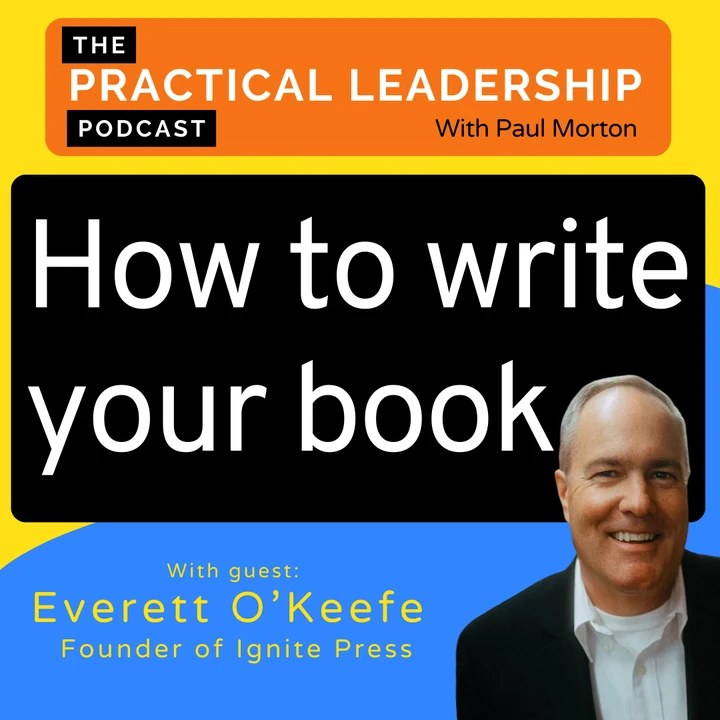
Today, we’re joined by Everett O’Keefe, best-selling author, speaker and the founder of Ignite Press.
Everett shared his expertise on how to leverage the power of publishing to enhance your business and personal brand.
Everett introduced a practical model to simplify the book writing process:
- FAQ & SAQ Model: This involves identifying Frequently Asked Questions (FAQs) and Should Ask Questions (SAQs) related to your expertise.
- This content forms the basis of your book, helping establish authority and demonstrate expertise.
Great quotes:
- “That’s why I call a book the great force multiplier.” Discussing the extensive impact a book can have on one’s professional influence. (00:03:51)
- “You don’t have to sequester yourself on Walden Pond to write a book.” Debunking the myth that writing a book requires complete isolation. (00:06:09)
- “A book doesn’t just communicate your authority, it screams it.” On how publishing a book can significantly boost your perceived expertise. (00:08:35)
- “Every FAQ is a chapter waiting to be written.” Emphasizing the ease of generating book content from frequently asked questions. (00:09:14)
- “Books outlive their authors, carrying your legacy forward.” Highlighting the enduring nature of a published book. (00:15:32)
In this episode, Everett provides invaluable insights into using book writing as a strategic tool for business growth and leadership enhancement.
Tune in to learn how to start your authorship journey effectively and use your publication to carve out a niche of authority in your field.
Get your copy of Everett’s book “The Power of Published” here: https://mypodcastperk.com/
Book a time to discuss your book with Everett here! : https://meetings.ignitepress.us/everett
Transcript
Automated transcript. Speaker labels and spellings may contain errors.
Paul
Best-selling author, number one, six Amazon bestsellers, founder of Ignite Press, winner of multiple awards, a sought-after speaker, coach, and consultant. [upbeat music] Hello, and welcome to The Practical Leadership Podcast. I am your host, Paul Morton, and we are talking about leadership, management, and the various lives that surround it. It's my joy, delight, and privilege to bring into my studio some of the smartest, wisest people I've been able to find for your delectation and enjoyment, and I hope that you do get a lot out of the conversations that we have here. When you realize that your management team has grown too fast or you've inherited a new team, and the fastest, best lever you have for growth and improvement is attached firmly to those managers, get in touch. I help you run management, coaching, and training programs that'll make a big difference really quickly.
You can find me at the Practical Leadership Academy website and on all the usual social channels. [upbeat music] Everett Latif, thank you very much indeed for joining.
Everett O’Keefe
My goodness, makes me sound important or something like that. Thank you so much for having me on, Paul. This is great. And, and I am a you. I am willing to get up at 4:00 in the morning to be with you, man. This is terrific.
Paul
This is outrageous. I mean, honestly, we should have phone a bit.
Everett O’Keefe
It's great.
Paul
But you know what? I'm so glad you could be here, so.
Everett O’Keefe
Well, no, no. What a, what a better way to start the day?
Paul
Oh. So I obviously shortchanged you significantly there in your background. You've been around for a while. You've written some phenomenal content. Uh, The Power of the Published. The Power of the Published, and that's what we're gonna be talking about today, uh, is the idea that y- everybody's got a book in them, right? How'd you get it out?
Everett O’Keefe
Uh, they ... Uh, most people do. Yeah, that's what, uh, statistics show, and it's what we've been, what we've seen from our clients, too.
Paul
So how'd you get it out? Where'd you start? But before we get there, tell us a bit about you.
Everett O’Keefe
Well, so I'm, I'm the founder of Ignite Press. Uh, we've, uh ... We're a hybrid publisher. We sit in between traditional and self-publishing. Quite frankly, we like to think we embrace the best of the both, of both worlds because we put out a completely professional product. But our clients have creative control over their content and ownership of their content, and they get their books at cost, and they get all their royalties. Um, and they're not hamstrung and roadblocked by traditional publishing, uh, which sadly, you know, it happens to most people. So we've published, uh, about 160, 170 books so far. Most of our books have become Amazon number one bestsellers, and therefore, most of our authors have become Amazon number one bestselling authors. And we just love working with businesspeople, um, executives, coaches, consultants, speakers, to help them get
their message to the world through the incredible medium of book.
Paul
Well, one of the reasons I'm most interested to talk to you, not least of which is because you are an outstanding human being, so I genuinely enjoyed the conversations that we've had previous to this, this recording. It's, um, I'm having a stab at this myself, so I'm having a bit of a go myself. So I was, I was showing you here. This is, this-
Everett O’Keefe
Let's see that cover
Paul
... Let's see the cover here. So if you're watching in black and white or on the podcast, I'm holding up the title and the front cover of my, uh, soon-to-be-written published book, Hidden Tradecraft of Elite Managers: Unveiling Second Nature Skills for Remarkable Performance. And so this is the result of about an hour and a half in Canva, thank you very much.
Everett O’Keefe
[laughs]
Paul
And, uh, some, some good conversations. So I'm going through this myself. So I'm gonna consider this free consulting and coaching.
Everett O’Keefe
[laughs]
Paul
Thank you very much indeed. In the not too subtle guise of trying to find advice and good ways forward for you, my dear listener, Everett, where should someone start?
Everett O’Keefe
Yeah, I think, you know, it's, it's, it's always good to understand first your why. Where, why are you publishing a book in the first place? And for a businessperson, that often is a really easy thing to answer. Very often it's because w- you know, as a, as a business executive or coach or whatever, we're looking for access to a higher caliber of client. We wanna convert our prospects to become clients more quickly. And what people also fail to realize is how great a book is at creating better clients, not just better quality clients, but educating them to your process so that they become more amenable to your suggestions, um, and that you develop a m- much stronger relationship. But most people are creating a book for the purpose of authority. They're creating a book so that they have greater authority in their market. They have expert status which, if you are an author, you have instant expert status, so that that can be leveraged in everything.
Um, I call the book the great force multiplier, because it truly multiplies the effectiveness of every other thing that you do in your business. So sitting down and going, "Okay, why am I publishing a book?" is absolutely critical. And once you've answered that question, the how becomes so much easier because then it's a matter of, well, if I'm doing it for authority, what content do I want out there? What content do I already have, uh, or know that I could put into a book that would help give me that authority, that expert status, to help, help me bring more business to my business or better business to my business?
Paul
I'm glad to hear. I'm glad to hear you say that. I mean, the authority thing is one of the reasons that I do the podcast. Well, I say the reason I do the podcast is just I enjoy myself.
Everett O’Keefe
[laughs]
Paul
I enjoy chatting to interesting people. And then it turns out that people like listening to me chatting to interesting people, which is great. And when I'm seeming to be chatting to interesting people and call very clever senior chaps and chapettes, they must, they think that, gosh- He must be clever too. So-
Everett O’Keefe
You must know well. And you're, and you're in a leadership role because of what you do, so you're-
Paul
Yeah
Everett O’Keefe
... you're im- immediately, you know, your stature is immediately greater than the people that you're interviewing because of that role. You're the host.
Paul
There you are. That's it. So we add to that book for authority. The content for my case is coming from the, some of the courses that I deliver. So it's a leadership course I deliver. It's got a number of sections. So guess what? I have a number of chapters, right? So now we've got that. Now that's the, that's the why. What's the next stage?
Everett O’Keefe
Yeah. I think then it's de- determining, you know, obviously you're, you, you wanna work, start working on your content. But the great thing is, is that for many people, the content, they already have it. It was just like you. So Paul, you're a huge proponent of repurposing existing content, and this is what people often fail to do, is they think that everything they have to do is create it from scratch, and that they're gonna need to, you know, sequester themselves on Walden Pond for six months to go do that. You know, uh, become a hermit in the meantime. You know, uh, get rid of family, you know, all like, all like this. And I think of your, uh, your kids, you know, doing piano lessons in the house. How could... You know, you can't take yourself away from them for six months, right?
Um, but repurposing is amazing because so many people already have great content, and it's in, it may be in videos d- or courses that they've created, like you have done. It may be in their, if they have a blog, it may be in their blog. If they've done podcasts, and that's hosting or appearing as a guest. If they've delivered speeches. That any, any one of these things can become the, a great foundation for a book. Uh, and, uh, and then there's all this content in their head that could come out of their head so easily and so rapidly, uh, if they only took a couple quick steps. So Paul, can, should we get into that, um, FAQ model book that we had talked about?
Paul
Let's have a look at some of the ways of getting this product idea.
Everett O’Keefe
All right. All right.
Paul
I mean, of everything you've mentioned, the podcasts, the, the speaking, the, the blogging, I would imagine that every single person who's listening to this right now who enjoys podcasts, out of the, out of, you know, 10 people that are listening to this, out of the entire audience there, I would imagine half of them, because it's probably if you're listening, you are probably a relatively senior executive, made a podcast. You have written some blog posts. You have made some speeches in the past. And go dig them out. See where you're starting from. Seth Godin, right? Seth Godin, great marketeer. When he publishes his books, I'm fairly sure he basically goes copy, select for his last two years' worth of blog po- posts,
pastes it into a Word document, and sends it off to his publisher.
Everett O’Keefe
Yeah. In fact, um, that's a great example of a blog to book strategy where, yeah, you just, you... Each one of those blog episodes becomes the chapter of a book, whether that's a really short chapter or it's the foundation for a chapter that you expand on. Uh, you know, uh, it, um... That is fantastic. And that, and you're exactly right. Most people in an executive role have created some content already that's just sitting there waiting to be put in. Like, I love blogs, okay? But a blog, a blog doesn't scream your authority quite the same way as a book does because anyone can do a blog, and it's much harder, or most people think it's much harder to do a book.
Paul
So FAQs.
Everett O’Keefe
Yeah.
Paul
What are they? What's this model?
Everett O’Keefe
Yeah. So there's a great model I learned from a guy named Mike Koenigs, and, uh, it is the FAQ, SAQ model. And so, you know, each of us in our, in our day-to-day job is asked questions quite frequently by, uh, the people we network with, or our prospective clients, or our existing clients. And, and those are frequently asked questions that, that we have the answers for in our head because we rattle the answers off all day long. We've, you know, we've said 'em over and over and over again. Um, and so start by writing down, just take five minutes and write down 10 or 20, write down as many frequently asked questions as you can think of about your career, okay? Or about, about your, your brand or your business, okay? Um, and then stop for a moment and write down the questions people should be asking.
These are the questions that if they knew a little bit more, if they were a little bit more savvy, these are the things that they would ask. The things that get a little bit deeper into the topic and, quite frankly, allow you to show your expertise. Now, this is a, a real quick example of FAQ versus SAQ. Goes like this. You know, when, when people go buy a car, right? Very often they wanna know, "What's my car payment?" Right? "What's my car payment on this car?" And, um, and that's fine, but the real question they should be asking is, "What is this car going to pay in the payment, in the insurance, in the gas, in depreciation?" Right? So if they, if they knew a little bit more, that's the kind of thing they would be asking. So thinking about your own industry, write down frequently asked questions and then write down should have asked questions. And then grab this piece of technology that you're carrying in your pocket or your briefcase and use the recording app.
Or there's a great app also called Otter. Uh, it's otter.ai. And simply sit down and record that, those frequently asked questions, the answers that you rattle off all day long. Um, and what you will quickly do is create this kind of brain dump from what's already in your head to getting it now into a document. And by the way, if you can dictate even two to three minutes, maybe five minutes tops on any one question, that can be the foundation for a chapter. So each one of these questions becomes a chapter in your book, and you can very, very quickly create a very useful book just by doing those FAQs and SAQs.
Paul
So we've got our why. Why are we doing it? We're doing it for authority, but for clients, force multiplier. We've got a few models of the how. We've got- Content that you've already created is in your pocket, then building some structures around your FAQ/SAQ model, frequently asked questions, should ask questions, dictating the model into some structure you can then do what with? What's next?
Everett O’Keefe
Yeah, I mean, that's, uh... Most people, the part where they struggle the most, where they spend the most time, is trying to get the content out of their head, right? And getting it into a document. Once it, you know, and the FAQ/SAQ model is a, just a really great method of getting that content out of your head into a document. Because once it's in a document, finally other people can help you.
Paul
Ooh.
Everett O’Keefe
Right? It's harder for people to get that content out of your head, uh, until some technology changes, I suppose. But, um-
Paul
[laughs] That would be interesting
Everett O’Keefe
... yeah. So, so then, then it can be in a place where other people can help you, whether that's a, uh, whether that is a writer, whether it is an editor or a book coach. But that getting that first draft out is the part where people tend to struggle the most as far as the manuscript development. So this just is a, it's a hack. It just gets you right past the very most difficult part. Because from that point forward, we can help you, right? We can help you with writing. We can help you with copy editing. We can help lay out the book and create a beautiful cover and, uh, and, you know, and launch it to the world so it's on Amazon and, you know, uh, walmart.com and Baker & Taylor and Apple iBooks and Google Play.
All of those things can be done by others. Uh, and so, so the hard part is getting over that manuscript hump.
Paul
Yeah.
Everett O’Keefe
And that's a great way to do that.
Paul
I remember when I was taking drawing classes, one of the first things they had us do was close our eyes and just make marks. Take a pencil and make marks on the page, and then you open your eyes. 'Cause then what you're looking at is no longer a blank page. It's when you're staring at the blank screen or when you're staring at the blank page, it's almost you have this reluctance to start. And there's a wonderful psychological trick. I don't know if you know, um, when you get... It's like a completion bias. If you start something, you give somebody a, a 10-stage checklist. They're looking at it going, "Oh, I'm never gonna get there." But if you give them a 10-stage checklist and say, "You've already done the first three. The first three was talking to me and then giving me your name and then telling me you wanted to start.
Look, check one, check two, check three, so you've only got seven to do." It only ever had seven items on it. I've added three that you've magically done, and therefore you're halfway through, or th- th- it's halfway through.
Everett O’Keefe
I love that, Paul.
Paul
You're very much halfway through. It's not a blank page. You've co- overcome the hump. You've got something down, and therefore you're on your way.
Everett O’Keefe
That's excellent. I'm gonna use that, Paul. I like that.
Paul
Oh, for sure.
Everett O’Keefe
Yeah. And another, another way to, to get going with this, I mean, uh, obviously ChatGPT and other AI tools have come such a long way in such a short time. They are fantastic tools at outlining a book. Um, if you are interested in... If you know what your topic is, you know, um, I don't know, let's say you're gonna write a book about teaching people to do art, right? Since you, you, you mentioned art. Um, you can use ChatGPT to very quickly sketch out the chapters that you might cover in such a book or the problems or challenges that you might address for your audience. Uh, so, uh, but we lean to that FAQ model just because your clients are already telling you what they wanna know from you, right? By asking you those questions. Um, and, and that whole idea about educating your clients.
Pe- you know, I think books help create more clients for a business. Um, and, and at the same time, they create better clients for the business, and I be- I mean better by higher, higher, uh, uh, higher financial ability, higher, higher resources to engage your business, but also better-educated clients, more, more clients more readily accepting of your recommendations. And which of course means that they close faster and you get better revenue and more referrals and all of those things. It just steamrolls, you know, or, or snowballs. So, um, uh, yeah, so you've gotta get a book in. Get, get a book out there. Um, it's, it's the most powerful tool that you're ever gonna cr- create in a business. And, and the only tool you're gonna create in your business that's gonna outlive you, right?
You know, that book you're working on right now, you are gonna l- you are gonna... A, you're gonna leverage that. You're gonna have inst- instant authority having published it. Um, it's gonna be working for you next year and the year after and the year after. It'll be working for you, uh, all your life, and it'll be around after you. And there's not a single other marketing tool that we create that is going to really outlive us. So, you know, it, they're just... It's durable. And then, you know, when you think about it, Paul, when do people read your book, right? It, we, uh-
Paul
Bathroom.
Everett O’Keefe
Yeah. They might read it in the bathroom. They might read it on vacation. They might read it, um, before they go to bed. Um, people are getting your content at their, in their most vulnerable times when they don't have a bunch of roadblocks in their mind, you know, bunch of obstacles. And you get to pour your expertise, um, and your authority directly into their brain in long format. You know, when will you ever get to speak one-on-one to w- a client for hours on end? I mean, it's a very rare thing that you'll, you know, that people get a chance to do that. But they're, but authors of books get to do it all the time without even being there, right? I mean, that, the oth- all... That's the other force multiplier, right?
You don't even have to be there, and your client is getting your expertise and information. So, yeah, it's, uh, it's, it's an amazing thing and, and, um, and I'm just happy that we get to watch our clients benefit from this, from this stuff.
Paul
So are there any areas, any particular topics you think that are not suited?
Everett O’Keefe
You know, it's funny, I'm, I'm pretty sure there'd be a really great book out there about how to, how to collect trash. Uh, you know, someone wrote [laughs] someone wrote a book, and it's a real book, How to Avoid Big Ships. That is a bo- it's a, it's a book about how to avoid big ships. Cracks me up. Um, I still don't know if it was done as a joke or not. Um, so yeah, I mean, I, you know, there, you- if your audience isn't willing to read it, then there's no reason to, you know, uh, you probably don't need to write it. So it really depends on what the audience is for. And, and I think that, I think that we've seen these days when you look at the variety of podcasts out there and the topics of podcasts, you now know that there's an audience for almost every message.
Paul
There's somebody for everybody. There's, there's an audience for everybody.
Everett O’Keefe
Yeah.
Paul
Your model, I think, precludes quite explicitly those topics that don't have an audience. Because you're talking about having an FAQ, a frequently asked question.
Everett O’Keefe
Mm-hmm.
Paul
If there ain't nobody asking the question, you ain't going to have an answer.
Everett O’Keefe
Yeah. Or, or yeah. And or what would be the point of creating an answer, you know? Um, and that FAQ is just one method, right, of creating a manuscript. Um, your, the repurposing, uh, uh, of content, of existing content's a great way as well. And then of course we know we've got clients who, like, they know they have an idea. "Oh, I, you know, for years I've wanted to write this book and it would be called this," or, "It would be about this." But they also don't know where to start. Well, that's fine, we can connect them with a phenomenal book coach who can guide them through every step of creating a manuscript in a more traditional manner. Um, and then of course there are professional ghostwriters out there who do a terrific job. Um, I mean, it's like, uh, I don't know this for sure, but I'm pretty sure that, uh, Barack and Michelle Obama didn't take countless hours out of their crazy busy schedules to write their books, right?
They had ghostwriters write their books. And, um, that's accessible, and you don't have to be a giant political, you know, or, uh, a business figure to be able to do that. That is also available to all of us.
Paul
And you have the expertise of how to actually put it together and-
Everett O’Keefe
That's right. That's right. This, there's no reason... That's, there's, there's a way forward for, for anyone who wants to write a book. There's a way forward, and there's a way that is con- that will match y- your time, your skills, and your budget. There's all, there is a way forward.
Paul
What are some of the pitfalls in this process?
Everett O’Keefe
Um, a lot of people, um, a lot of people take way too long to write their book. Um, it's really common. I'll bump into someone and they're like, "Oh, I've been working on a book for years." So I, m- my book, The Power of the Published, it, it, the subtitle is important. It's How Rapidly Authoring a Book Can Ignite Your Business and Your Life. And I thought long about why I would say rapidly. Um, but here's what we've discovered. The rapidly written book gets written and published. The slowly written book almost never gets completed. Uh, it's, it's just we get distracted, life changes, whatever, we lose steam and focus on that book. Um, I had one client who came to us and he had been writing a book for three years.
He was a marketing client, uh, of ours. And we weren't at that time heavily into publishing, we were just doing, we were doing marketing. And a couple years later, he was still writing that book. And I finally turned around and published a book and, uh, and said, "Are you coming along?" And then I finally, I sent him a, a book with his book title on it, his cover, and all the pages blank on the inside. And I said, "Okay, now, let's fill this thing." Right? Um, and that's what it took to get him, you know, kind of get him off the dime, uh, to get him moving. The other pitfall that happens besides a slowly written book is very often people will get the manuscript done, they will be just on the cusp of publication, and then they get the doubt, you know, the doubt falls in, uh, you know, and they're like, "Well, I don't...
Oh, is this really good enough?" You know? "Am I really gonna do this? Should I?" You know, and they'll, and-
Paul
Yeah
Everett O’Keefe
... when, yeah. It's that whole fear, it's almost that fear of success thing. So that is also a stumbling block for many people, and they just need, they need someone going alongside them, the accountability to keep moving them forward, whether that's a book coach or a publisher.
Paul
Yeah. I mean, the fear of embarrassment, the fear of what if I publish it and nobody reads it? What if I do something and it's rubbish?
Everett O’Keefe
Yeah.
Paul
You know? I think it took me a long, long time. W- when I was working full-time professionally, real life grown-up job, there were so few things that I would dare to do outside of my comfort zone or outside of the job description or outside of, of the very, very narrow range. I, I'm even hugging myself thinking about it here.
Everett O’Keefe
I, I see it.
Paul
Well, um, the, it, it was, it was a self-limiting belief. And then when you realize that the only times you grow are when you screw up, when you get embarrassed, when you get some fairly pointy feedback, or when you have somebody holding your hand leading you on the path. These are the points where you grow, and I recognized that through looking at my kid. My neighbor gave their k- their child a bike and said to them, "I expect you to fall off 10 times before you get any good." That's a bit cruel. What the... Oh, I see what you did there. I see what you did there. You're going to fall flat on your ass, and then you'll get decent at it. Or not. Right?
Everett O’Keefe
Right.
Paul
And it's when you put your hat in the ring, it's when you stand up, it's things happen to people who are there, who do. You don't have to be any good, you just have to do, and that alone makes you better than 90% of the people who have the book in the drawer, have the idea in their head.
Everett O’Keefe
Right. Yeah, because the people who actually publish a book is, uh, it's a fraction of a fraction of a fraction of a percent of, of people that actually finish and publish a book. And so when you accomplish that, you are breathing rare air. You are in an elite club. Uh, and, and that's why- I think that's why we revere authors so much. You know, we give them such great credence. You know, and it was funny, you, you talked about will people even read my book. There's a, there's a chapter in The Power of the Published where I talk about the power of the unread book, how, um, how a book, even if people don't read it, how it just continues to scream your expertise. Um, so someone gets a book. Let's say, let's say someone knows that you wrote a book. Well, okay, that's a level of authority. Let's say they've heard the title and the subtitle. Well, now they think you're an expert at that topic. No matter what's inside that book, they think you're an expert at it.
Um, if they have seen the book, if they've seen the cover, um, they're like, "Wow, that's amazing." If they have the book, you know, that book may sit on their desk or their nightstand or whatever for ab- for years continually screaming your credibility, uh, on that topic because you've got a book on it. Your name's on that cover. I mean, uh, even if they never open a single p- open or read a single page. Um, and then as, as we've talked about, Paul, before, and then what do people do with books? They just never throw them away. Um, and when they do finally get rid of them, they donate them, right? They... Or, you know, oh, to the used bookstore or the library or whatever. And, a- and what else is there in your m- in your marketing? What is it? What other tool can you create where there's that kind of respect given to the content?
It's, it- it's r- it- it is literally crazy.
Paul
I think it's gotta be right up there with the boys and girls at Harley Davidson debating do we allow people to tattoo our logo onto their bodies? And I think it was the, the, the then CEO, one of the original family members went, "Are you crazy? They're willing to write our name on their bodies, and you're wondering if we should let them do it? Of course we should let them do it."
Everett O’Keefe
[laughs] Absolutely. Now if only I can get some of to tattoo Ignite Press on their, uh, uh, on their bodies, then I'll know, then I'll know I've arrived, you know, that the company's arrived.
Paul
Yeah, I love that. There's a wonderful, uh, there's a couple of concepts I really like when it comes to books in general. There are... I have two vices. Actually, I have many vices, but two main ones. Well, three main. Actually, when it comes to [laughs] cigars, the very occasion- I have a religious cigar, right? So I have one at Christmas and Easter, that's it. Um, books and wine, and you're supposed to take a book out of your shelf like a fine wine. So that's something that's been maturing there until just the right moment when you want to take it out and enjoy it. Now the problem is that if I actually treated my wine like my books, I'd be in hospital.
Everett O’Keefe
[laughs]
Paul
So one in, one out, I've got a rule. And then there's this lovely Japanese word. I think Japanese and the Germans must be connected somehow because they always have the right words for things. And it's, I think it's tsundoku, which is the pile of unread books in your house. The tsundoku, so the pile of unread books is this collective noun for the books you're going to get around to reading, and I have a few tsundoku floating around. I get it.
Everett O’Keefe
And this is what's exciting. Everybody does.
Paul
Yeah.
Everett O’Keefe
Right? Every- everybody who is, you know, is reasonably educated, uh, and many who aren't, like, they have a pile of those books around that they're like, "I'm gonna get to them." And, uh, it's, it's amazing. Then just, just... And the things that just come about, the things that come about through, uh, uh, through books. Paul, do we have time for one story about one of my cl-? So this, this client, her name is Shelley. That's not truly her name. The names have been protect- or changed to protect the innocent, as we say. Um, Shelley came to us about two months before she was going to a conference in Dubai, and it was on medical tourism. And, uh, so she goes, "Everett, I've got this manuscript. Do you think we can publish it and put it in a book so I can... I just want to take a few copies of the book to Dubai with me to this conference." And again, she's just attending this conference.
Said, yeah, I said, "Yeah, let's see what we can do." So we, we got her book laid out. We, uh, you know, copyedited and laid out, created a cover, got some copies in her hand, and away she went. So on the first day of the conference, she handed out, I don't know, about five copies of her book to different people at the conference that she had gone there to meet, okay? And, um, and then that night, she's walking through the lobby, and she sees one or two of them sitting there, and they're reading her book. She's like, "Oh, this is cool. This is crazy." This is what every author wants, right? Is to see people reading their book. Um, so she's, so she's like, "Okay, this is really cool." Well, the next day, several of the people she had given books to came up to her, uh, to talk to her, and s- some of them wanted to talk to her about her business, about what she does.
The long and short of it is, is by the end of the conference, those people that she'd given these books to, she had contracts lined up. She had business scheduled for, uh, for the coming year. Um, one of them invited her to be a contributor in a textbook, in a college textbook, so that now she or she was among the experts in her industry. Um, and over the coming year, she did a ton of business, uh, with those people. And one of those, uh, companies asked her to come back to that conference the following year as a sponsored speaker. And so here she was walking into this conference initially as an attendee. Here's some books. Maybe I'll meet some people, et cetera. And, uh, quite honestly, it made her an expert on the world stage.
Um, and it, it's just incredible the stories that we get to hear from authors and what books are accomplishing for them. We even had one, uh, just recently, um, uh, Emily Isbell is her name, and Emily, in the writing of her book, wanted to get some endorsements. So she, uh, took some sample chapters. Uh, we recommended she send those to some people that she wanted to maybe get endorsements from. And, and And, you know, you don't do it for this reason, but one of the, one of the people said, you know, read her stuff and goes, "Yeah, you know, we'd love to have... Yeah, yeah, sure. Let me write you an endorsement. And can you come speak to our company?" Um, you know, [laughs] and can you... And so even in the endorsement process, she developed business before the book was even published. Uh, and it's...
That's, that's the credibility that comes with authorship and, and it's, it's a special thing.
Paul
Yeah.
Everett O’Keefe
I worked two stories in there. Sorry.
Paul
It's all right. That's fine. I'll take them. I have two things to ask you. One is if I were to give you 10,000 billboards all around the world and you could write anything on them that you'd want, what would you write?
Everett O’Keefe
Okay. So I thought about... I, I saw this question in advance and it's, uh... So I'm cheating because it's a, it's, you know... From a personal standpoint, I'm gonna tell you from a personal standpoint it would be, "Find Christ." That would be the 10,000 billboard.
Paul
There you go.
Everett O’Keefe
Okay? From a professional standpoint, it would be this: Be the one who wrote the book, not the one who read the book.
Paul
Both of which very good. Is there in fact a book that you recommend or gift more than any other?
Everett O’Keefe
Yeah, I mean, obviously, you know, my book The Power of the Published is the one I probably send the most, uh-
Paul
Okay
Everett O’Keefe
... under- understandably. Um, however, uh, one of my very, very favorite books that most n- most people have never heard of is called The Traveler's Gift by Andy Andrews. The Traveler's Gift by Andy Andrews. That was a life-changing book for me, and so I send it to people periodically.
Paul
And you have been kind enough to offer a few freebies for people who've listened this far. What are they?
Everett O’Keefe
Yeah. So, um, I've got it set up where you can get a free copy of my book, The Power of the Published: How Rapidly Authoring a Book Can Ignite Your Business and Your Life, and you can get that at mypodcastperk.com, mypodcastperk.com. And then if you have an idea for a book, the... If you have a manuscript you've been working on or you've been [laughs] thinking of working on, um, and you wanna talk about what that book could do for you, reach out to me and let's just schedule a book consultation directly with me. You can do that at ignitepress.us. That's ignitepress.us. And we work with authors all around the world. Right now we have a, a, a business executive in Romania that we're working on.
That's one of our latest projects. And, uh, we're hap- happy to talk with you about your book and, and what it might do for you.
Paul
Everett O'Keefe from Ignite Press, thank you very much indeed for joining.
Everett O’Keefe
Paul, thank you. What a joy to spend some time with you. [upbeat music]
Paul
And that's a wrap. I hope you enjoyed the show. Thank you for joining me. If there's ever anything I can do to help you on your journey, then do please reach out. You can find me on LinkedIn and all the usual sources. Do please subscribe, leave me your five-star review, and most importantly, get in touch with your comments and feedback. It's really how I grow, and that's what I'm doing this for. Thanks again. [upbeat music]