Show notes
More revenue doesn’t automatically mean you’ve built a more valuable business. I want to know what you’re keeping, whether it runs without you and whether you’ve done anything more than make yourself a job.
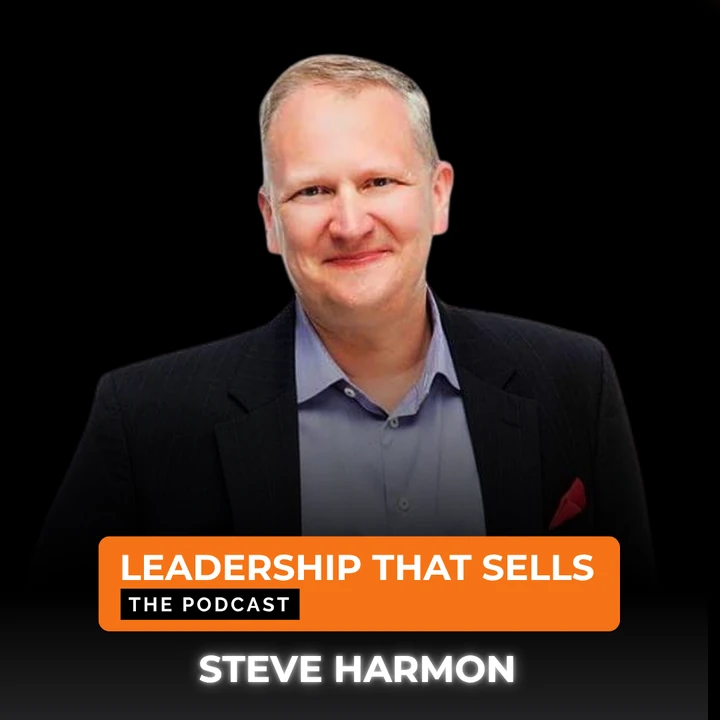
Steve Harmon returned to his family’s business and found hundreds of thousands in liabilities missing from the books, plus cheques they couldn’t afford to send. I get into why he bought the warehouses the business operated, why doubling headcount isn’t scaling, and why an accountant says you can’t run a business by the numbers. We finish with the questions experienced leaders should be asking, and what it means to lead by serving and teaching.
In this episode
Here’s what I’d put to work:
- Build a repeatable process and a team that can deliver without you.
- Review the rent and other recurring costs leaving the business. Ask where owning the underlying asset could make sense.
- Before calling it a sales problem, check the asset, the location and the service customers actually receive.
- Stop treating headcount as proof of scale. Hire for quality, set a clear goal and clear the crap out of people’s way.
- Prepare the next generation by teaching and asking better questions, rather than staying at the centre of every decision.
Episode highlights
[05:52] Have you built a valuable business, or just made yourself a job?
[06:52] I follow the rent: how paying a landlord became paying down an asset.
[10:50] My objection to headcount as proof of scale: “no, mate, you just hired people.”
[13:28] You can’t sell last month’s empty space. Why Steve’s warehouse business works like a hotel.
[18:24] An accountant reminds me that my team doesn’t care how much money I make. They want to know their work matters.
[25:56] My value has shifted from what I can do to the questions I know how to ask.
[28:34] Lead like Jesus: our conversation comes back to putting others first and teaching them to teach.
Links and resources
- spartanlogistics.com : the website Steve shares for contacting him, his team and the wider group of businesses.
- Linkedin: https://www.linkedin.com/in/steve-harmon-04a7864/
- on X: @spartanprez
Thanks for listening. I’d appreciate a rating and a review; follow the show and share this episode with a founder or MD who’s working flat out but wondering what they’re actually building.
Transcript
Automated transcript. Speaker labels and spellings may contain errors.
Paul
[upbeat music] My guest today is a second generation business leader who helped grow a regional warehouse company into a multi-state logistics and real estate operation, and he's now managing millions of square feet of industrial space. He is a CPA by training, which is a very, very useful thing to have, especially 'cause right now it's tax season, right? He's an operator by instinct, and we just love operators on this show, and he's deeply focused on the culture and long-term partnerships of his business. He is now the leader of Spartan Logistics and the wider Harmon Group of companies. Welcome to Leadership That Sells. This is a podcast about the real conditions where leadership and sales actually work and where they quietly break down.
I get to talk to founders, CEOs, sales leaders, and operators who've had to make the decisions when the effort was high, when the pressure was real, and the usual playbooks that we all have don't quite fit anymore. Now, we're not here to trade slogans or five-step frameworks, although they do come out. What we're trying to do is we're trying to surface patterns. What consistently creates momentum, what gets in the way, and then what experienced leaders like my guest here eventually learn to stop doing. You know, you are what you don't do as much as what you do. If you are responsible for results and not just ideas, by golly, you're in the right place. It's, uh, then for me to say, Steve Harmon, thank you very much indeed for joining me.
Steve Harmon
Thanks for having me.
Paul
So you grew up around a family business, right? My introduction there said you're a second-generation business leader. Now that basically means that you don't do any work. Your dad did all the hard work, and you've just been surfing along, spending all his money, right?
Steve Harmon
Sure. That's almo- ... That's the third generation's job. The second generation had to, has to actually make it work.
Paul
Ah, there you go. So you grew up in this business, and then sensibly enough, you left. You went off to Arthur Andersen, as it used to be called, before they got pulled apart. You then come back into the family business. What was it you thought initially needed to be fixed, and what was it that was a lot harder than you expected?
Steve Harmon
I'll tell you, when I was exiled working in another job, I was still actively involved in the business, and so I thought I knew what I was getting myself into. But within a week of joining the company full time in 1996, what I found w- out was things were way worse than I thought. Um, there were hundreds of thousands of di- uh, of liabilities that were not on the books. There were disputes with vendors and uncollectible amounts and, um, and, and just issues that had to be sorted out, and there was a whole file of, uh, we dispute these amounts or, or we can't pay them or, or whatever. And there was stacks of checks that we'd cut and told the vendor we'd paid them, but we didn't have the money to actually mail the checks. I mean, it was bad.
It was way worse than I realized walking in the door.
Paul
Ouch. So you then, having come back in, uh... Now I'm, I'm assuming your, your... It was your dad, right?
Steve Harmon
Correct.
Paul
It was your dad.
Steve Harmon
My dad-
Paul
So you came back in-
Steve Harmon
My dad started the... This was the third company my dad started, and this was the first one that had been involved in both trucking and warehousing. And-
Paul
Right
Steve Harmon
... so it was, uh... We were, did $4 million the year I joined the company in, in '96, and it was just so small with such thin margins, that what we were really doing was working awfully hard to make ourselves a job. We did not have a repeatable business model that was demanded in the marketplace.
Paul
Uh-huh. Now, is that something you went off and learned in the fancy, uh, corridors of Arthur Andersen?
Steve Harmon
Uh, no. I, I spent most of my time working in banking and real estate, but I'd well read and smart enough and experienced enough to know that what we had to do was grow and i- increase our service levels to, to get our margins up. We had to get more cash coming in the door.
Paul
So, but it didn't start off as... You, well, you didn't grow it, rather, as a logistics company. 'Cause you come into this and looking at all these unpaid bills and the packs, the stacks. I mean, this, quite frankly, I go into different businesses, um, not all the time, but reasonably often. It's not an unheard of thing. "How's it going?" "Oh, it's fine. Look at the top line." "Okay, show me how." And then you take it apart for more than a couple of days, and every business has this sort of noise.
Steve Harmon
Yeah. Yeah. And, and there were many other issues too, you know, compliance issues, safety issues, insurance things, um, you know, payroll processing issues. Ah. Just, so how do you eat a cow? One bite at a time. Pull apart a problem, start working that problem, move on to the next problem.
Paul
Yeah.
Steve Harmon
Um, and ultimately top line growth leading to bottom line growth does solve all your problems.
Paul
There's, there's very few business problems that a healthy sales pipeline can't solve, right?
Steve Harmon
Right.
Paul
So when you started to actually grow this business, and it was a logistics company, right?
Steve Harmon
Correct.
Paul
So you built a, an ecosystem around it. So it was like a property empire you started to build around this. My empire's fair enough.
Steve Harmon
Em- I love the word empire.
Paul
Empire.
Steve Harmon
Can I use the word empire?
Paul
That makes you the emperor, right? So so at what point did you realize that the leverage that you needed wasn't warehousing, but it was actually the infrastructure around your customers?
Steve Harmon
So the, the real core realization was that a, a small service business is a job.
Paul
Mm.
Steve Harmon
You know? So it doesn't, it doesn't become worth anything just because you show up every day and serve some clients and get paid. Now, if you have a repeatable, unique business process, now you've created a real business. If you have processes and people that back that up and it runs without you and becomes a magic cash machine, that's a real business that brings value. But what I looked at was I said, "Look, we turn a lot of money every month, every year, but what we don't get to do is keep a lot of it." So, you know, we're not building asset-based wealth here. The trucks are depreciating. You gotta buy new forklifts every year. You've got, you know, you, y- your only real asset is cash and accounts receivable.
Paul
Hmm.
Steve Harmon
So we, um... I looked at it and said, "Look, we pay the landlord every month, and if we can figure out a way to buy the warehouses we operate, that rent will essentially become debt service that will pay down over the next 30 years. And when I'm 57 years old, I will have s- real asset-based wealth I can sell and retire on." So we got into a capital-intensive business with no capital, and begged, borrowed, and steeled our, stole our way to a, um, industrial real estate portfolio, some of which is leased to our operating company and some of which is leased to a third party. Along the way, we also build a general contractor that will, where we could control the cost and quality of the buildings we're building for ourselves and others, and a property management leasing company to provide the staff to manage the portfolio while we were sitting on a beach
somewhere sipping mai tais.
Paul
Sipping on the beach, sitting on the beach with a mai tai. That, my goal is a year-round tan. That's what I want, a year-round tan.
Steve Harmon
Strongly recommend.
Paul
I'm a Scotsman living in the-
Steve Harmon
[laughs]
Paul
... south of England.
Steve Harmon
It's a, it, it, yeah, it's wishful.
Paul
Stretch target. Stretch. [laughs]
Steve Harmon
[laughs]
Paul
I could just get one big freckle. That's all I... So-
Steve Harmon
Yeah
Paul
... I mean, what you're, what you're describing there is an interesting thing that people, um, have come across in, if you look at the Amazon business cases that they've run, and people think that they know what Amazon's about, but one of the things that they do very well is that they, uh, they look at how they are disintermediated, disintermediated, separated from money. What are we actually spending money on as services? Whether-
Steve Harmon
Mm
Paul
... that's payment providers or logistics, shipping, packaging, all this stuff. Amazon is one of the world's biggest producers of cardboard, would you believe? Because they say, "Well, we're buying boxes." Why are we buying boxes? "Well, we have to have boxes." Okay. Should we make boxes then? All right. Should we own some paper mills? Yeah. Should we buy trees? I don't think they own trees yet, but I wouldn't be surprised if it's on the list, 'cause it's that, what are we spending money on that we might as well circle, you know, 'cause they've got ca- they're capital rich, right?
Steve Harmon
Yeah.
Paul
They can do that. So you've done exactly that. You've identified those areas of your business that were, you know, capital intensive, but, sorry, um, op- OpEx intensive, but could've been a capital, capital accretive.
Steve Harmon
Mm.
Paul
You know? That sort of thing. That was clever.
Steve Harmon
So yeah, we got into, uh, a- industrial real estate at exactly the right time. It w- there was a glut of it the time. People were trying to get it off their balance sheets, and we were happy to help them do that.
Paul
Mm-hmm.
Steve Harmon
And so today, you know, it's not as easy to acquire industrial real estate. It's really in demand. Rents are up. Costs, construction costs are up. And, uh, we seem really smart for having, uh, planted a tree 30 years ago, if you will.
Paul
That's it. I love this, the n- so the Napoleon story. Napoleon's walking down the, some boulevard somewhere in France, and he's saying to his generals, says, "It's very hot." And the generals go, "Yes, it's August." "If my soldiers are marching down here, they will be very hot." "Yes, Emperor Napoleon, they will be." "We must plant trees." "They'll take 30 years to grow, Emperor Napoleon." He said, "Yes. Start now."
Steve Harmon
[laughs]
Paul
[laughs] He's like, "Okay. I-"
Steve Harmon
Their sons will appreciate it.
Paul
Yeah. The, I said, the, what is it? We, we sit in the shade of trees planted by the grandfathers of men who knew that they would never live to do it. So in operational businesses like yours, growth, I mean, you said you had some. It can hide, growth can hide inefficiency for a very long time. What are the signals that you look for that tell you a company's scaling properly versus just getting bigger? 'Cause I, I, I get annoyed a lot by people saying, "Oh, we scaled from 100 to 200 people." I said, "No, mate, you just hired people. That's not scaling." Scaling-
Steve Harmon
Yeah
Paul
... is something entirely different.
Steve Harmon
That's a good insight. So what I really think about is the quality of people. Like, I don't necessarily need to be a certain size today to-
Paul
Yeah
Steve Harmon
... to put a few nickels in my pocket. What I need is a small group of A players committed to our mission, vision, and values-
Paul
Hmm
Steve Harmon
... that I've clearly articulated and set long-term goals around. That, to me, is what winning looks like. And then I just get out of their way and let them make me money. I mean, let's, let's be honest.
Paul
Yeah.
Steve Harmon
It's the quality of people that we're adding that is my number one mission today.
Paul
It's beautiful. There's, the only sport that Scotland's any good at in the Winter Olympics is curling. You know curling?
Steve Harmon
No.
Paul
In the Winter-
Steve Harmon
Cur- curling's a good time.
Paul
There you go.
Steve Harmon
You don't have, you usually don't even have to set your beer down to do it.
Paul
That's it. All one-handed. And there's a wee man in the curling who's, well, he's right at the front, and he's normally the coach, and he's got the brush. And he's the fella, and he says, "That's how we're going. That's where it needs to be. I'm gonna nip out in front of you and get rid of all the stuff that's in your way so your, your stone goes straight." And if you think leadership, they put the right person with the right tool in front of the right goal, and then clear the crap out of their way. I think the, the, y- you would maybe call it quarterbacking, right? So the, you move everything out of the way so this guy can run.
Steve Harmon
Yep.
Paul
Yeah.
Steve Harmon
That's a great insight.
Paul
Yeah. So you've got, then, a lot of operational problems every day. Things that come to your desk are not the easy stuff, right? You don't get the, "Ah, what's, what, what flavor of coffee should we order now?" Okay, well, m- you might actually. I once turned down a, an office rental because they would ... They were trying to get me to, to move in with instant coffee. And I said, "Really? No. No, we're gonna spend, like, 200 grand on this and you want me to ... No." Um, and quite frankly, I told the guy afterwards and his, his wee face just dropped. He's thinking, "I would've bought you a coffee machine." Too late. We went somewhere else around the corner. What is the operational problem that your leadership teams mistakenly think is a sales problem?
Steve Harmon
That's a really good question. So what, what we have, once you're in the real estate business, your, you, all pr- your problems are vacancy problems. I don't have widgets sitting on a shelf that I can sell this month, next month, or the following month. I have this month's space that if I don't sell this month, I can't sell it next month. So all of our real problems become vacancy problems.
Paul
Mm-hmm.
Steve Harmon
Um, so in that way, our logistics company is actually a big apartment complex disguised as a warehouse, right? I've gotta be full to make money.
Paul
Uh-huh.
Steve Harmon
Uh, so giant fixed costs are, uh, the problem that I face every day, and I have the same pr- solution as a hotel or a restaurant or a, a hotel or an apartment building. I have to have a good asset in the right location with great service. A hotel has super short-term contracts and long-term assets and millions of dollars invested upfront, but if you have high-quality service and a great location, people will continue to return to you time after time after time. That's the model I'm in. I am the hotel of the industrial world. That means I need technology, service, and a brain space that, so that when people think, "Oh, I gotta have serv- services, warehousing services in this market," they think Spartan Logistics.
They think Steve Harmon.
Paul
So that then goes to operational design. So that, you've recognized that your commercial performance is determined by how you design your operations, so that's not just where you build or where you buy, but everything that wraps around it. As we said, that you need your ecosystem and you go around that. I suppose then that the operational design then determines your sales results way, way, way down the line. What is the ... When you're looking at this as a, as like a holistic thing that you're trying to build, there's a lot of complexity there. I'm just trying to-
Steve Harmon
Well, I drink, so that makes the, dealing with the, uh, daily challenges and complexities easier, so.
Paul
[laughs] I like that. I like that. So you had, um, so you've written a book, The Spartan Story: A Warehouse Company Grows, there. I mean, I think this talks about the commercial evolution of your business and your ... It's got a, a lot of your operating philosophy in there. I, I said we didn't, we weren't really going for the three steps, um, the, the, the three steps to happiness, but if you had to sum your operating philosophy up, what would it look like?
Steve Harmon
Um, I always say it very simply, that we are successful with three key things: full buildings, happy customers, and passionate team members. We talked about why my building's gotta be full.
Paul
Yep.
Steve Harmon
That means I gotta have happy customers-
Paul
Yep
Steve Harmon
... repeat customers, satisfied customers, customers who are saying good things about me in the marketplace. And those two things only come if I have dedicated, uh, employees, happy to show up every day and do a great job for my customers. That's it. Three things. That's all I gotta do. It's, um, it's like golf. It's, um, it's, it's simple. It's not easy.
Paul
There you go. I think it's the difference between complexity and complicated. Something can be complex with lots of moving parts, and you can identify them, and as you said, you eat the cow one bite at a time. Or it can be, uh, complicated, which is spaghetti, and you're trying to pull things apart, and that's just when you moved into the, the day one, when you came back at it. Now, you're a, a, a CPA, which for my, um, my British audience here is a certified public accountant. Is that right? Or chartered public accountant.
Steve Harmon
Uh, in the US, it's certified, yep.
Paul
Certified. So do you think that a financially disciplined leader makes better scaling decisions? Or if you think like a finance bod, a bean counter, does that make you slow to take risks?
Steve Harmon
There's a reason I got kicked out of the accounting club.
Paul
[laughs]
Steve Harmon
I'm not that kind of accountant. Right? I was big. I was loud. I was-
Paul
Dollar here
Steve Harmon
... in, in conversations. I can do the numbers. I could do the technical part. But-
Paul
Uh-
Steve Harmon
... uh, it was pretty obvious I didn't fit in very well.
Paul
Okay.
Steve Harmon
And-
Paul
Okay. No, that's good
Steve Harmon
... and, and so I actually think I'm the ideal leader because I've got the whole finance language and breadth and analytics at my- ... fingertips and a skillset, but I really am a people person. I, I really think you cannot run a business by the numbers. You run a business with your team.
Paul
Mm-hmm.
Steve Harmon
That's it. And your team can be held accountable for, uh, uh, production or, you know, any kind of, uh, key performance measure. But the reality is, is people don't care about how much money you make. They don't care about how much, you know, the customer, you know, makes. What they care about is, are they valued? Are they respected? Uh, does their work matter? Uh, so engaging people where they are, and get them aligned around a common culture and goal, that is what I've brought to our company in a way that's really weird given my background as an accountant.
Paul
And especially, I think, because you are in a family business. Um, of course, we know that it's gonna be your children that are gonna be going and s- sipping the Mai Tais. It's not y- it's not you personally. I can see you're not a Mai Tai sipper.
Steve Harmon
[laughs]
Paul
But how do you commit... What did you do? Have you done this, or are, will you do this? How do you then modernize a family-run business without creating that cultural rejection from all the people who've been there way longer than you?
Steve Harmon
Yeah. The, the, the number one, like, to be in- the numbers dork for a minute, well, you gotta invest in people, but you also gotta have profits. You gotta pay the bank. You gotta pay the tax man. There's a lot of priorities competing for capital.
Paul
Mm.
Steve Harmon
So, like every dollar invested capital's already spoken for b- before we make it. So, um, you know, that is executing at the top level that, that I, I get really excited about as well. When I know people are out doing their jobs, then I can focus on, okay, does everybody have the tools they need? Do... Where are we spending our money? How are we doing this? What are we accomplishing next year? I think the, the visionary planning is one of the best skills that I bring to our organization.
Paul
Hmm. And in terms of planning then, what time, what, what point did you see that this full vertical integration became the advantage you were gonna purs- pursue rather than some, just a distraction?
Steve Harmon
I'd say early on we made the commitment to real estate, like early '90s, like probably less than five years into Spartan's existence.
Paul
Okay.
Steve Harmon
Um, and that is contrary to the direction most of the third-party logistics industry is going. Most people go out and they sell a contract with a customer, then they go out and lease a building that matches that contract. They arbitrage operating that business as profitably as they can for as long as they can, and renegotiate both the lease and the contract when they're up.
Paul
Yeah.
Steve Harmon
I've taken a contrarian view that says, I believe that my service is gonna keep that customer operating or bring in other customers that need this space, and I'm just gonna h- go ahead and get the longest commitment that I possibly can by owning the real estate so that I'm not at the whim of the landlord's cost structure.
Paul
There you go. Which is good for them.
Steve Harmon
And so customers love us because we're not jacking their rent, you know, 20% every five years. It's, we have a long-term commitment to, uh, a location, a capital, and customer that, uh, allows stability in a supply chain, and customers really value that.
Paul
Is it a type of business that you prefer working with? I mean, what are the sort of long-term things that you, you know... You, you building any data centers recently?
Steve Harmon
[laughs] I don't understand the data center, uh, business model. Like, I just have never got into it. It's a huge capital commitment and, and I think most of the actual investment is going into, uh, technology.
Paul
Yeah.
Steve Harmon
And every technology's obsolete in five years.
Paul
Hmm.
Steve Harmon
So that, that's... I don't understand that well enough to invest in it. I, I, I'm gonna go over here and just build warehouses that, that deliver physical goods to hungry consumers. That seems like a better play for, for what I can do.
Paul
I think the data center model, the fact that we don't understand it, and I consider myself fairly financially literate, and I look at this and think, "Doesn't make any sense." I don't think there's a magic, oh, and this is how it makes sense. I think you and I would both agree, it doesn't make any sense because, guess what, it doesn't make any sense. That's why. It doesn't make any sense unless you have an infinite flow of cheap or free money. In which case, huh? How are you actually gonna make some at the end of the day? Oh, you're not. That's not what your d- your end goal is. Your end goal is something else.
Steve Harmon
But you remember the '90s. We poured trillions of dollars into building the financial, the, the physical structure of the internet.
Paul
Yeah.
Steve Harmon
And after the dot-com boom, we went, "Oh, that, that didn't work out like we thought." And we thought we wasted all this money, but we didn't. We built this infrastructure that made all business possible for the last 25 years, and was a massive burst of productivity worldwide. That... We didn't get what we thought we were gonna get, but what we got was pretty damn great.
Paul
Yeah.
Steve Harmon
I think data centers are the next wave of that.
Paul
Yeah.
Steve Harmon
They're gonna drive the robotics, the analytics, and the, and the, and the just productivity increase that we need for the next wave of, um, demographic crash.
Paul
Yeah. I mean, I-
Steve Harmon
We're gonna have to be more productive 'cause we're gonna have less workers.
Paul
Well, I don't see anybody going back and build- and making buggy whips anytime soon.
Steve Harmon
[laughs]
Paul
But, uh, I mean, I, I, I'm quite comfortable that there is a plan that is good And I don't necessarily know what it is, so we just, we rely on that
Steve Harmon
I, I think my point is good or bad, it will pay dividends.
Paul
Yeah. Yeah, yeah. Having access to that sort of, uh, com- compute, you know-
Steve Harmon
Right
Paul
... compute. What are you working on right now? What's exciting for you, Steve?
Steve Harmon
What I'm most excited about is, uh, third generation leadership. My son and my nephew are actively involved in my business. Uh, my daughter is 26 years old and in college. My, um, you know, we have a fabulous team here, many of which are in their 30s and 40s, kind of prepared to lead for the next generation. And this team understands each other, communicates well, and is working together. When I have reached the point where I am teaching, training, and visioning, if, if you'll allow that word, uh, I get really excited about that 'cause I think I'm a natural teacher.
Paul
Mm.
Steve Harmon
I think more leaders should be teachers.
Paul
Yeah. There's a, there's a point that we- we're all told we need t- we need to, we need to have somebody to follow. We all need to have somebody to follow in our lives or in our works or whatever. We need to have somebody to follow. The problem is there's not very many people out there to follow or who are willing to stand up and be the ones who say, "Let's go this way." You know? And at a certain point in life, careers, you get to the realization that I'm no longer valuable for the things that I know how to do. I'm valuable for the questions that I know how to ask.
Steve Harmon
Mm.
Paul
I'm a conduit-
Steve Harmon
The people I know
Paul
... to the future, uh, to other people, to other... No- not necessarily my knowledge or my experience. My experience is valuable, but the things that I know are rapidly becoming out of date. But by goodness me, I can poke the bear like nobody else. As in-
Steve Harmon
[laughs]
Paul
... it's an interesting thought, but what happens if bang comes in, you know? So that's nice-
Steve Harmon
That's the crystallized intelligence model that Arthur Brooks writes about in Strength to Scream-
Paul
That's-
Steve Harmon
... that I strongly recommend
Paul
... yes, yes, yes, yes, yes, yes, absolutely. As, um, there's the, the, the next generation, the second wind that we go into, how do we then take people forward to your third generation, which is, which is actually quite special. So well done on that one. Um, where can we find you if we need you?
Steve Harmon
Um, let's see. Probably in Columbus, Ohio, about the third row with a beer in my hand. Uh, you know, we're, we're, we're into fall now, and, and, and we have real football in America again. So, sorry. [laughs]
Paul
But, you know, I mean, my, my wife's American. Uh, you can just about see the, the US flag back there.
Steve Harmon
Yeah.
Paul
So we were over, um, a while ago, and we went to see a baseball game 'cause I've never really managed to understand football. Um, and I spoke to a chap in the bar once, and I was... I think it was in Texas. I said, "Could you explain this to me?" And he went, "No." [laughs]
Steve Harmon
[laughs]
Paul
Just, "No. Just enjoy it for what it is and here," and bought me a beer. This is fine. But baseball, I can get behind baseball. I can understand that relatively quickly. And it was such a... It was min- a minor league thing. Uh, so it's such a fun sport. So yes, I, I, I, I sincerely understand the attraction, and I would love to come and watch a game with you one day, and we'll have a beer. We'll have that beer.
Steve Harmon
Uh, but seriously, uh, spartanlogistics.com is all of our connectivity to my- me and my team and our various, uh, portfolio of businesses, where we solve, uh, pro- business problems for major manufacturers.
Paul
In the process of solving those major business problems, if I were to give you 1,000 billboards, one at the exit of every major airport, and the largest Sharpie pen you could imagine, what would you write? What's the message that would you, you would leave behind and s- and sign it Steve Harmon?
Steve Harmon
Very simply, lead like Jesus. My faith has informed my understanding of the human condition, my compassion for our team and others, and my personal ability to, uh, have a reason to get up every day and go use my God-given talents to do great things. Specifically, leading like Jesus allows a, says put others before self.
Paul
Hmm.
Steve Harmon
I did not come to be served but to serve-
Paul
Yeah
Steve Harmon
... and to teach others. And that teaching of others so that they can teach others is how the world was changed.
Paul
Mm.
Steve Harmon
Lead like Jesus.
Paul
And Paul, he says, "Follow me as I follow Christ."
Steve Harmon
Mm-hmm.
Paul
You know? I, 'cause I mean, I want to wake up one morning after the morning of and have the man himself say, "Well done, my good and faithful servant."
Steve Harmon
Yeah. Amen.
Paul
"Well done, my good and faithful servant." Because you can't... I can't abhor the idea of, "Get, get away from me. I do not know you." Oh, that, that gives me a shiver-
Steve Harmon
Yeah
Paul
... just thinking about that. I've been given some talent, moderate as it is in this world.
Steve Harmon
[laughs]
Paul
And I struggle to use it in the way that I think is best. But I think being in the service of others, a servant leader, and you recognize that you are maybe at the top of the totem pole today, but actually you're at the bottom holding the pyramid up. The pyramid's the wrong way around. You're at the bottom. You're not, you haven't clambered up there. You are supporting everybody else on top of you, and you're doing that by being in service of them. And if you do that by remembering that, you know, all you have to do is, there, there's only, like, love people. That's it. D- do everything in love. Be firm in the faith. Do everything in love. Yeah.
Steve Harmon
Amen.
Paul
Get on with it. There we go.
Steve Harmon
All right.
Paul
Lead like Jesus. Steve Harmon, thank you very much indeed for joining me.
Steve Harmon
Thank you, Paul. [upbeat music]