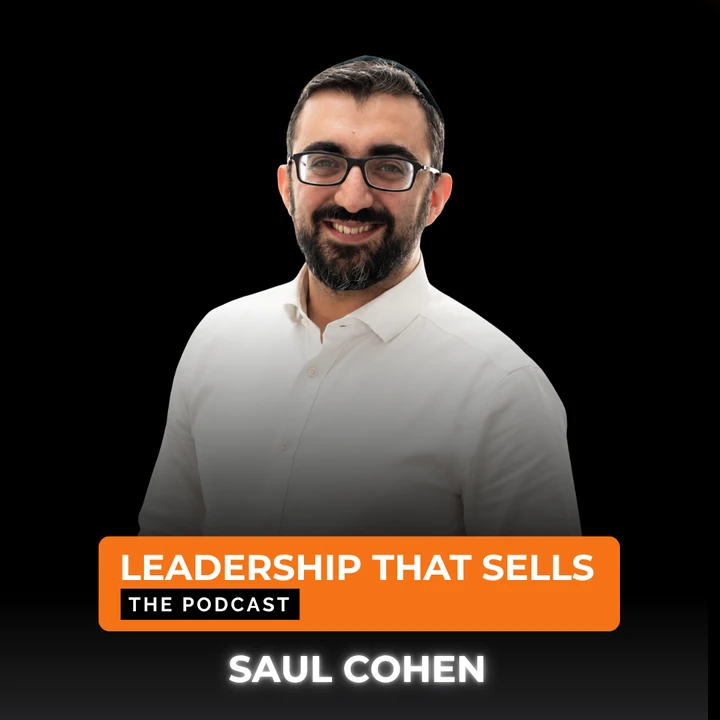
How to Build a Business Buyers Trust
with Saul Cohen
Show notes
One of the biggest mistakes founders make is believing their business will be valued for what it means to them. It won’t. Buyers pay for predictable cash flow and reduced risk, not emotional attachment. That’s why this conversation with Saul Cohen matters.
We unpacked what really drives business value before an acquisition, why so many founders accidentally damage their exit, and the commercial disciplines that genuinely increase enterprise value. If you’re building with an eventual exit in mind, this episode is well worth your time.
In this episode
If you want to build a business that’s worth more tomorrow than it is today, start here.
- Build systems that reduce dependency on you.
- Turn founder-led selling into a repeatable commercial engine.
- Treat culture as a business asset, not a soft skill.
- Understand how buyers think long before you decide to sell.
- Focus on reducing risk as aggressively as increasing revenue.
Episode highlights
- 01:36 The most expensive leadership blind spot before an exit is usually the founder’s own ego.
- 11:03 Business value is driven by cash generation multiplied by perceived risk.
- 13:20 Saul introduces the SCORE framework for increasing enterprise value.
- 15:50 Founder-led sales eventually become a valuation problem.
- 19:24 Why most founders are unconsciously competent and why that makes scaling harder.
- 24:49 The emotional mistake that destroys value during an exit.
- 30:20 Saul explains his people-first approach to acquisitions and private equity.
Links and resources
- Saul Cohen
Linkedin : https://www.linkedin.com/in/cohensaul/
Website : https://theexperteye.co.uk/ - Free business valuation call
https://api.leadconnectorhq.com/widget/booking/2vJaGhCvAJxnEB4OntBb
Thanks for listening to Leadership That Sells. If you found this episode useful, please follow the podcast, leave a review, and share it with another founder, MD or senior commercial leader who is building a business for long-term value. Your support helps more of the right people discover the show.
Transcript
Automated transcript. Speaker labels and spellings may contain errors.
Paul
[upbeat music] My guest today is a sharp acquisitions advisor, and he helps founders turn financial discipline into enterprise value. That's what we're all about, I think, isn't it? He's supported over 100 transactions worth more than 450 million of His Majesty's British pounds in acquired revenue. He's led diligence in high-stakes deals, and he has built founder-side exit confidence, which is a thing that many of us lack. He's an economist turned chartered accountant, and he now helps owner-operators buy smarter, grow stronger, and exit richer. Thank you, and welcome to Leadership That Sells. This is a podcast about the real conditions where leadership and sales actually work, and where they quietly break down. And I like talking to founders, to chief execs, to sales leaders, and operators really who have had to make decisions when the effort was high, when everything was going right-ish, but the pressure was real.
By then, all of a sudden, the usual playbooks stop fitting. We're not here to trade slogans or magical five-step frameworks, even though some of them are good. What we're here to do is to surface patterns, what consistently creates momentum, what gets in the way, and then what experienced leaders eventually learn to stop didding, doing. So if you are responsible for results, not just for ideas, you're absolutely in the right place. That said, Saul Cohen, thank you very much indeed for joining me.
Saul Cohen
Thank you so much for having me on. Look forward to the chat.
Paul
Absolutely. Absolutely. Um, so you, you've done more than 100 deals, okay? That's fair enough. That's good. That's some, some decent experience. What is the most expensive leadership blind spot that you see that founders repeatedly miss before they get to an exit or an acquisition?
Saul Cohen
[laughs] Their own ego. Um-
Paul
Ah.
Saul Cohen
[laughs]
Paul
How important they are and how essential they are.
Saul Cohen
Yeah. Um, look, I, I think, I think with anything, um, you know, knowle- knowledge is like a circle, right? And what you know is inside the circle, and what you know you don't know is the perimeter. And as you learn more, your perimeter gets bigger. You know that you don't know more. Um, and I think the biggest issue in acquisitions is that there is so much that you don't know that you don't know. Um, and I have seen pretty much a circle of the same issues play out over and over and over again, right, by now. Um, and generally, when things go bad, it's, it's one of... it comes down to one of two things, either cash flow or the people in the business, the culture of the business. Um, and I think that that, that...
But really, those two things actually come down to one thing, and that is the owner not knowing what they don't know, um, or the, the acquirer not knowing what they don't know. Because, um, you know, when you know that you do- what, what you don't know, what it is you need support with, you can go out, you can build a team around you, you can get the right advisors in next to you, you can get support, um, and you c- you can ask a question. But if you don't know that the question needs to be asked, you, you, you think you're in the worst possible position because you think that you are okay, and actually your head's in the sand and you haven't even realized.
Paul
I mean, the first thing, I mean, I've, I've done a bit of advisory and helped quite a few people get to different places in exits, acquisitions, and stuff. And one of the first things that I'm always pointing people towards is the library, right?
Saul Cohen
Mm.
Paul
Go to the library. Go to Amazon. Go and buy, um, you know, Intelligent M&A. Go and buy, uh, Merger, Mergers and Acquisitions for Dummies, you know? It's, uh, not hard stuff really when you get down to it. It's, it's... There's, there's a lot of finance, there's a lot of law, there's a lot of bits and pieces like that. But go find out. Go find out what the, what the, what the process is. It's a fairly well-trodden path.
Saul Cohen
Mm. Um, and I think, you know what, we, we live in a world where there's so much availa- uh, information available for, to us. There is, it, the, the problem... But, but again, you know, even when you think about with AI, right? I can ask AI anything.
Paul
Mm.
Saul Cohen
But the, the quality of the response-
Paul
Mm
Saul Cohen
... is always based down, based on the question that I ask it.
Paul
Yes.
Saul Cohen
Right? So if, if I ask it to tell me about AI, it will g- uh, a- about acquisition, sorry, it will give me a whole load of really useful information about, you know, how to do diligence and what financials to look for and all of that stu- good stuff. Really, really good. But will it tell you how to manage the thing afterwards? Will it tell you how to create emotional safety with your team? No. 'Cause you, you didn't know that you needed to ask about emotional safety with your team and sort of psychological safety and, and, and creating an environment where your team, uh, your new team who have been through this change, you, you, you haven't even thought about the fact that you need to get them on board. Unless you know, unless you've heard someone te- talk about it, um, you, you, you're not aware of these things. Um, and actually, I'm, I've, I've got a book coming out towards the end of the year, um, just after the summer.
And, you know, one of the big things that prompted me to write that book was I saw two people make an acquisit- or make a de- but have, come to a deal, right? Business seller, fantas- ran a fantastic business. Um, a business o- owner that I really re- re- respect. Actually, I still, still really respect him. Um, does incredible things in business. Sold a £3 million business making about 600K profit, really nice, tidy business, um, to another business owner that I also respected at the time, um, that had made acquisitions before. And I thought, "This is the perfect deal. It's gonna go really well." And post-completion, almost I, I choreographed every decision that the new owner had made- I looked at it and I'm like, "Why is he doing that?
That's interesting." And I defaulted to, oh, you know what? He's made acquisitions before. I'm sure he knows what he's doing. And lo and behold, what, what I thought would happen happened, and, you know, you get to three years down the line, the business is on its knees. It's, it's a fraction of what it was. You know, the whole relationship's, uh, in, in flames. Um, and that really, it, it made me turn around to think. I was like, there, there, there is a missing piece here. There's so much that people still don't know, and that, that's actually why, what drove me to do that. But important thing is, is that there, there is little bits in there, there's nuggets of information that you just need to know that you've got the right people around you to flag.
Paul
Yeah. Yeah. And it's one of those ... I think it almost goes back to knowing what you don't know. It just always goes back to the whole entrepreneurial CEO type, and I've worked with a lot of people like that through my entire career. Now I got the opportunity to be brought up in a relatively corporate environment, but it did have, at the very, very top of this fairly large business at that point, an entrepreneurial CEO. And you get brought up and you learn what to do and what not to do, and what you can do, what you can't do, and how things work, and how you read a balance sheet, and how things ... you know, what people are all about, how to lead, how to manage, all that sort of stuff. And I talk about the, the trail of destruction I've left behind me in all these people's lives [laughs] as I've marched through it, pretending I knew what I was doing.
Hopefully I'm a bit better now. No promises. But you don't get that if you were the entrepreneurial CEO, you were the founder. You jumped into something age 20-something and said, "That's me, I'm the boss," and you've been the boss for 12 years, 15 years, 20 years, and nobody's ever stood up to you and said, "Mate, what the hell are you doing? You have no damn clue what you're on about." Because they've been the boss, they've never thought to stop and ask, A, is this how you can deal with people? And they tend to have problems dealing with people that are either tech founders or something like that. Or, B, what do I ... uh, could I be wrong?
Saul Cohen
Mm.
Paul
Could I be wrong, right? These are huge things. So it's ... And I think, like you said, it's the, the team in there, and the cashflow, and they're both intrinsically linked. One leads to the other, right?
Saul Cohen
Yeah. I think it's an interesting thing 'cause, um, there's not really any school for entrepreneurship. Um, you know, the ... No, no one to-
Paul
School of life, mate. School of life
Saul Cohen
... Y- exactly. You, you jump off the cliff, and you build a plane while you're flying it.
Paul
Yeah.
Saul Cohen
You know? I ... Yeah. [laughs] And, and it, and it ... it really is like that.
Paul
Slow motion.
Saul Cohen
Yeah. [laughs]
Paul
[laughs]
Saul Cohen
Yeah. Um, I mean, for me, you know, I, I, I made s- I'm, in, when running my practice, I ma- I made loads of mistakes. Um, I'm, I'm sure I'll make more. Um, and, and, and you just-
Paul
Oh, we are
Saul Cohen
... that, that, that's what, that's all we've got to learn off, um, and to learn from. And, uh, I th- I, I think that's, that's really, really what it comes down to. And I think that sometimes what you find, generally actually, the most successful entrepreneurs that I've met are always really humble people, really keen-
Paul
Mm
Saul Cohen
... hungry to grow, hungry to learn. Um, and they, they'll learn from anyone, and they're very generous with their time. Incredible people, which is why I love working with them. Um, but what I think is a hon- is sometimes it's quite interesting to know is that when someone's achieved a level of success, um, what sometimes happens is that they've achieved that success in an uneven way. So maybe they're really, really, really good at getting sales, right? And so as a result of the fact that they're really good at sales and marketing, they might have driven their business to £5 million revenue a year and, and it, and it, it might be making a profit, but they might be terrible at building out the team, and so they've got
terrible culture and whatever. And actually, if they would've, if they would fix that one problem, they, they could be a £30 million business because-
Paul
Yeah
Saul Cohen
... they're so good at, they're so good at sales.
Paul
Mm.
Saul Cohen
But they haven't realized that they've got that problem yet. They just think that that's what the world looks like. Because in their sphere, that's all they've ever known. Um, and being an a- being an accountant doing acquisitions, I, I'm, I'm quite privileged in that I can see, I can see those things 'cause I c- I can compare against other, other businesses and, and the others and what they're doing and, and how it works. Um, so I think, I think that's really interesting.
Paul
So as you're comparing across these businesses and you're, you're doing this across ones that are successful, ones that are not, and you see them after the fact as well, what would you say are the, the disciplines, like operational disciplines, reporting disciplines, that really make a business feel high value or premium to a buyer-
Saul Cohen
Yes
Paul
... way before they actually get into the DD?
Saul Cohen
Okay. So, um, well look, do you know what? Let's talk about value, because that's what it, that's what it comes down to. It comes to, to the value of a business. Um, and you won't be surprised to, for me to say is that in most small businesses the ba- the, the, the value of the b- the business is valued based off of the cashflow potential that it can, it can generate, right? Um, you know, if you think about a tech business, that's valued on the potential of that technology, the potential of that IP. Um, but for most SME businesses, you know, your, your solid businesses that are doing really good profit but, you know, they're, you know, smaller, uh, you know, sort of let's say sub 30, 50 million revenue, um, you know, than most of the economy.
Um, for all of those businesses, they're valued based on the cash that they can generate for an investor.
Paul
Yeah.
Saul Cohen
Now, to, for me, the, in, in, in, in the way that works is we take their profit that they earn or t- their earnings, which we call EBITDA, but essentially what that is, just think of it as your earnings or the cash earnings of your business, and then we apply a multiple based off of- How risky I think this business is. So the less risky, the higher the multiple; and the more risky, the low [laughs] , the lower the multiple. Really is actually that simple. Now, the first part of that is your earnings. If you don't have good accounts, if I can't trust your accounts, [laughs] I can't trust your earnings figure. So there's almost not even a conversation to be had. So accounts, non-start. Uh, if no, no good accounts, it's a non-starter.
We can't really have a conversation 'cause I've got no information for me to use to put a genuine, a value on your business. Um, and then I've developed sort of what, what I call a, I think a framework, um, that, you know, just based off of the 150 acquisitions that I've seen, um, you know, what, what were the commonalities and how did that sort of link to what I said to you about the risk and the multiple? How does that link to the multiple? So I've called it sort of the SCORE framework. Um, and so just makes it easy for me to remember. [laughs] Um-
Paul
Got it, SCORE. That's S-C-O-R-E, right?
Saul Cohen
Yeah, exactly.
Paul
Right.
Saul Cohen
So we've got systems, um, which, you know, that again, not surprising. Um, commercials, so your sales, your sales pipeline, how mature is that process? Um, your organization, so, uh, the team that you've got. I mean, and, and, and let me stop on that for a second b- and just remind you that in a small business, the asset, the main asset that you're buying is the team. It is the culture. It's their knowledge of their industry. It's their knowledge of their systems. It's their knowledge of their customers, their suppliers. So that on... Really, uh, easy to overlook, but massively important. Um, then it's the regulatory environment, so legals, what, what do your contracts look like, et cetera. Um, and then the last one doesn't... Um, it's sort of a cap on the whole system, and that's exposure.
So what's, what's your risk, um, inherent in the business? You know, if you've got maybe, like, let's say you've got three clients that apply, that, that account for 90% of the business, and if you lost one of them, all the profit eva- evaporates. Very high risk. It's gonna cap your multiple because the, uh, the i- irrelevant of the... It's almost irrelevant the fact that all the others are really good. You've got this incredible risk that's there, that's glaring, that's gonna cap the multiple. So that's sort of how it works and, and what we do and, um, internally, we've developed a bit of a sort of a, a ca- a questionnaire so we can go through each of those areas and sort of give a business a grading so that we can put some science around this, you know, notion of applying a multiple to a business.
Paul
Nice. Nice. Now, the fundamental bit there, you're saying, is basically how much money you're making. Right?
Saul Cohen
Absolutely, yeah.
Paul
In the context of risk and team and the commercial environment, it's how much money you're making and how much of that do you get to keep at the end of the day. Okay? And what's your profit? How, in your experience, do commercial leaders, and many of the people listening to this are gonna be in that bucket, how do commercial leaders almost accidentally grow their revenue in ways that reduce the multiple rather than increase it?
Saul Cohen
Um, I think the biggest way in which it's done is that it all, all the sales relies on them, and it's almost counterintuitive 'cause at the beginning of your business, you want all your sales to rely on you. You are the most powerful asset in your business. Right? For the first, first million, maybe even £2 million of revenue, you, as in the business owner, are the most important asset in that business. Business does not function without you. Um, and you wanna make sure you're front and center 'cause no one's gonna sell your product with the same amount of passion, conviction as you are, and so you need to be front and center, um, in, in that sales engine. Um, and honestly, the issue that I find actually is that most pe- most entrepreneurs that I speak to, um, not all, but most, do tend to like that sales part of the, of the process.
They, they really enjoy it. They get a lot of, um... They get the buzz. Um, a lot of buzz.
Paul
They're the hero. They're the hero of the story.
Saul Cohen
Absolutely. They love being the hero. Um, and, uh, yes, and, and, and I think that, that, that that can't continue when you're looking at an exit because I think an investor will know that it's going to lose... A business will lose its entrepreneurial stardust. It's going to lose that, and we're gonna need to find a way to replace it, um, and mitigate that, that risk and that loss. But if the loss is too great, if you own all the client relationships, if all the clients have no relationship with anyone else in your team other than you, um, if you're the only one who knows how to sell the product, if you're the only one who even knows the pricing, uh, how to, how to work out pricing of your product, um, you know, then, then you're making it almost impossible for an investor to come in and, and actually take over.
Paul
So I mean, you've got... You're the hero. The, the, the, the salesperson, the commercial leader, uh, and the founder are all the same person, and the relationship with the customers is n- it's with them and not the business.
Saul Cohen
Mm-hmm.
Paul
They're the hero, and to some extent they want to make themselves the hero because that's actually the, the, the face of the business is the founder. What is it that you're then... What do you need to do- I mean, 'cause what I see is you wanna try and move from founder-led sales, and I get a lot of conversations with founders who say, "Oh, I'm fed up selling. I don't wanna do this anymore. I need to step back." I said, "Mate, you can't do that. You, you have to keep doing this for, like, another two years. And even if you are acquired-
Saul Cohen
Yeah
Paul
... you're still gonna be doing this for at least another two years to, for... Because to st- to stand up an enterprise sales motion is gonna take 18 months. Easy.
Saul Cohen
Yeah.
Paul
I don't... I mean, I can bring in the very best enterprise salesperson. It'll take 18 months. It really will. So, you need to be keeping on going-
Saul Cohen
Mm-hmm
Paul
... um, for that length of time. If you then look at that founder, and you need to try and see if they understand how they do what they do, I think. 'Cause if it's just, "Oh, I just go and talk to people and have some phone calls, and money comes." Right, okay.
Saul Cohen
Yeah.
Paul
What, in your opinion, is the one diligence question that, that really just instantly reveals whether or not a founder really understands their own magic, their own growth engine?
Saul Cohen
You know what? It's interesting. Uh, [laughs] I don't even ask it 'cause I know that they don't. [laughs]
Paul
[laughs]
Saul Cohen
Um, because the truth is, is that most founders are unconsciously competent.
Paul
Yes. Yes.
Saul Cohen
Um, what we do is we do monitor how they operate in the business. How much time do they spend in the business? How much does the business rely on them? What does their email... What does their, what does their emails, you know, in- in tray look like? Um, that sort of thing. But most founders are unconsciously competent. They will tell you that they're not doing much, but actually they're doing loads. Um, they can't always tell you exactly what they're doing. They can't tell you how they're doing it. They can't tell... And I think what we, at the beginning, we used to try asking questions like, you know, well, you know, how much of the sales do you do, and how mu-... It's, it's just irrelevant. It, it, it...
The, the questions... It's not because people are trying to be disingenuous. It's... I, I, I actually think they're just-
Paul
Enjoying it
Saul Cohen
... they've just become s-... Yeah. Yeah. I think they've just become so unconsciously competent at what they do. It's just second nature to them. They don't even think it's that special. I think that's why they also struggle with hiring, by the way.
Paul
Yeah. I, I see. It's huge.
Saul Cohen
Because, because it's the same thing. They just think, "Oh, I'm not that special. I'll just get someone who's like me, and they'll fill in." [laughs] No one's like you.
Paul
Which is sometimes a bad thing and sometimes is a good thing.
Saul Cohen
Yes.
Paul
But-
Saul Cohen
Absolutely
Paul
... if you then think fr- a bit again to that founder, what are the, again, commercial, because it's all, this is all, uh, the, I think the cure for pretty much any business problems, I think, is a good pipeline.
Saul Cohen
Yeah.
Paul
Uh, what commercial decisions that somebody makes today are the ones that are gonna most reliably expand that multiple later?
Saul Cohen
Do you know what it is? It's, it's about having a documented, very clear, easily replicated process for building a pipeline.
Paul
Okay.
Saul Cohen
Okay? Yeah. At the beginning, all your clients are gonna come to you because of your reputation, your personal reputation, and that's fine. Lean into it. Richard Branson, you know, he leans into it all the time. You know, it, it's absolutely fine for that to be the beginning. But afterwards, you need to have something that's gonna follow up outside of you, outside of just, "Oh, I'm coming to work there because Saul, I like Saul," or, you know, "Paul's great, and so we're just gonna go and, and we'll do the consulting." N- needs to be people either they've heard about the na- they've heard the name of the brand in your local area or, um, you know, that's, that's your ideal referral engine. Or you've got a, a network of referrers who refer your business. Not you specifically, your business. They refer your business. They love the way your business works.
And some of that actually does come down to the operations.
Paul
Mm-hmm.
Saul Cohen
Because, you know, generally, if I think about it in my business, if we're really good with, um, let's say, um, m- mortgage brokers, right? If we give mortgage brokers what they need really easily, really quickly, mortgage brokers love working with us, then what happens is when a client has a really difficult accountant, they say, "I'm not so happy with my accountant," mortgage broker says, "Oh, you know what? Well, these guys are great. Why don't you go and work with them?" Um, and it's like that in almost every industry, that there is, there are people who will refer work in and, um, or you might have a pipeline, um, you know, social media presence, all of that stuff. Those are assets. Um, Daniel Priestley talks about it in his book, 24 Assets. You know, uh, uh, this fantastic book. It's actually-
Paul
Mm
Saul Cohen
... b- right behind me. Um, but the, he's absolutely spot on when he said it, that, um, those things, those marketing assets that you've got, those are genuine assets in the business, and they don't show up necessarily on your balance sheet, but they do show up in your multiple. And when you have, you, when you've got really good marketing assets, and you can demonstrate that they're really good because you can demonstrate the pipeline, and you're very good at predictably saying, "This is when we're gonna... This is all the work that we're probably gonna win. And I can tell you that I know that we're gonna win 200 grand worth of work in, in three months' time because it, this is how it works in our, in our, in our pipeline and, you know, I, we just, we know how the pipeline operates," an acquirer, it makes it very easy for an acquirer.
'Cause as you say, everything is downwind of, of lead gen and the commercials. And when, when I've got bus- when I've got business coming in, I can almost, I can make any decision work. Um, I might need to rearrange things. I might need to change profitability. I might need to support the team. Whatever it is, I might need to fill gaps, but I can do it because I've got cashflow coming in because I'm making sales.
Paul
That's it. That's it. Where... So if that's what is gonna expand the multiple, where do these same people, these same founders- ... destroy the post-exit wealth that exists just by making poor decisions?
Saul Cohen
Um, [sighs] well, the first thing is not do-
Paul
Avoid this. Avoid this. [laughs]
Saul Cohen
Yeah. The first thing is, is, is making assumptions about the valuation. Right? Um, I think that most owners that I've ever encountered have at some point or other assumed that their business is worth a lot more than it's actually worth. Normally-
Paul
10 times revenue maybe.
Saul Cohen
Yeah. [laughs]
Paul
No.
Saul Cohen
Yeah, yeah. [laughs]
Paul
A long time ago.
Saul Cohen
Yeah, yeah. I mean, I, I think, uh, the, the ... I, I do think the exaggeration has become a little bit more realistic these days. When I first started-
Paul
Six times revenue? No.
Saul Cohen
Yeah. [laughs] Exactly.
Paul
Just no.
Saul Cohen
[laughs] Yeah. Um, yeah.
Paul
Three? How about two? Yeah, you're getting close, sunshine. [laughs]
Saul Cohen
[laughs] Um, so yeah, I th- I, I think that, that unrealistic expectation. What, what ends up happening, which is, is absolutely bizarre, I still don't really understand it. Business owners are incredible people. They're re- often the ones who are really successful, they're, they're savvy, they're shrewd. You know, they're, they're, they're organized. They understand their market. They understand commercials of selling. Um, as we said, they're humble people, care about the world. Somehow, you know, when they're selling their house, they know exactly what they're doing. When they come to sell their business, somehow they've, they stop acting on fact. Uh, they stop thinking about what are the mechanics. I think it's because it's all so intangible, and they're not used to it. But they stop thinking about their buyer. They stop thinking about, you know, what does my buyer's mindset look like?
When, what, how, how's my buyer thinking? What do they care about? What are they interested on? Suddenly it's just about I'm selling my baby. [laughs] Well, well-
Paul
Yeah
Saul Cohen
... my, my baby's worth like 50 million to me. I don't know. You've ro- you've come here offering me 500 grand. You know, [laughs] you, you ... I'm the one doing you a de- uh, uh, uh-
Paul
Yeah
Saul Cohen
... I'm giving ... I'm, I'm doing you a favor here, um, type thing. And actually, I think that's what it is, is, is there's so much emotion involved. You have to s- almost remove the emotion from, from the deal, and that, that is really difficult, um, because it ... there's, there's identity play, there's psychology involved. It ... There's so much going on. Mergers and acquisitions is more about people than it is about numbers.
Paul
Yeah.
Saul Cohen
Um, and but in, in terms of coming back to that mistake, I think the biggest mistake is not acting on fact. And I always tell people to get valuation of their business, make sure that they understand their business, and start preparing your business for an exit before you're ready for the exit. Because what happens o- often is we get people coming to us. Most of our clients are doing acquisitions, right? Because most of our clients will come to us for tax planning. We'll support them with tax planning, give them a bit of extra income, support them then to make a couple of acquisitions, and then prepare for an exit. And when you do it that way, you understand the process a little bit better because you've been in the acquirer seat. Um, and so you, you, you can sort of im- enhance your acquisit- or your exit yourself because you understand the process more.
Um, but lots of people come to us from the exit side, um, and sort of say, "Look, we're looking for an exit in a few years' time. Can you help us?" Yeah, fine. That's great. But most people will come to us and say, "I need to sell this business. How long is it gonna take me to sell? And what can I do to get the most valuation?" And at that point, they're already tired. They don't have what it takes to go in and start changing systems. So we're doing damage limitation rather than let's make it as, as, as great as it can be. Um, and then there's, there's a big difference between those two things. I think people don't reali- it takes 18 months to sell a business minimum. And that, that is a business that's ready for sale takes 18 months to go.
To find the right buyer, negotiations, to get to head to terms with the right buyer, sign exclusivity with under, under head to terms, and then complete the deal with, with diligence. I've seen them drag on for years, um, unfortunately, [laughs] you know, in, in difficult cases because the business wasn't ready. Um, so you know, and people, I think, leave it too late, um, and then, then they're in sort of a more difficult situation and end up selling out of need rather ... necessity rather than-
Paul
And, and 18 months, by the way, when you're doing this, your business kee- has to keep going.
Saul Cohen
Exactly.
Paul
It has to keep being profitable. It has to keep growing despite you, the founder, now being dragged from pillar to post and doing different things.
Saul Cohen
Absolutely. Yeah. Which is really difficult.
Paul
So hard. So hard to do. Uh, so what's exciting for you right now? What are you working on? You said you've got a book coming out.
Saul Cohen
I do, yes. I've got a book coming out at the end of the year. Um, that is, uh, well, um, not the end of the year, I should say. End of the summer, towards the end of the year. Um, so it's currently coming out September. Um, we've, we've just dropped the wait list for that, which is going really well. Um, uh, I am [laughs] ... I have done 150 acquisitions for other people or more than that, and I've stopped counting now, um, which is an insane number actually when I sit and think about it. Um, but never done my own. Uh, I've sold a business but never made an acquisition myself. Uh, and I am working with someone at the moment. We're just launching a ... Well, well, we've launched actually a private equity fund.
We've raised a bit of capital, um, and we're going out to make a, a number of acquisitions. So that is, that's really exciting.
Paul
So what's-
Saul Cohen
And then I run my firm. [laughs]
Paul
Wow. Well, what, what's your thesis then? 'Cause when the, the, the people listening to this may well be of that interest.
Saul Cohen
Well, for us, we want to be ... We don't want to operate as, as standard private equity operate. Um, we want it to feel like- You know, [sighs] a, someone who's gonna maintain my culture and my values is coming to take over the business. Our, our, our modus operandi is not about, you know, strip it and flip it.
Paul
Mm.
Saul Cohen
What we wanna do is we wanna take really good businesses with really good cultures, empower their teams, um, create, you know, a, a, a leadership. We'll need to, uh, sort of create that, uh, five-star leadership, uh, shall we call it, because we've got a five-star leader exiting. Um, and so we'll need to create a new tier of five-star leadership, empower their teams, and let the businesses grow together. So we'll probably bolt them on, let's say, garden maintenance. We'd bolt them on with a number in, in the same area, in the same industry. Excuse me. Same industry. Um, and then build it up for a wider exit in a number of years. Um, but absolutely it's, it's about building on what's there, on, on, on the cultural assets that already exist rather than just sort of saying, "Oh, well, here's a nice client base.
Let's just bolt that on with something else and, and get rid of the team and, and all of that sort of stuff." Not at all our-
Paul
Yeah
Saul Cohen
... our way of working. Yeah.
Paul
Any particular scale, uh, sector?
Saul Cohen
Uh, so we're, we're actually looking earlier than private equity. So, uh, private equity normally don't really get involved at below 1.5. I've seen some of the smaller private equity houses-
Paul
EBITDA.
Saul Cohen
Yeah. Um, I've seen one of the smaller ones, uh, some of the smaller ones now starting to get involved a little bit lower, about 1 million. For us, we're looking at sort of the half million, um-
Paul
Oh
Saul Cohen
... and, and, and between half million and, and a million. Um, the idea- our idea is, is to maybe buy, you know, four or five, grow it, keep it nice and stable in an industry-
Paul
Right
Saul Cohen
... and then at some point sell it out to a family office.
Paul
Mm. I mean, the challenge I've always seen with trying to do that when you're ... The reason if you get below the, the million, below the 2 million thereabouts is just simply the cost. The acquisition cost, the DD cost, the legal cost.
Saul Cohen
It's the same, isn't it?
Paul
Yeah, yeah.
Saul Cohen
Yeah. [laughs]
Paul
It makes it unprofitable.
Saul Cohen
It's really interesting, isn't it? 'Cause it does, it take, it takes exactly the same cost to do-
Paul
Yeah
Saul Cohen
... a business at a mi- well, not exactly, but pretty much the same to do a deal at £1 million in, in, in revenue as it does to do one that's 10 million in revenue. Um, the reason why we're looking ... We, we just think that's not, we think that's a really big opportunity area at the moment.
Paul
Oh, it is, for sure.
Saul Cohen
There's so many, there's so many in that mark. You're, you're right. The, the upfront costs are a little bit heavier. Um, and the management in those businesses isn't as mature as it would be in a 1.5 million EBITDA, uh, business, which is why ma- uh, private equity don't, don't really look at, at that level.
Paul
More work.
Saul Cohen
Yeah. Um, but, you know, we think with building out the right sort of management structure to, to manage the group, we think we can do it. So that's the plan.
Paul
Yeah. Where do, where do people find you when you have some, uh, opportunities for you?
Saul Cohen
Um, well-
Paul
When we need you, when we need you
Saul Cohen
[laughs] So look, LinkedIn is, is always the best place. I'm always on there posting, keeping things, uh, active. But, uh, I, I do have an offer, uh, for anyone that ... When I've, when I've been on a podcast, we do, we do, um, a valuation call where it's sort of like a, a half-hour call we can go through and just give you an idea of what your business is roughly worth. Um, obviously it's not, um, W- War and Peace and it is, it's not like a full deep dive or anything like that, but it's a half an hour absolutely free for anyone who's coming off of a, a podcast. I'll give you that link. Um, and but also I can give you the book waitlist as well.
Paul
Absolutely.
Saul Cohen
So the book is coming out in September, so I will give you the waitlist for that.
Paul
Well, so we'll make sure that those links, uh, when you send them through, we'll get them into the description on this, uh, in, in, in the episode here. And, uh, I highly encourage anybody in Evergreen to keep an eye out on Saul Cohen and what he's doing. He's very interesting stuff here. Obviously an experienced operator, and, uh, with some great potential. I look forward to reading the book. Have you got a title for the book yet?
Saul Cohen
I do. It's called Finding Gold.
Paul
Ah.
Saul Cohen
[laughs]
Paul
Oh, really? Finding Gold. How's that? Well, that's magnificent. Saul Cohen, all that remains for me is to say thank you very much indeed for joining me today.
Saul Cohen
Thank you. [outro music]