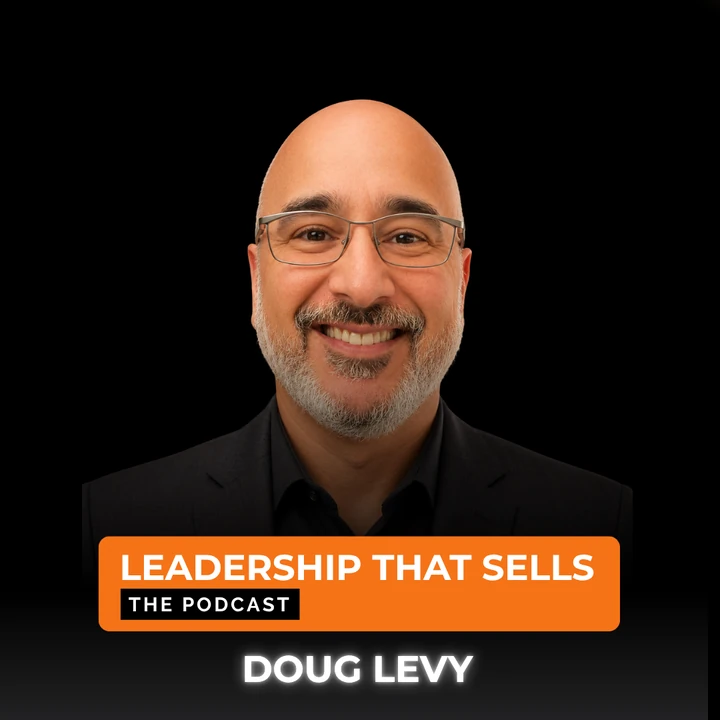
How to scale margins without scaling chaos
with Doug Levy
Show notes
Everyone talks about scaling. Far fewer people actually do it.
In this conversation with Doug Levy, we unpack what real operational scale looks like. Not adding people because revenue is growing, but building a business where productivity outpaces payroll. We also get into why founders become the bottleneck, why poor hiring quietly destroys EBITDA long before anyone notices, and why disciplined systems create freedom instead of bureaucracy.
In this episode
Here’s what I’d take away from this conversation.
- Stop delegating tasks and start delegating problems.
- Build systems that allow good people to operate without your constant intervention.
- Scale revenue through operational discipline before adding headcount.
- Hire with discipline because poor hiring quietly destroys profit long before it shows up in the numbers.
- Reward the behaviours you actually want repeated across the business.
Episode highlights
01:30 The biggest operational lie founders tell themselves.
03:18 Why delegating problems beats delegating tasks.
07:45 What real scaling actually looks like and why hiring more people isn’t the answer.
10:48 The leadership challenge of turning generalists into specialists.
15:10 Why poor hiring quietly destroys EBITDA years before leaders notice.
20:20 The hardest leadership lesson is usually found in the mirror.
24:08 The leadership principle every organisation eventually reflects.
Links and resources
If you enjoyed this episode, I’d really appreciate it if you followed the show, left a rating and shared it with another founder, MD or senior commercial leader who is trying to build a business that scales without unnecessary complexity. Thanks for listening, and I’ll see you in the next episode
Transcript
Automated transcript. Speaker labels and spellings may contain errors.
Paul
[upbeat music] My guest today is a former COO who turned disciplined operations into enterprise value like we all love to see. He helped scale a 45-person service business by 300% in revenue while, wait for it, headcount rose by 20. He protected retention below 9%, he helped drive a private equity exit at a record EBITDA multiple, and today he spends his time helping founder- founders eliminate profit leaks and scale without the operational drag. A very warm welcome to Leadership That Sells. This is a podcast about the real conditions under which leadership and sales actually work, and where they quietly break down. I like to talk to founders, to chief execs, sales leaders, and operators who've had to make the decisions when effort was high, when the pressure was real, and the usual playbooks didn't quite fit. So we're not here to trade slogans or fancy frameworks.
What we're trying to do is to find, to find patterns, things that consistently create momentum and what gets in the way, and what experienced leaders eventually learn to stop doing. So if you are responsible for results and not just ideas, you are absolutely in the right place. Doug Levy, thank you very much indeed for joining me.
Doug Levy
Thank you for having me, Paul. I'm looking forward to chatting with you today.
Paul
Absolutely. Listen, big first one off the bat. Revenue's growing-
Doug Levy
Yep
Paul
... but your founder is trapped up to their ankles in the day-to-day stuff. What is usually the first operational lie the business is telling itself?
Doug Levy
That's a great question. I would say the first operational lie the business is telling itself in that situation is really a lie that the owner is telling himself or herself, which is, "This business needs me to do this specific thing," because that's usually not true. A business that's growing has, uh, a- an owner or founder who has surrounded himself or herself with competent people that can do things, but when this person continues to get in the way and continue to meddle in the day-to-day where they're not needed and where other people surely have the skillsets to handle things, that's where things start to get a little, a little sticky.
Paul
They're doing things they shouldn't be doing.
Doug Levy
Yep. Absolutely.
Paul
And-
Doug Levy
And a lot of times they just ... They don't have the tools or the discipline to tear themself away or they're not, they're not ... They need somebody to kind of ... I- instead of them taking a trust fall, they need somebody to kind of push them off the ledge. I've had to do that in a number of cases and say to, to a, to a founder, "Your manager can do this. The person at the front desk can do this. This pers- you d- you don't even need to be involved. You don't need to be looped in on the email. You don't need to know what the outcome is. They've got it. You focus on, on whatever your strengths are."
Paul
It was one of the best things that I learned how to do was to delegate well.
Doug Levy
Yep.
Paul
And-
Doug Levy
Yep
Paul
... delegate, and to be comfortable that once you've delegated, it's been delegated.
Doug Levy
Yes.
Paul
'Cause if you've learned how, you learn how to do it well, and you don't just fire and forget, but you, you structure what you're doing. So you s- you're talking about you're delegating. Rather than delegating a task, you're delegating a problem.
Doug Levy
Yes. Yes.
Paul
I, I don't want you to do this, I want you to solve this.
Doug Levy
Yes.
Paul
And-
Doug Levy
And the key, and the key to that, I think, is, is understanding and tempering your expectations, because when people delegate, they often do so with the mindset that, "I expect this person to do it exactly the way that I would."
Paul
Mm-hmm.
Doug Levy
And that's simply not the case. So in order to grow, in order to grow soundly and peacefully, you have to let people do things the way that they would do them, and you even have to let them screw up a couple of times-
Paul
Yeah
Doug Levy
... and learn from those mistakes. So I think the reason that people don't delegate is they often say, "This person just can't or won't do it the way that I can and would and do," and that's not the objective.
Paul
I mean, the objective is to surround yourself with sm- people who are smarter than you. If you're the smartest person in the room, you've got a problem where you're hiring.
Doug Levy
Absolutely. Absolutely.
Paul
If, if you're the A player, you should be hiring A pluses.
Doug Levy
Absolutely.
Paul
If you're the B player, you're hiring Cs, right? Let's just, just don't do that stuff.
Doug Levy
Absolutely.
Paul
You know, fil- hire to fill in your gaps, and if you don't know what your gaps are, go find out.
Doug Levy
Yep.
Paul
Any number of tools out there that'll do it for you, you know?
Doug Levy
And even, and even subordinates. I mean, it, n- I, I don't think that you have to necessarily have everybody around you be better than you, but even, you know, things ... You have to delegate things downstream. You have to delegate to people that are below you in the hierarchy. Obviously not in a human way, but in, in a business hierarchy. And those people may not be as good as you is, at something, but if they could do it 90% as well as you can because you've taught them and you've put the systems in place, then let them do it. Because, because you offloading your capacity to them and them doing it at 90% of your capacity is a win.
Paul
Yeah. Totally. Well-
Doug Levy
It's a win. A lot of people don't see it that way.
Paul
Well, it's ... I think it goes to hiring as well. You go, go, you go all the way back to, I think, 80% of people problems are solved by hiring.
Doug Levy
Yep.
Paul
You know, you hire better.
Doug Levy
Yep.
Paul
Hire somebody you'd want to work for.
Doug Levy
Yeah.
Paul
Especially if you're hiring a leadership team. You want ... You ... Who knows what will happen, you know? Maybe one of these guys will be tapped up by the board, and maybe you'll step to one side or whether at some point you ... Who knows what's gonna happen?
Doug Levy
Mm-hmm.
Paul
Um, so hire people you'd be comfortable and want to work for-
Doug Levy
Mm
Paul
... as part of your attitudinal step into place. Especially if you're a founder. I mean, I've worked with a lot of entrepreneurial chief executives, and they all have this thing. They're, they're typically young, become older, but they've always had authority. They've always had that, "Wouldn't ... I own the damn business. I can do what I want."
Doug Levy
Yep.
Paul
Therefore will do it my way. And never been brought up in any sort of corporate environment, never been trained or had anybody to say, "You cannot treat people like this," or-
Doug Levy
Sure
Paul
... "This is a better way of doing it," or whatever. And delegating is one of those big things. It really is one of those big things. Um-
Doug Levy
Or even, or even thinking that what you think is serving you is not actually serving you. Yeah, sure, you can do whatever you want, but should you? And is that what's best for you in the end? I mean, e- even if you're not truly altruistic about it, you know-
Paul
Yeah
Doug Levy
... if you don't take care of people, you're gonna put yourself in a position where they're gonna leave and you're gonna have to start all over, and then you just have a setback when you'd rather just be on a family vacation and cashing the checks at some point.
Paul
That's it. It is exactly that. Uh, I mean, it's the... What, what, what's the, what's the quote, the Mark Twain, Mark Twain quote? It's the things that we know that just ain't so. It ain't, it ain't what you know that gets you into trouble, it's what you know for sure-
Doug Levy
Yeah
Paul
... just ain't so.
Doug Levy
Yeah.
Paul
Love-
Doug Levy
I love that
Paul
... you know. Very true. So you, you did this magical thing here. When we, we talk about scaling, "Oh, I scaled a business." No, no, mate. You just spent somebody else's money, and that, those days are gone. Okay?
Doug Levy
Sure. Sure.
Paul
You get some ZRRP cash.
Doug Levy
Yeah.
Paul
You got a ton, a ton, a ton of cheap money, and you went off and you hired a million people. "And I scaled my business from 10 to 3,000 people." No, you just hired people. That's not scaling.
Doug Levy
Yeah. Yep.
Paul
You, Doug, scaled revenue 300%-
Doug Levy
Yes
Paul
... without hiring too much.
Doug Levy
Yes.
Paul
What were the non-negotiables that allowed that sort of productivity to come out and outpace payroll rather than match it?
Doug Levy
Sure. So I think it's important for context that the scale took place from about $3 million in top line revenue to about $12 million in top line revenue. So I think that's important for listeners because it's just a different scale than 500,000 to two million, or from 10 million to 30 million. So just, just for context, it was three million-
Paul
Yeah
Doug Levy
... to 12 million. And we had to start doing things a little differently because what gets you to three million doesn't get you to 12 million.
Paul
Yeah.
Doug Levy
So we had to change the way that we went about business, and we had to incorporate some rigidity that you typically don't see in startups and early stage companies. Startups and early stage companies are all about everybody pitch in, the, the blurry lines give people the flexibility to get things done, and that makes total sense at that stage. But when you're trying to get from three million to five to 10 to 12 to 15, that no longer works. At those levels, everybody needs to stay in their lane and stay out of everybody else's way. Because bumper cars is okay at low speeds, it is not okay at high speeds. So I actually just came up with that one, and we're keeping it. I'm gonna write that down somewhere.
Paul
Good. That's good.
Doug Levy
So, so, um, so yeah. So having rigid, more rigid systems where people stay in their lanes and, and it, it, it, it removes a lot of friction. And then the other thing is highest and, is, is using highest and best use principles for every single person on the team. And if anybody doesn't know what that is, it's basically making sure to the best extent possible that somebody isn't working below their pay grade. So you hire... Y- you leverage somebody's talents and skills in the highest band of their capabilities, and you have other people do the work, or systems do the work that that person doesn't need to do-
Paul
Mm
Doug Levy
... even if it's part of the same task. So you do have to introduce some complexity, um, and handoffs and stuff like that, but if you, if you build the systems the right way, it works. So we had, we had 37 or 36 people at, at three million and change in revenue, and then we had 45 people at, at 12 and a, at almost, at a little over 12 million in revenue.
Paul
And that, ladies and gentlemen, is how you do it. That's how you do it. Um, did you have... This is the, this is the question, though. You went from 36 to 45 you said?
Doug Levy
Yes.
Paul
Right. How many of those 36 stayed in the 45?
Doug Levy
A good number of them.
Paul
Mm.
Doug Levy
A good number of them. We got the weak players off the team, um, but I was, I was lucky. Luck is when preparation meets opportunity, but I was-
Paul
It's fortune. Fortune and luck.
Doug Levy
Yeah.
Paul
Two different things.
Doug Levy
Sure. I was, I was fort- I love that. I was fortunate to have a group of, of really adaptable bought-in people working on the team, and I honed my skills at change management, which is super, super important. Because if you're gonna grow, if you're gonna grow like that, things are gonna change, and people have to just get in line. Um, but the way that you get them to do that is with, is with honey, not vinegar. So we found really, really great ways to, number one, um, help the staff understand, and in some cases the clients, understand the benefits of the changes that we made. So we focused on benefits, not features, right?
Paul
Mm.
Doug Levy
So it's not, "We're introducing this new piece of software that you have to use," it's, "This will make your job easier." And, um, we also were very generous with pay. So we, we paid... We said, "Listen, if we can continue to do this work with the same number of human bodies, we can pay you more of the money." So we had- Above top of range salaries for our employees because they were doing the work of, of multiple people. So, um, there were roles, for example, that in the market might have been 100, $120,000. We were paying 160,000 plus bonuses because we could, because we had the profitability to do that. So they were incentivized. We were going the ... going about it the right way, um, and explaining how things work. And also we made sure that our ideas were, were fully baked because if you come, if you come out with a half-baked idea and, and don't cover really all the edge cases, um, you can't ...
It, it doesn't work. So, like, just perfect example is when we first rolled out electronic signature capabilities, I wrote an 18-page internal document that covered literally every single scenario that my staff would have to worry about, and it went off perfectly. No hiccups, no problems. So they know when Doug is bringing a change, he's prepared, and it's not gonna make my life miserable for the next three months while we work out all the, all the bugs.
Paul
Yeah. I mean, you're talking about the, the change management here, which is essentially getting people from one state to another.
Doug Levy
Yes.
Paul
Now, the reason I asked if how many of, of the, the 36 were there in the 45 is that in my experience, I mean, I moved a bunch of Swiss Army knives into a cutlery set, right?
Doug Levy
Mm.
Paul
So you move people who are generalists or special generalists into quite specific roles.
Doug Levy
Yeah.
Paul
And there are just types of people who are not suited for that. Now, you said-
Doug Levy
Yes
Paul
... you get rid of the weak ones, which I'm sure happens everywhere. But I think you also end up with the people who are good at that stage, who are good at those ambiguous roles, who are not good or don't want to function in those, those sort of corridors.
Doug Levy
People love clarity.
Paul
They do.
Doug Levy
People love clarity. So even though somebody can be a Swiss Army knife, that doesn't mean that it's necessarily what they want to be doing-
Paul
Mm
Doug Levy
... or where they're best. So if you can take those pieces out of the knife and say, "This person is the best set of tweezers, and this person is the best bottle opener," you walk... You talk to a Swiss Army knife and say, "Hey, what if you got to just be the best bottle opener you could be for the rest of your career?" They'd be like, "Oh my gosh. That's amazing."
Paul
Yeah. Yeah, yeah, totally. I mean, f- f- from the ... Thinking about it from the s- the c- the leadership angle, I think there's a commercial truth that your customers tend to see more quickly than anybody es- uh, you do, which is that if the, if the machine is only running with your leadership intervening everywhere-
Doug Levy
Yep
Paul
... it's not gonna be a profitable business for very long-
Doug Levy
Yeah
Paul
... if it ever gets there.
Doug Levy
Yep.
Paul
What would you say is the reason that poorly disciplined hiring decisions destroy EBITDA way before anybody really notices damage to margin?
Doug Levy
That's a great question. It ... Poor hiring-
Paul
Mm
Doug Levy
... leads to poor retention.
Paul
Yep.
Doug Levy
They're essentially the same thing, yes?
Paul
Yep.
Doug Levy
So poor retention is by far the most damaging thing to a business because it's a cancer that eats the business from the inside out. You can deal with public relations problems. You can deal with product shortcomings. But when the business is, is dying from the inside because of retention, that's hard to fix, and it's hard to notice sometimes. Um, what it does is there, there are so many unseen and unnoticed costs to a bad hire. So typically, let's say you hire for a low-level role, and let's say the role is $60,000 a year, $5,000 a month. That person's gonna take time to ramp up, right? So they're not earning their full salary the ... on day one because they're still learning, they're still training, they're still an expense. They're not providing value yet. If that person leaves after six months,
we've paid them three... $30,000. But let's say their fully loaded expense with benefits and taxes and all that is, is $6,000 a month. So we've paid them $36,000. Let's say they were only 50% efficient throughout that first six months, so that means $18,000 of what we paid them is a, is just a loss. So all right, listen, I lost $18,000 on this hire. Not the end of the world for a multimillion-dollar business. Um, we'll move on, and we'll hire somebody else. But what else happens? Number one, throughout that time, you've had to manage that person much more closely, so you've got hundreds of hours of manager time, which is expensive and is several thousand dollars. You've got teammates and peers that have to pick up for that person's slack, so now you're paying that person to do work that they weren't assigned.
You have to start the hire- the recruitment and hiring process all over again. So those things lead to loss ... Those things lead to... Just those things lead to hundreds of hours of lost productivity. But the ... one of the worst parts is the cultural damage that it does because your top performers see this happening every single time.
Paul
Yeah.
Doug Levy
And then the new person comes on the scene, and what do the A players say? They say, "Oh, boss hired another clown. Let's see how long this one lasts." And when those people, the A players, don't have the support that they need and aren't surrounded by the competence that they need to perform, they're gonna leave And those things don't happen overnight. They don't even happen over the course of a year, but they happen over the course of five years, three years. So those are the things... And then, and then from the, from the leadership standpoint, when you make a bad hire, you're not excited about the rest, the next one.
Paul
No.
Doug Levy
You get confidence issues, you get trigger, you get gun-shy about, about your next hires. So these are the things that, that don't affect the bottom line overnight or in six months or a year, but they affect the very DNA of the business and its ability to grow and succeed and capture talent and retain talent over the long term. And my- by my calculation, a bad hire, a hire that leaves after six months, costs you a minimum of 80% of that person's salary in calculable loss, plus the emotional loss, plus the cultural damage.
Paul
Yeah.
Doug Levy
Which are incalculable.
Paul
With, with bells on. Uh, absolutely. I mean, and, uh, the, the energy alone, I mean, I know it's easier in certain states in the US, but the energy alone in getting rid of somebody. In Europe, uh, the UK's not too bad, but other countries-
Doug Levy
Yeah
Paul
... just, you, you cannot. You can't-
Doug Levy
Yeah
Paul
... fire someone that easily. It's-
Doug Levy
And that, that, that, the stakes are so much higher in, in-
Paul
It's awful
Doug Levy
... in, in Europe than they are here. 'Cause here you can just kinda, you can wake up one day-
Paul
You're at will, you know
Doug Levy
... with a bad mood and just get rid of somebody.
Paul
Yeah, totally. You're hired-
Doug Levy
Yeah
Paul
... at will. Um, and, you know, I mean, there are employment rights for reasons and all that sort of good stuff.
Doug Levy
Sure.
Paul
Fair enough. You, you, you get to pick where you live. Um, but yeah, the, the, the, the cost in a bad hire, well as you say, 80%? I think it's way higher. I think it's way higher. I think like 150.
Doug Levy
Oh, absolutely. In many cases, in many cases it's easily-
Paul
Calculable. You said calculable. Fair enough. Yeah, yeah, yeah.
Doug Levy
Yeah. And the thing is, is that this is, it, the, the bad part is that it turns into a repeatable cycle if you don't fix it.
Paul
Yeah.
Doug Levy
And a lot of people don't have the tools to fix it, and that's something that I've noticed is that, is that you don't... You can't open a locked door by just pushing it harder. And that's often what people try to do, and they just end up making the same mistakes over and over and over and over and over and over again.
Paul
And like most of these things, the solution doesn't lie somewhere else. The solution is always you look yourself in the mirror.
Doug Levy
Yep.
Paul
Look yourself in the mirror. Obviously, oh, I don't... You know, it was, the wonderful lines, Abraham Lincoln's one. He says, "I don't like that man. I must get to know him better."
Doug Levy
Yep.
Paul
Yeah.
Doug Levy
Yep.
Paul
That's like-
Doug Levy
I love that
Paul
... it's, it's, the problem is in between the monitor and the chair. The problem is you.
Doug Levy
Absolutely.
Paul
99.9% of the prob- times.
Doug Levy
And, and-
Paul
'Cause-
Doug Levy
... even if, and I, I, I love that. I tell that to people all the time. You know, 'cause anytime, anytime I, you know, I start working with a new client or, or, or I hear somebody say, "Ugh, people don't wanna work anymore," or, "Ugh, I just can't find good employees," I know exactly what I'm dealing with. And I can't necessarily blame that person for feeling that way, but I can teach them that it's, it's, it's, it's a misguided opinion in, in, in my humble opinion. Because it means if you're not finding the right... It's kinda like when, when you're, when somebody's dating and, like, a woman is dating and says, "Ugh, men suck," or a man is dating, "Ugh, women just are terrible." It's m- it's not... It's that whole thing, the adage about when you're pointing a finger, you're pointing three other fingers back at yourself.
Paul
That's the one.
Doug Levy
That kind of thing.
Paul
Oh, I like that. That's good. There we go.
Doug Levy
So people just, people don't look in the, people don't look in the mirror. People don't hold accountability, so it's, it's, yeah, it's, it's not them.
Paul
Everyone in here's an asshole except me.
Doug Levy
Exactly.
Paul
Why? Yeah, of course they are.
Doug Levy
My favorite, my all-time favorite, is if it smells like shit everywhere you go, it's 'cause it's on the bottom of your shoe.
Paul
[laughs] Oh, you haven't wiped your arse properly. I dunno. One of these.
Doug Levy
Yep. Yep.
Paul
There we go.
Doug Levy
That's another good one.
Paul
Doug, what are you working on right now? What's exciting for you?
Doug Levy
I've got a lot of exciting stuff going on. So I'm expanding, um, I'm expanding. I found my niche in, in, uh, in a f- couple different verticals. Um, physicians, I found a lot of, uh... There's a lot of, there's a lot of businesses where somebody gets into business because they're good at something and highly educated at something, except for running a business.
Paul
Yeah.
Doug Levy
And I found that that's true with a lot of physicians. Um, but it, it works all over small businesses. My big thing, though, is I'm working on, uh, I've already launched a, a hiring system to help businesses overcome these patterns of making these bad hires and learn a different way to do it, a more disciplined way to do it, where if you just do it by the book every time, the biases don't creep up. The similarity bias, the halo effect, all those things, they don't creep in. So I've been really excited about helping business owners, um, break that cycle that we've been talking about and hire properly and with more confidence and with more defensibility. So I'm doing some local workshops. I'm gonna be doing some webinars, and, uh, and I've got a really exciting, really exciting product that I'm, that I'm releasing over the summer.
Paul
Excellent. Well, we will put links to all of that good stuff in the description right here. I have one last question.
Doug Levy
Hit me.
Paul
If I was to give you the world's largest Sharpie and a billboard-
Doug Levy
Okay
Paul
... at every international airport around the world, what would you write? What's your message, Doug's message to the world?
Doug Levy
If we're s- keeping it within the context of, of-
Paul
Doesn't have to be
Doug Levy
... I want, I, I got an ans- I got a good answer for-
Paul
You can have two
Doug Levy
... I got a good, I got a good podcast answer-
Paul
Go on
Doug Levy
... for, for this audience. Um, 'cause we're talking about leadership and we're talking about sales. Um, you get the behavior that you consistently reward, tolerate, and measure.
Paul
You get the behavior that you consistently reward, tolerate, and measure. That's pretty good. That's pretty good.
Doug Levy
Because every, every organization, whether it's a family unit or a business, is shaped by incentives and accountability.
Paul
Mm-hmm.
Doug Levy
So, and I've got another one, and this is one that I freshly, I freshly sold y- or I freshly stole yesterday from somebody that I was speaking to, is that in life, does your audio match your video? Are the things that you're saying, the things that are coming out of your mouth, are they matching your actions?
Paul
Yeah.
Doug Levy
'Cause if your audio doesn't match your video, there's a problem.
Paul
Yeah, sync. Your audio doesn't match your video. I like it. That's, um, uh, Maya Angelou.
Doug Levy
Yeah.
Paul
You know?
Doug Levy
Yep.
Paul
That's her. It says something like, when, when somebody shows you who they are, believe them.
Doug Levy
Yep. Yeah, I think her, I think one of her-
Paul
Yeah, that's a good one
Doug Levy
... other ones is, is people will never remember what you say, but they'll always remember how you made them feel.
Paul
How you made them feel. That's so good. So good.
Doug Levy
Yeah. I love that.
Paul
On that note-
Doug Levy
That's, that's an operating principle, yeah.
Paul
Yes, it totally is.
Doug Levy
Yeah.
Paul
And on that, with an eye to scaling the things that matter in the right ways, I just have to say, Doug Levy, thank you very much indeed for joining me.
Doug Levy
It's been my pleasure. Thank you, Paul. [upbeat music]