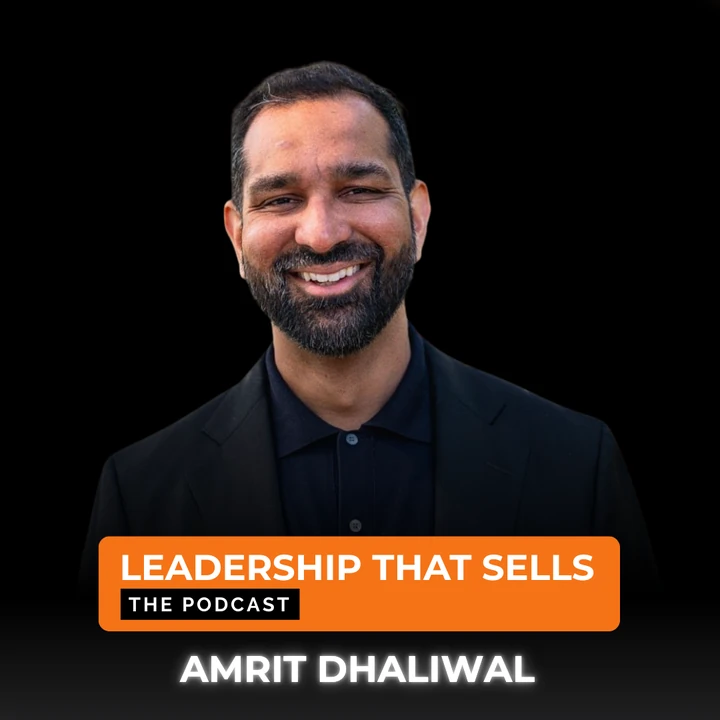
How to make a million with mindset , models and tools
with Amrit Dhaliwal
Show notes
What happens when you treat frontline hourly workers like mission-critical professionals? In this episode, I sit down with Amrit Dhaliwal, CEO of Walfinch, to explore what empathetic leadership really looks like in the real world—and how it can become your competitive advantage.
Amrit shares the lessons he’s learned building businesses from scratch, including a restaurant, a tea room, and multiple home care companies. We talk about the messy middle of leadership: building trust, hiring for mission over money, and solving real human problems like payday loans and car repairs—not with sympathy, but with action. Whether you’re running a franchise or managing a sales team, Amrit shows how the best leaders don’t just show up with KPIs, they show up with care.
If you want to hire better, sell with more integrity, and build high-performing teams who stick around, this episode is a must-listen.
How to lead with empathy and performance
-
Start with empathy, but don’t stop there. Use it to understand what motivates your team—and then align that with your business goals.
-
Solve problems that matter. Helping an employee get out of a payday loan trap might do more for retention than another bonus scheme.
-
Hire for values, not just skills. Look for people who would do the job for free (but pay them well).
-
Reframe your incentives. Reward long-term results, not just quick wins—especially in recruitment and sales.
-
Don’t accept poor margins as an excuse. Amrit shifted Walfinch to focus on private-pay clients to create space for better staff pay and service.
Timeline summary
[02:22] – What Amrit learned about leadership running both a deli and a care agency
[05:06] – The surprising story that changed how he supported his staff
[06:26] – “Empathy isn’t just feelings, it’s problem solving”
[08:49] – Why Walfinch moved away from local authority funding—and how that helped
[10:08] – How to hire people who would do the job for free (but still pay them well)
[13:12] – Building a sales process around long-term trust, not short-term gain
[15:09] – Why care sector recruitment isn’t broken—it’s just not high enough volume
[16:08] – The value of having ex-care workers do recruitment
Links & resources
-
Amrit’s book: Time to Thrive: The Home Care Revolution
-
Amrit’s podcast: Walking with Walfinch
- YouTube
- X (formerly Twitter)
If you got something useful from this episode, please take a second to rate, follow, share or review the podcast. Every little click helps us grow—and helps more leaders lead first and sell more.
Transcript
Automated transcript. Speaker labels and spellings may contain errors.
Amrit Dhaliwal
And so I often talk about Mr. Miyagi a-and say, right, you know, our role, uh, a-as salespeople-
Paul
Mm-hmm
Amrit Dhaliwal
... or franchisees or whatever, you know, people that are leading businesses, is, is actually to be the guide. You know, be Mr. Miyagi.
Paul
Mm-hmm.
Amrit Dhaliwal
And, and be the guide and, and so that it's not for me. It's not, yes, great, I'd love to have this new package of care and it would add, you know, X percentage GP to my bottom line. Cool. However, it doesn't work for b- for you, Paul, and therefore I need to constantly put you at the center of the conversation-
Paul
Mm-hmm
Amrit Dhaliwal
... and what works for you. 'Cause if I can get that right, then you will refer me to your friends, you will, you know, come back to me when you do need it, uh, and, and we will grow together. But then you don't need to pretend to be authentic. You know, you just do what is right for the client. And I-
Paul
My guest is the CEO and f- founder of a national home care brand in the UK. He is a serial entrepreneur who's built and sold multiple businesses, including an Italian restaurant and another home care company before starting Walfinch. He's the author of Time to Thrive: The Home Care Revolution, and he's very generous with his wisdom. He shares all online for entrepreneurs like you and me on LinkedIn, on Instagram, on YouTube, and, uh, and on his own podcast, Walking With Walfinch. Welcome to Leadership That Sells. This is the podcast that helps you lead first and sell more. Most teams, sales teams today are, they're not really teams. They're what we call teams in parallel, and most managers are still leading them that they're a football team, when in reality you've got a team of sprinters or golfers, and that mismatch is the root of some of your biggest problems.
It's coaching that doesn't land, pipeline reviews that feel like interrogations, and your A players are operating as lone wolves. Now, we built a leadership power up for your managers. Not another heavy training manual to learn. It's a light, fast reset that gives your managers a simple model to lead the team they actually have. We teach them to set the target with clarity, build the flag with shared identity, and then hand over the map to coach people for real autonomy. If you're ready to fix the model, grab our free Parallel Team Playbook. It's a short, sharp, built-for-senior leadership guide, and you can find it at the Practical Leadership Academy. Amrit Dhaliwal, thank you very much indeed for joining me.
Amrit Dhaliwal
Thank you for having me on the show, Paul.
Paul
Cracking to see you here. You've got such a good story to tell. I'm really looking forward to digging into this. You've got a heck of a career. Um, abandoning university in your rear view mirror, having passed, one hopes, and then said, "Yeah, enough of this game. I'm going off to work for myself." So your career timeline says to me that you've built quite a few businesses, and you've sold them as well. Now, this one, a deli in Richmond, that home care company before the one you started now. If you look back at this, what in those different organizations or in your history about leadership and mindset did you learn that you could, you, you're applying now as you're building out Walfinch?
Amrit Dhaliwal
It's really interesting. When I... So I was 22 when I bought the deli, and, uh, I then ran that for a bit, had no idea what the hell I was doing, and converted it to a more fine dining Italian restaurant, and also started another unit there, which was a tearoom, uh, all before starting this, this care business. And it was really interesting looking at the staff that I had in the care business and the staff that I had in the restaurants and, and, and tearooms, because actually the genre of the staff was very much the same. It was paid by the hour. It was really understanding what they needed and what they wanted from me. And I think the, the biggest thing I've probably learnt in that time is around empathetic leadership, and that's not about just always being nice and never having-
Paul
Mm-hmm
Amrit Dhaliwal
... a hard conversation, but actually it's about saying, "Well, okay, you've got something serious going on" or I understand your motivations behind something, and we're able to then unlock a key there because I'm able to unlock your, your motivations and, and drive so that we're all running in, in the same direction.
Paul
I love that. Um, I, I'm a great proponent of strengths-based leadership, if you can call it that, right? Which is trying to, trying to build on people rather than fill in the gaps. You know? So you're really bad at this, so we're gonna hammer you with the thing you're really bad at 'cause that's gonna be fun, right?
Amrit Dhaliwal
Yeah.
Paul
And yes, of course there's, there's toxic stuff or there's damaging stuff. Like you can't add up. You're running a till and you cannae add.
Amrit Dhaliwal
Yeah.
Paul
This could be a thing we should fix. But mostly if you're good at something, I'm gonna work with you to make sure you're really good at that, 'cause then I've got a team of triple A stars rather than Bs and Cs, and that, the A stars are the ones that make all the difference in the world.
Amrit Dhaliwal
Yeah.
Paul
You're talking empathy here. You're talking empathetic leadership. When you're dealing with, um, um, you know, people on a, on a, on a day rate or an hourly wage there, what sort of challenges are you, you, did you come across? What sort of, what sort of ex- Give us a story.
Amrit Dhaliwal
Yeah, I mean, look, there's so many different things. I, I remember when I first got into care, and I didn't really understand that either [laughs] . You know, I sort, I sort of leapt in-
Paul
This is your theme
Amrit Dhaliwal
... 40 different things.
Paul
This is your theme.
Amrit Dhaliwal
This is it, you know. I, I-
Paul
Apply ignorance. Apply ignorance
Amrit Dhaliwal
... pure blind ignorance. Just, just head first and figure it out later. When I first got in, I, I didn't really realize the way that people operated and the baggage that they came with because of the other organizations that they'd worked in and, and so on. And there was a, a, a simple story that I remember where it suddenly came to, to light that I had care workers that were getting payday loans so that they could, you know, get through the month, pay, fill up their cars, sort their washing machine out, and so on. And we, you know, I was able to then sort of have that conversation and have a, a sort of- ... focus group of five or 10 care workers that I spoke to individually understood what was going on here. Uh, you know, 'cause there were different problems to what I had, and different problems to the people, you know, my friends had, and so on. And, and, and not necessarily issues that I had thought about.
And okay, well great, so that is really problematic because I'm giving you £1,500 but you're spending £1,600 on a payday loan. And, and that's a, a huge issue because you're never gonna get out of this cycle, you know? So we then came up with a solution around that and came up with, you know, free lending for care workers and, and so on. And, and then started rotating and revolving... And this is back in 2013. You know, started revolving this, this free piece of lending that was going out to care workers and, and had a system around that, and so on. And so, you know, sometimes it isn't about empathy in, in the classical way. Sometimes it's about problem-solving, but actually understanding how big an issue that is and, and thinking, well, okay, if somebody is thinking, "Well, I, I can either fix my washing machine this month or fix my washing machine next month," or, "I can either fill up my car today or fill up my car tomorrow." I mean, these are problems that
people live with that are deep, and it's often quite easy for leaders to fix those, uh, 'cause you can come up with relatively free or cheap solutions that you can implement pretty quickly.
Paul
Mm-hmm. Yeah. So I think, I mean, you're, you're, you're touching on... I think you're, you're touching on... You've got a lot of trust there, and I think if I had to pull out what I understand as one of the, one of the big concepts that you, you, you speak about, it, it is trust. It is this, call it a safe space, whatever you want as the modern parlance. But both, I think, because you have a team of people who are, I'm sure, well-paid but not well-paid if you under- if you, if you follow on the grand scheme. But then also you are selling essentially a personal and quite emotive product, which is in-house, in-home care.
Amrit Dhaliwal
Correct.
Paul
Which itself can come with quite a high price tag. How do you as a leader deal with that connect but disconnect?
Amrit Dhaliwal
I think there's, there's... You know, I wear lots of different hats, so my day-to-day now has really moved into franchising and scaling the business through the power of franchising. And so w- w- I ha- I speak about this a lot with franchisees who are then out there delivering, you know, frontline care with their staff. So it's really about sort of saying, "Well, have we hired the right person in the first place?" Because if we haven't hired the right person, they're out anyway. You know, I'm, I'm all about sort of saying, "Well, okay, y- when, when you're working with me and for me, I will absolutely break my back for you. But actually you need to be the right person, and there needs to be that, uh, it, it needs to be the give and take there." You know-
Paul
Mm
Amrit Dhaliwal
... "I will absolutely give you everything, but I also expect the same in return." And-
Paul
Mm
Amrit Dhaliwal
... and it's really saying that we're going to work tremendously hard together to then, you know, fulfill a mission. Uh-
Paul
Mm
Amrit Dhaliwal
... and it's, and that mission isn't just the Ferrari fund. You know, for, for me it's about revolutionizing home care within the UK. And so it's really then saying, "Have I got a care worker here or a franchisee here or a registered manager that, you know, lead these businesses here that actually wants to do that, and it's not just about earning?" But, but then, you know, on the ground level, you know, you've got issues within the UK where the local authority and the government, um, doesn't pay very well. And so what we've done is actually just morphed our business model and saying, "Well, actually, we're really focused very much w- towards privately paid business." And so we've tilted the business in a different direction so that we can then take better quality margins, make more profitable businesses which can afford to pay staff really well. And, and then that really changes the whole thing.
And when we talk to clients and we're asking for an increase in rates, we're pretty unapologetic about it because we're providing a good quality service, we'll turn up all the time, we'll pick up the damn phone. And we will also-
Paul
[laughs] That's half the battle
Amrit Dhaliwal
... Well, that's half the battle. You know, and we'll, we'll, we'll actually send staff that is, you know, happy and-
Paul
Mm
Amrit Dhaliwal
... wants to be there. And, and I think a lot of it comes down to then who are you recruiting? Are you recruiting someone that's coming in just for the money and, or just for a job, or are you recruiting someone with a mission and a purpose? And I think that, for me, is really important. Somebody that wants to do the role, and in, in the perfect world would do it for free, but actually needs to be paid. You know, and they're the people that I'm really interested in. And if I was getting care for my mother, that's the person I'd want. And, and also if I'm looking at a franchisee, that's effectively the person I'm looking for that has that outlook of saying, "Well, actually, yeah, great, I wanna build a profitable business, but also I'm looking for something that has real purpose and meaning."
Paul
I mean, you've got... I mean, uh, I've just, um... The m- the business I'm working with, we're in the middle of just hiring somebody just now, and f- I think for the first time in maybe 10 years when I've been hiring, I had more applicants, good applicants, than, uh, I, I could even possibly interview. So it tells me something about the job market at the moment in the s- the s- sector that I'm looking at. I know that in the care sector, trying to find good people is hard, and typically in a, an economic environment where things are All things being equal, any company typically struggles to find good staff. But I think you're having a bit more of a struggle than most, especially because of the, the growth in demand in your sector, and I think because of the, uh, perception of
the, the, the roles. And I'm wondering, you are in the middle of... You've got these 12 steps to transformation. I love this. You're actually trying to change, not just run a business inside the world that you've got, but you're trying to change the world. That's a good reason to get up in the morning. So you're trying to reclassify a carer as a professional. This isn't somebody who comes and just helps you with your breakfast. This is a professional who's coming into your home to enable you to live. And your measure of, would I want this person looking after my mum, is about as basic and as human and as clear a KPI as you can get. I'm sure you've got more detail that goes into that. When you are...
In, in your book, and just for the, the audience who is, uh, predominantly around sales and sales leadership is what we're talking about, you talk about the, the very personal and emotional nature of these home care services, and they do come with quite a high price tag. How do you work with your franchisees? How do they work with their sales teams, their people, to sell what is an expensive service like home care, but do it in a way that is empathetic, respectful, making sure that you're building trust with the clients, with your families, without coming across as, as pushy or insensitive?
Amrit Dhaliwal
[coughs] Yeah, I think that's, it's really interesting, and I think most of these businesses are, um... The, the sweet spot for a business that's been running for about three years is about a million pounds in revenue.
Paul
Mm.
Amrit Dhaliwal
And, and, and what you tend to find is that the franchisee, the leader of the business, tends to be, not always, but tends to be the, the kind of key salesperson within-
Paul
Yeah
Amrit Dhaliwal
... that business. So they're the person that is, uh, setting the direction, but also having the, you know, meetings with ref- you know, people that... referral providers, we call them, so, so your, your lead sources, and also having the, the first meeting with a family, and so they're really invested. And I, I think what's really important for me is, is having a... If you do hire a salesperson, it's really making sure that they're invested in the long-term benefit of that client. So when I'm thinking about selling a franchise, if I'm giving someone a commission on selling a franchise, I'm also then looping in that first year of trading so that they don't just sell a franchise, but they're finding the right person to actually develop this business.
If I'm finding somebody that is a recruiter for recruiting for care workers, I want someone that their commission or the way that they are remunerated is not just associated with filling, you know, putting a bum on that chair. It's also associated with the first three months, six months, year of that person's work. Because actually what we're looking for is saying, "Well, we want someone really productive, but for a longer period." So I, you know, and, and having been in a sales world myself, uh, briefly, you know, eight months of my, my working career, um, and, and, and really thinking about it, uh, actually I was thinking, "Well, okay, if I was paid to do something, if someone, someone paid me to recruit, I would recruit like a maniac and say, 'Yeah, just fill up some seats.'" But actually, if I was say, if, if my remuneration was associated with not just filling the seat, but also how it
looks in 90 days, I, my-
Paul
Mm
Amrit Dhaliwal
... my sales process would slow down, but also I'd, I'd fill it with more of the right people. And yes, great, you're going to also find a bit of that, um, the, the, the gray method comes in because actually, you know, sometimes you, you're taking a punt. But 80% of it will, would be people that I think would actually do a good job. And I, and I think that if you want, as a leader and an owner, the, the salesperson, then you need to find someone that understands who you are looking for. For example, in my world, I think some of the best recruiters for care workers are astute care workers, you know-
Paul
Yeah
Amrit Dhaliwal
... that actually done the role, understand the value set, and what we need to teach them is the, the, "Right, okay, I need you to make 50 phone calls," you know, uh, uh, and so on. And I think, you know, this, this whole concept, we talk about it, you know, social care being in crisis and so on. Yeah. Cool. You know, that, that's true, right? But also, I think what is also true is that people just don't hit the phones enough. People don't get out there enough. And I think that, you know, if I was running... If I had nothing else to do apart from running one home care business, uh, I feel... And when I did, I didn't have a recruitment issue because I just did a higher volume of recruitment. I didn't have an issue with I can't build my business fast enough or hard enough or big enough because I was like, "Well, okay, so how many meetings do I need to have in a week?
Do I need to have 10, 50, 100, 1,000? How many meetings do I need to have? How many conversations do I need to have? Do I need to go door to door?" You know? And it's about doing so much activity that you're bored of doing the activity, you know? It is... And, and at that point you will, you will find where the sweet spot is. And I think for me, it isn't a lack of, um, uh, uh, people or capacity. It is usually a lack of volume of activity that, that salespeople or, um, business owners or founders have.
Paul
You're going old school here.
Amrit Dhaliwal
I, I, I truly, I believe it, you know? And, and, and actually if I think about it, it's all about the pushups, right? If you're unwilling to do the pushups-
Paul
You're not gonna get the buys
Amrit Dhaliwal
... we, we'll, you know, no one's gonna know that we're here. I'm on this podcast today because one of your listeners is gonna be interested in changing their life through the power of franchising. And hey-
Paul
Yeah
Amrit Dhaliwal
... I'm here. But if I wasn't here, then- I w- I w- th-that conversation would never happen, right?
Paul
No. As I say, it could, it could be a combination of, uh, I want to, want to try this whole franchise thing, or actually, my mom's getting old.
Amrit Dhaliwal
Exactly that.
Paul
Either way, you win.
Amrit Dhaliwal
Yeah. Yeah. But I'm here, right? You know, I'm, I'm here doing the pushups when actually I could be watching some Netflix in the middle of the afternoon, so, but I'm here.
Paul
Mm-hmm. Mm-hmm. And it is, regardless of who you talk to, it is, it does always, always come down to either picking up the phone, getting out and seeing people. And-
Amrit Dhaliwal
Yeah
Paul
... I've got this theory of one removed, you know? So I call it the idea that w- we communicate at one step removed from where we should actually be communicating. So instead of going out and meeting somebody and having lunch with them, we'll have a 10-minute coffee. Instead of a 10-minute coffee, we'll get them on a Teams call. Instead of a Teams call, a video call, we'll send them an email. Instead of an email, we'll send them, uh, a chat. Instead of a chat, we'll send them a text, you know? And you should always be... W- we're hiding. You hide.
Amrit Dhaliwal
Yeah.
Paul
And there's a generational thing there as well, and I think that it's, it's, it's, it's a l- not a lack of drive or lack of desire, but a lack of seeing the result.
Amrit Dhaliwal
Well, and, and, and I think, you know, one of the things that I often talk to my teams about is understanding who am I speaking to, you know? What is the demographic that I'm speaking to? Um, you know, what is their personality type? What is the age group? Um, male or female, gen- you know, wh- where they live, et cetera, et cetera. And also, what do we know about how they like to communicate, you know?
Paul
Mm-hmm.
Amrit Dhaliwal
Um, and so there's going to be, uh, the, the younger generation, you know, like to receive a text and will be, will more likely to respond to that than a, a phone call. The older generation will be more likely to respond to a phone call or a letter or an email, um, than, than, than Gen Zs and so on. And it's really understanding how people like to communicate, and also saying, "Well, okay, let's test it out," right? So, you know, let's do 100 of these and say, "Well, okay, great. That works, that doesn't," or 1,000 of those, and that works, that doesn't, whether, whether it's te- phone call, text message, email, different drips, and so on. And I think for me, it, it comes down to testing things and understanding what works. And, you know, wh- when I, wh- when I used to run one home care unit, I mean, we were constantly changing the way that we would approach it.
So, you know, am I having meetings, uh, in person with these people? Am I doing phone calls with these people? Do I just send e- you know, emails to these people? And, and okay, great. Where does my lead flow sit? Right, care workers, so am I phoning them as soon as they come in? You know, am I sending them a text message? Do I, you know, do I send them an email? Uh, do, do I leave it with a robot? You know, what, what do I do here? And actually what activity gives, gives me the best ROI? And then let's just do loads of that, you know. Do more of that than the competitor. And, and I think that is, for me, and it is basic actually. Uh, for me, I think most businesses that I have run, in fact, all businesses I have run have been really straightforward.
Uh, and, and/or even if they seem complex on the outside, I, I've really always tried to think, "What are the five things that I need to do to drive this business?" You know, and if, if I can't describe it to you in five things, then I, I haven't, uh, simplified it enough.
Paul
What are the five things you need to do to drive your business?
Amrit Dhaliwal
So I think with a, with a home care business-
Paul
That's it. That's it
Amrit Dhaliwal
... you know, so, [laughs] you know, um, it, it's, it's really straightforward really. I think, uh, we, we've got to recruit carers and, and train carers, and so make sure that we've got good quality people that are, you know, operational and running. We've got to network the hell out of it, you know, and understand who is in that local area, um, that, you know, whether it's doctors, nurses, whatever, people that are, are going to be in front of older people or certainly my demographic, right? Then we've got to make sure that we're speaking to that, that demographic, and actually getting out and meeting them, and really getting in front of them and saying, "Right, okay, I'm going to immediately come and see you, you know, Mr.
Morton," right? You know, "You're, you're, you're looking for care for your father. Great. You've called me today. I'm gonna come out there." And that's that kind of fourth piece. And, and within my sector, um, within home care and, and social care, there is that compliance piece. It's about keeping the business safe, making sure the auditing piece is done. I mean, they... It is super straightforward. Essentially, four out of the five things are effectively sales pieces, right?
Paul
Mm-hmm.
Amrit Dhaliwal
And then one of them is, is, is making sure that we can keep the lights on because the, the, um, regulator is at bay, and, and it helps me manage the whole thing. But I think really it's about thinking about how, how, what management system, leadership system, sales system do you use in order to make all those things happen. And, and, um, you know, we, we use EOS, um, the Entrepreneurial Operating System, Traction by Gino Wickman. And I think, you know, that has had meaningful change within how I've operated businesses. And, you know, if I think about all of the businesses that I've had, I've slowly morphed into using this more and more and more, and whereas now we're sort of fully engulfed in it. And what I find is that each quarter when we sit down to do a quarterly review, we're able to move the business in a much more powerful way forward because
we're actually looking at this and saying, "Well, this is it. This is what we're doing for the next 90 days. These are the things that'll make change."
Paul
Yeah. Yeah, I like that idea. I like that a lot. So I, I... The, the EOS has been on my mind for a, a while. In fact, I need, I think I need to dig into that one a bit more, a bit more. Okay. Hmm. If you are working with your franchisees and they are out trying to sell this deeply personal service to people- Is there anything you can do to help the franchisees build these authentic relationships? You said point four, you get in front of people there. They need to have a r- a relationship that converts a lead into a client. What do you... Is there a strategy? Is there a way that you, you teach your, your sales people, your franchisees to do that? Because I think trust is, is more than everything.
Amrit Dhaliwal
Yeah.
Paul
You have to be trusted.
Amrit Dhaliwal
So, so the thing that I often talk about is, uh, education.
Paul
Mm.
Amrit Dhaliwal
And most people, when they're looking to buy care for the first time, have no idea what the hell's going on. You know, even people that are from within the sector have no idea what is going on. And so most people n- need to be educated in some shape or form, and that might be them thinking, "Well, I needed to buy X," but actually I've, I've told you because of all of the, the assessment I've done on... with a, with my f- you know, five or six questions here, I've, I've ascertained that actually you don't need to buy this. What you probably need is send Mum to that free class that's down the road, have another assessment done with a GP, and actually be anti-sales in many ways.
Paul
Mm.
Amrit Dhaliwal
And say, "Right."
Paul
Advising.
Amrit Dhaliwal
Yeah. Totally be in that advisory, advisory role. And so I often talk about Mr. Miyagi a- and say, right, you know, our role, uh, a- as salespeople-
Paul
Mm-hmm
Amrit Dhaliwal
... or franchisees or whatever, you know, people that are leading businesses, is, is actually to be the guide. You know, be Mr. Miyagi.
Paul
Mm-hmm.
Amrit Dhaliwal
And, and be the guide and, and so that it's not for me. It's not, "Yes, great, I'd love to have this new package of care and it would add, you know, X percentage GP to my bottom line." Cool. However, it doesn't work for p- for you, Paul, and therefore I need to constantly put you at the center of the conversation-
Paul
Mm
Amrit Dhaliwal
... and what works for you. 'Cause if I can get that right, then you will refer me to your friends, you will, you know, come back to me when you do need it, uh, and, and we will grow together. But then you don't need to pretend to be authentic. You know, you just do what is right for the client. And I, I really believe that. You know, I believed that in my restaurant years ago when I said, "Well, okay, there's this new wine, but actually this other wine's half the price and it basically is from the farm next door," uh, and, and so on. You know, and actually the margins are pretty good on both of those things, so, so why don't we, why don't we just push the thing that is right for the client-
Paul
Mm
Amrit Dhaliwal
... and say, "Well, some people want brand, some people just want taste." You know, then we're saying Waitrose, Lidl, right? Um, and, and so, you know, it's about understanding the end user and saying, "Well, what do, what is right for you? But let me give you all the information that you make the right decision for you."
Paul
I mean, there's... I mean, I can unpack two things very quickly out of that. One is what I like to call servant leadership, and leading in a sales process, you still... It's leadership that sells, you know? You are leading people to the right answer for them, and you're looking for them to be successful. You're, you, you're in particular, you're building a, a recurring revenue business.
Amrit Dhaliwal
Yeah.
Paul
So recurring revenue is a function of recurring impact, so you have to have that recurrency of the impact so that you can continue to build. If you stop having the impact in people's lives or in their systems or whatever it is you're selling, you stop, you stop getting any money for it, right?
Amrit Dhaliwal
Yeah.
Paul
Um, so you have the recurrency, you have the, the impact, you have the value that you're delivering. But then I think also it's understanding that people don't know how to buy. They're not... You're helping them to buy. You're not selling, you're helping them to buy. And that they're, they're on a buying journey, you're not taking them through a funnel. Yes, you might have top of middle of funnel, all that sort of stuff. But it's the, the... Typically, whether, whether you're buying enterprise software or whether you're buying home care for your mum, your mum or your dad, you've never done it before. Or if you have, it was a long time ago. You don't do it very often. You, the franchisee, the salesperson in this case, are the expert. And if you can turn that, you use your expertise, you lead on your expertise, you have instant authority, you have instant credibility, and you can guide people down the right path.
You can guide them down the wrong path if you want, totally, and yeah, I'm sure that there, there'll be devils waiting in hell for you when you do. But you can be that advisor and make them successful.
Amrit Dhaliwal
I, I feel like there's no other way, you know? Uh, and because any other way is, is a charlatan, uh-
Paul
Yeah
Amrit Dhaliwal
... really in many ways. And I think it's just, let's just put the client first. And I find that when I'm buying stuff as well, I... You know, when you've got consultants that operate for you, I mean, I, I've got someone that's worked with me for four or five years as a consultant, right? And which is, you know, madness actually. But actually because he's always honest with me, even when it's like, "Oh, this might end our relationship, but I'm gonna be honest." Whereas I've had other people that are constantly selling to me. I'm like, "Hold on. I just want honesty," you know? Uh, if, if you tell me what is right and, and actually I... Hold on a second, Amrit. That stinks, you know?
Paul
Mm.
Amrit Dhaliwal
Don't do that. That, that's, that's not right. You know, don't tell me just because I wanna hear what, what I'm doing is wonderful, that it's wonderful when it's really not. You know, I'd much rather you're honest because we will move the business forward at a much faster pace and in, in a much healthier way if you're honest with me. Um, and, and I pay for honesty actually i- in that situation.
Paul
When I started doing, um, consultancy, uh, when I left my last job, I was told that the first job of a consultant is to keep consulting.
Amrit Dhaliwal
Yeah. [laughs]
Paul
So your first job is to make sure that the gig continues.
Amrit Dhaliwal
Yeah.
Paul
And of course I did that for a while 'cause you need the money, and then you realize, "This sucks."
Amrit Dhaliwal
Yeah.
Paul
'Cause I'm terrible at holding my tongue. ... terrible. And I, I can't lie, you know? It's, uh, it's like a, like a Vulcan or something like that, and she's like, "Yeah, that's a good idea." "No"-
Amrit Dhaliwal
[laughs]
Paul
... "No, that, that's horrible. Don't do that." [laughs]
Amrit Dhaliwal
[laughs]
Paul
"But my mum told me to do that." "Your mum doesn't know what the hell she's talking about."
Amrit Dhaliwal
[laughs]
Paul
You know? Sorry, been nice knowing you, I'll just, I'll just show myself out.
Amrit Dhaliwal
Yeah.
Paul
Um, it's like in, in your... You mention, you talk about your Wall Finch franchisees hitting a million pounds within the three years because you give them the tools, the model, and the mindset, right? Can you break those down? Break down what those three pillars mean to you and how you coach your franchisees to success.
Amrit Dhaliwal
Yeah. I think the, the, the whole thing's about coaching to success. I... And, and if you think about tools, that might look like CRM systems, that might look like workflows, it might look like a sales system, it might look like a pitch deck. Um, it might look like, you know, us going out together and saying, "Right, okay, let's do these, these meetings in person." Um, and, and of course all of the paperwork and, and, and all of that that underpins it. You know, so, so th- that is the, the, the general how-to of the whole thing. And I think, actually, you know, I've been doing this for over 10 years now, um, for over 10,000 hours and, and done enough of it that it feels boring to me if I was going out to do a, a meeting like that, and I'm like, "Okay, I also know that.
Okay, great. If the first one doesn't go right, the second one will, and that's okay, and I'll just keep going." And so I feel like if I was starting to, from zero with nothing else to do and I was building a, a home care business, I could get that to a million pretty quickly because I understand that and I understand that it is a volume game of handshakes and then all of the things that underpin it underneath that. And that brings me into the mindset, and it's about persistence, you know?
Paul
Mm-hmm.
Amrit Dhaliwal
It's about being positive, uh, and, and that possibility mindset. And, and I think where most people just don't do enough, and whether that is, you know, they, they haven't done enough in, uh, from the care aspect, they haven't asked the feedback questions enough, they haven't done enough for the sales piece. They just haven't done enough. It's what you were saying at the top of the conversation where, you know, I should have had a lunch with you, but I had a coffee, you know? And it's, it's, it's exactly that, and it's saying, "Well, okay, well, what is the next thing? What can I do?" And I had a conversation with a member of staff of mine today, um, and you know, my life is extremely fast-paced, and I was explaining to her that
it, it will only get faster because I'm living three years in advance. You know, I'm, I'm there and thinking, "Well, I'm doing these 10 things. Two of them are gonna go well, and eight of them are, are gonna be test, test runs," right? And so my mindset is very much out there and saying, "Right, okay, future, it's gonna value me today, it's going to help my, my growth, and it's going to be there in three years' time when I get to it." You know? And so, you know, whether that is socials or the podcast or whatever it might be, and it's then saying, "Okay, we need to run at pace with that." And it's then saying, "Well, you know, where am I in that business cycle, and what, what is the speed and who are the people I've got with me?" But understanding that it's not just me, it's a team
effort, and I need to get all of the right people around me so that I can be free on a Wednesday afternoon to film this with Paul Morton, um, and, and not have to worry about the day job. So it's really having a values-led mindset. It's about understanding that it, it is about the press-ups and it is about-
Paul
Mm-hmm
Amrit Dhaliwal
... persistence. But also there's, there's really understanding that leadership piece within that mindset and saying, well, you know, Daniel Pink, um, wrote, um, uh, his book Drive, and it goes really into motivation-
Paul
Mm-hmm
Amrit Dhaliwal
... uh, and what motivates people and, and that whole piece, I think, you know, when we're thinking about mindset.
Paul
Master the autonomy and purpose.
Amrit Dhaliwal
You know, e- exactly, and it's really just putting your arms around that whole thing. Um, and, and so you've got your tools and you've got your mindset. And, and, and I think really the, the, the third piece of it is, is that kind of coaching-led, um, uh, sort of work really, and it's really having that vision of saying, "Well, where is my business going to be in three years' time from now?" And, you know, so, so I, you know, run on a, as I was saying, the EOS. So we think 10 years. And 10 years from now we'll be doing 2 or 300 million in top-line revenue, we'll be international, we'll have 200, 300 locations around the UK, run through, you know, maybe half of that in terms of numbers of franchisees.
Great. Now where do we sit in three years' time? So in three years' time, you know, we'll, we'll be doing... We'll have 100 locations. You know, we'll be closing in on 100 million in, in network revenue. Um, and, and then break that down to one year. Great. So in one year we'll be at, you know, 50 locations, we'll be at, you know, 30 million in revenue. And, um, and what does that look like in 90 days? And, and then how does that 90-day segment of the things I need to do today? So the things I need to do today might be looking at how my dashboarding looks, looking at how my-- have I implemented the EOS with my franchisees effectively? Are we driving the guys that are at a million to get to three million? Because that's gonna help me get to my three-year, 10-year goal, and so on and beyond.
You know, am I talking to the people, um, about international growth, but I'm not gonna be there for five years, and so on. And it's really understanding all of those things, putting that all together and saying, "Okay, what am I doing today that is gonna impact me in 10 years because I've mapped the whole thing out? And who have I surrounded myself with? Do I have the right coach, the right mentor?"
Paul
Mm-hmm.
Amrit Dhaliwal
"Do I have the right, you know, toolkit and the mindset?"
Paul
That's superb. I, I love the, the, the forward casting, the s- the anticipatory drive that you're aiming for the future and working back. That's, that's a, a fascinating way of putting it all together. Okay. To wrap this up, what are you working on right now, Amar? Apart from, apart from Wolfinch.
Amrit Dhaliwal
Yeah. [laughs] No, it's, uh, I think my key focus really has been around adding value to prospective franchisees. I think when I bought a franchise as a former franchisee, there just wasn't any information around. And, you know, there was sales stuff, but there was no information really about should I buy a home care business? Is franchising right? How do I buy a franchise, and so on. Or, and if there was information, it was all very dense white papers. It wasn't particularly interesting, uh, content. And so I'm, I'm really working on trying to develop a whole system around, you know, people like, well, like I'm sure many of your listeners who are thinking, "Well, should I become an entrepreneur? Uh, 'cause I'm an employed exec right now. Should I become an entrepreneur and a founder? Uh, if so, how do I know?" So I've created, um, a test, uh, uh, that you can, you know, 15 questions, and it, and it sort of tells you, well, okay, yes, yes or
no. You know, take the leap or don't take the leap. Very happy to send it to you, Paul, to link to this episode.
Paul
Well, we've got a link to it in the description of this, uh, episode.
Amrit Dhaliwal
Super. And, and then we've got, um, uh, then it's bu- really building the content around that and saying, well, okay, so there's lots of different streams. How do I build my first million in business? How do I, you know, buy a franchise? How do I get involved in home care? How do I scale a home care business? Really building free content and tools and assets that are really great IP, frankly, for anyone looking at, at scaling these businesses. You know, my, my first book came out this year. I've already started working on the second one, which is very much more driven around this and really going into far more detail into how to grow your first million. Um, and so really working through that and, and saying, "Well, okay, this is it." You know, this is the manual for somebody.
Paul
Wonderful. So other than Wolfinch.com, where can we find you?
Amrit Dhaliwal
So, so there's wolfinchfranchising.com, which, uh... And then wolfinch.com for the care. Uh, I'm on LinkedIn, Amrit Dhaliwal. I'm on Instagram, Amrit Wolfinch. My YouTube channel is AmritTheWalkingCEO, and my podcast is Walking With Wolfinch, so, uh-
Paul
All of which will be linked downstairs
Amrit Dhaliwal
... great. And I'm, I'm pretty easy to find and, um, you know, uh, always love a chat.
Paul
Good. Then just to wrap this up, if you had one message you wanted to share with the entire world, it has to be anything you like, doesn't have to be business or whatever relevant, thousand billboards everywhere, biggest message you could possibly imagine, what would it be?
Amrit Dhaliwal
That's a great question. Um, so, so I think, I think talking about business as, you know, ongoing from this conversation, I think what I would probably say is something like if you're, if you're going to build a business, you know, build one that matters. Don't choose vanity projects. Solve real problems. You know, help people thrive, and, and money will follow with that. I think often what we do is run after money. I, I'd rather say, "Well, how do we help people thrive and, and let the money follow?" And, and that's the only sustainable play, in my opinion.
Paul
Solve real problems and let the money flow. There we go. Well, Amrit Dhaliwal, CEO, founder of Wolfinch, and a generous purveyor of wisdom, thank you very much indeed for joining me.
Amrit Dhaliwal
Thank you. [upbeat music]