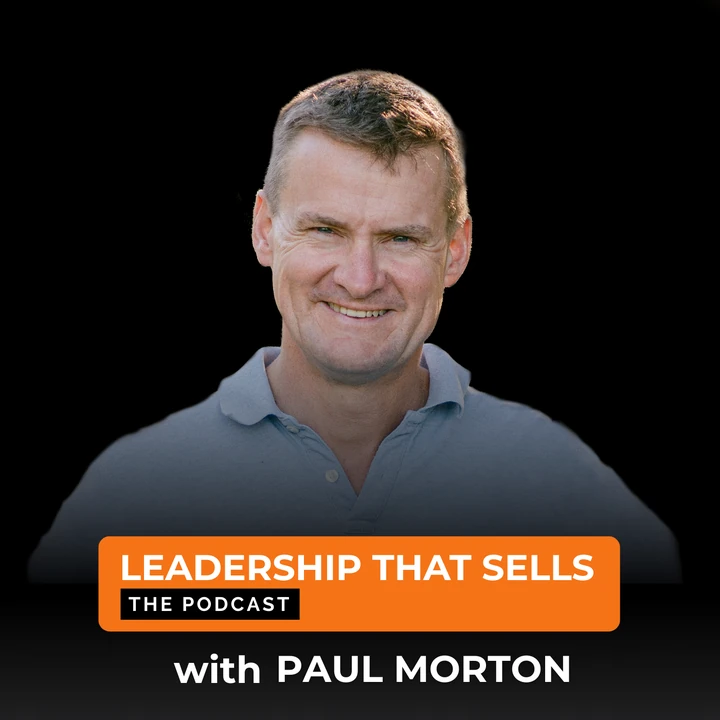
How to build purpose for your teams
with Allan Costa
Show notes
High-energy human and non-stop builder of people and businesses, Allan Costa shares how he builds purpose for his teams and meets people where they are.
We cover neurodiversity, human centered leadership and generally getting people to do their best so you can deliver results.
Find Allan on LI: https://www.linkedin.com/in/allancosta/ on Insta: @AllanCostaReal and at allan@allancosta.com
——
When you’re ready, upgrade your leadership:
Transcript
Automated transcript. Speaker labels and spellings may contain errors.
Paul
[upbeat music] Hello, and welcome to the Practical Leadership Podcast where I interview great leaders and try to extract their wisdom and their experience for you to learn from, and hopefully avoid making their mistakes. If you want to upgrade your leadership skills in 25 minutes, check out practical-leadership.academy. [upbeat music] Alan Costa, thank you for joining me.
Allan Costa
No, it's a huge pleasure.
Paul
Can I ask you very simply, would you please introduce yourself?
Allan Costa
Yeah, sure. Well, my name is Alan Costa. I live in Brazil. Uh, I nowadays am a business partner and, uh, operations vice president of the largest, uh, cybersecurity company in Brazil. So nowadays we have around 800 people helping companies to defend themselves from the, uh, menaces of the cyberspace. Besides that, I also, uh, have a platform in Brazil that delivers consultancy and content about innovation that's named AAA Innovation. Uh, and besides that, I also have an involvement in the startup scene in Brazil. I founded a group of angel investors named Curitiba Angels, and I am part of Harvard Angels of Brazil. And through those groups, I am a, a angel investor, and I have positions in, in the board of, uh, a couple of startups here in Brazil.
Paul
That keeps you busy.
Allan Costa
Indeed, it does. Yeah. [laughs] Besides that, Paul, I, I always like to say when I introduce myself that I am father of Luca, 20 years old, and Mariana, five years old. And I like to emphasize that because despite all my graduations at Harvard, at Lancaster University in UK, at Fundação Getulio Vargas in Brazil, none of those degrees teach me more than, uh, what I learned from Luca and Mariana. So they are definitely my, uh, biggest sources of apprenticeship.
Paul
I think there's nothing like learning from your kids because they are a brutal teacher and very harsh critics sometimes.
Allan Costa
They, indeed they are. And i- it's amazing to learn because it's a, it's a, a kind of a learning involved in love.
Paul
There's so much I think you can pick up from seeing your children evolve over time, that you learn about human nature, that you learn about yourself.
Allan Costa
Leadership is about that at the end of the day, isn't it, Paul? Uh, leadership's about learning about people. It's about understanding people. It's about caring about people's needs. So things are undoubtedly connected, and when we develop this kind of look into the world, I believe that we create conditions to become better leaders.
Paul
When did you first become a manager of people?
Allan Costa
Uh, I was very young actually. I graduated myself from, uh, tech university, computer technology, and I started programming computers. And it's quite easy to program computers because you push buttons and the computer will do whatever you say that he must do. Uh, when I was 23 years old, I got a management position. I was very young. And I learned very fast that people didn't have buttons that I could push. So I had to, you know, look for education training about how to deal with people because I wasn't taught that at the university. So it was very early in my career.
Paul
So what was the biggest thing that you learned or the biggest thing that you would tell new leaders?
Allan Costa
Paul, I believe that, uh, when we start acting as leaders, uh, this is a role that usually is given to us by someone that is, uh, uh, above us. We get the title. Well, now I'm a manager, I'm a leader, I'm a director, whatever. But leadership is not about people above you giving you the title of a leader. Leadership is about people who works with you, usually below you in the hierarchy scale of the company, recognizing you as a leader. It's your team who makes you a leader. So, uh, people who are starting now in the leadership, uh, path, uh, must understand that leadership is about people. It's about serving people. It's about understanding what people needs to be their best at what they need to do. Organizations, they must achieve results, that must have profit. And you as a leader has to give a contribution, but the contribution that you can give depends entirely of the people who you work with.
Leaders usually are named executives. This is absolutely wrong because leaders don't execute anything. The people who execute thinking are the people who works with you. So these people has to see you as their point of, you know, uh, security, uh, as their point of vision, uh, because they need this assurance that they have the space to give their best and to be their best, and that this is connected somehow with the purpose of the company and with their own purpose. When you achieve that, well, then we are talking about leadership.
Paul
So you're connecting the purpose of what the individual wants to what you and your organization wants. And if you can get that, that's how you're making success happen, yeah?
Allan Costa
Definitely, Paul. And I believe that, uh, building this sense of purpose is, is one of the most important jobs that a leader have. And believe me, you can build purpose in any kind of environment if you have this perspective. I used to give the example of someone who sells jewelry, for example. Let's give an example. You are a businessman. You have a network of jewelry stores. And you have people selling the jewel that you produces at your stores. This person that is selling jewelry at a desk for someone who gets into the store, this person can understand their role. As a role that is standing in a desk and trading stones by m- by paper money, through stones and metal. Or this person can understand their role as the daily opportunity to make someone happy. Everyone who buys a piece of jewelry buys a piece of jewelry to make someone happy. The woman buys a jewelry to make herself happy.
She will feel prettier. She's giving herself some kind of reward for something her achieved. And the man who buys a piece of jewelry buys a piece of jewelry to make the woman that he loves happy. So when, when someone who sells jewelry understand the purpose of what she does or what he does, it change completely what, uh, he ch- he or she is providing to these customers. This is building purpose, and this is possible to be done in every single kind of business activity.
Paul
How would you go about building purpose in a new organization where you find yourself?
Allan Costa
I believe that building purpose in a new organization is about understanding what the company really does. For example, I told you that I am, uh, working in a cybersecurity company in the last few years. And the first thing that we must ask is, uh, what do we really do at the end of the day? We as a cybersecurity company, what do we do? We provide technology for companies to protect themselves from hackers in the cyberspace. I understand that this is too low in terms of what we can do compared to what we really do. Because, for example, cybersecurity is about educating people because the weaker part of the chain of cybersecurity is always the people. The technology is useless if you don't have a cybersecurity culture inside the companies. If you don't have a cybersecurity culture, uh, in our lives, we always ask about that.
Even imagine to use a laptop without, uh, antivirals installed on your laptop, probably not. But when I ask people if they have an antivirals installed on their mobile phones, usually people don't have. Because people didn't develop the cybersecurity culture yet. People didn't realize the kind of menaces that they are exposed about in our digital daily life. So our purpose as a company is not delivering technology for companies to protect themselves. Our purpose as a company is to build a safer digital world for people living and for companies doing business in. So the first question, and the most basic question, usually the great things are simple, isn't it, Paul?
Paul
Yeah.
Allan Costa
The great things are simple. So simple questions. What do we do at the end of the day besides what we sell? We sell something. But besides what we sell, there is purpose. Why do we do that at the end of the day? What will the world miss if we don't exist? That is the basic question that we must answer to look for purpose, uh, in your, you know, y- your new challenges when you get into a new company.
Paul
There was a great, uh, book, uh, Daniel Pink was the author. You, you may have come across it, uh, Drive.
Allan Costa
Yes.
Paul
The surprising truth about things that motivate us. And he talks about autonomy, mastery, and purpose.
Allan Costa
Indeed.
Paul
But he wrote recently that n- in fact, he was talking about purpose as in we're here to change the world, as the big capital P. But then there's a small p of purpose, which is the reason that you get out of bed every day.
Allan Costa
Th- this big purpose, Paul, uh, become very, very, you know, common in the startup environment. Because people, uh, started creating startups, and they started listening from the investors, "Well, you must have a purpose." And then every pitch that I watched in the last couple of years, it started as, "Well, we are a startup, and we have a purpose, and our purpose is to change the world." This is so damn beautiful. But let's put this into the ground. How will you change the world? How will you make the world better? How will you transform this world we're living in a better place, solving some kind of problem, uh, helping people in some kind of needs? This is the, the practical purpose beyond, uh, the buzzword that the world of business, uh, have been accustomed, uh, at the last couple of
years, isn't it?
Paul
That's marvelous, how to build your purpose from the ground up.
Allan Costa
Once you understand why you are in this world, you have to, as a leader, provide to the people that works with you this clear view about purpose, about why you as a company exist. And once y- you provide this clear vision of purpose, you have to look for points of connection with individual sense of purpose. Everyone in the world needs a larger purpose in their life. No one was born, you know, to live a life where you wake up early in the morning to spend your day into a, a screen of a computer doing Zoom meetings after the pandemic, and to go to bed at the end of the day and say, "Well, I fulfill my role today. It was to spend my whole day in front a computer screen doing, doing, doing useless meeting with a lot of people." Nobody was born for that. People born- To look for a larger sense of purpose.
Why am I, as an individual, into this world? You as a leader must provoke that into your, uh, into the people that works with you. You as a leader must identify points of connections within w- w- uh, about this larger purpose of the company with the smaller sense of purpose of those people. Because people must connect with that. It is absolutely impossible to build, uh, this purpose, uh, uh, sense into a company if you don't connect it with the individual sense of purpose of each and every member of your team. It's absolutely impossible. And this brings us, Paul, uh, an additional challenge as a leader because build this sense of purpose depends on corporate culture. A corporate culture is essential, uh, ingredient into this, uh, uh, building of the sense of purpose of a company.
Because people needs to interact, people needs to talk, people needs to look at each other's eyes. How do you do that in a hybrid world as the world that emerged after the pandemic? This is a huge challenge.
Paul
Yeah.
Allan Costa
Because I am talking with you right now, and for this purpose that we have within the recording of a podcast, this, uh, tool that we are using, uh, Zoom meeting, is absolutely perfect. I can see you, you can see me, we can interact. But when you talk about, you know, building purpose on a daily basis within the company, man, I need to look into your eyes.
Paul
Yeah.
Allan Costa
I need to see the expression on your face. I need to touch you. I need to be in contact with you.
Paul
Totally.
Allan Costa
So this is a huge challenge. Uh, that, that world that arrived, uh, when the pandemic ar- arises, that, uh, you know, w- we saw some bullshit, I'm sorry about the term, the expression. We saw some bullshit on the internet when the pandemic arrived because large companies said, "No, no one will ever to come back to the office." Come on, man. Come on. And now we see that these same companies are saying, "Oh, okay, I'm sorry. It's not exactly like that. We will have to come back to the office at least two or three days a week." Because of course, companies are their culture, and their culture builds, uh, what we call purpose. So that's, that's, that's how I see the question.
Paul
The companies build the culture, the culture builds the purpose, and the pu- the purpose needs to be connected to the individuals, and the individuals are the ones who do the execution. And the leaders are the ones who try and join the dots.
Allan Costa
Exactly. Thanks for summarizing my long answer.
Paul
[laughs]
Allan Costa
That's why I love you. [laughs]
Paul
[laughs] It's a gift. It's a gift. Going back, what is the mistake that you experienced or that you did that you learned the most from in that time?
Allan Costa
Paul, I believe that the largest mistake was to think that leadership was about myself.
Paul
Mm.
Allan Costa
Leadership, at, uh, a certain point at, of my career, was about how do I behave? How do I see the world? How do I, uh, do what I'm supposed to do to deliver the results that I'm supposed to deliver? Leadership is not about ourselves. Leadership is about themselves. Themselves being the people who we work with. A leader must be-
Paul
Yeah
Allan Costa
... genuinely, uh, interested about their people's needs. How your people behave, why do they behave their way? What are their origins? What are their stories? What are their needs? When you think about leadership as an exercise of understanding other people, this brings you, uh, the feedback you need to become a better leader. But it's never about yourself. It's about themselves and how you understand themselves to mold your behavior. It's not the, the people's behavior that must adapt to the leader behavior. It's the opposite side. It's the leader behavior that must be situational and that must be adapted to, uh, the, the people that work with him. I have an example in my team. As a leader, it's my role to understand that even those directors who are senior directors, people very experienced, sometimes must understand that they also has to multiply this understanding of caring about individual people needs.
We have a member in our team that is a genius. He even does have, uh, a kind of a syndrome. I don't recall the name now, but it's a kind of a autist syndrome. He's brutally smart. He's brutally intelligent, and he gives, uh, contributions to the team that are amazing. But there is one problem. He's not able to feel empathy because of his condition. When he talk about projects with people, for example, he doesn't hesitate to say, "Well, this is pure garbage. Throw into the bar- garbage can and start again." Paul, I cannot fire a person like that because he doesn't have the sensibility to talk with people, because he will never have. He doesn't have the possibility to have it. I must understand that the contribution that these people can give to our company purpose is to contribute in the technology aspects, in the strategy aspects.
But within a role that I have to give to these people, that doesn't demand that he deals with everyday problems of people. He must be in a position where he doesn't have the opportunity to give this kind of feedback. No. He must be in a position where he evaluates what he has to evaluate, where he brings his ideas to the table, but without being in a position where he's supposed to give feedback to people. This is understanding ... uh, your people needs. Because at the end of the day, I'm not talking about charity, okay, Paul?
Paul
Right.
Allan Costa
It's not because, oh, the world is good, and I am, you know, giving everything to the world. No, no. It's at the end of the day about results. You as a leader has to produce results. If your company doesn't produce profit, I'm sorry, you and your team will lose your job. You have to give results. So you have to, to, to, to care about people because it's these people who will bring you results. This very same person in our team, uh, gave an idea for a product that produces for us nowadays millions and millions of dollars of profit every year. If I don't have the sensibility to understand where am I supposed to find a place to put a person, I would miss these millions of revenue into my, my balance every year.
So this is leadership. This is building purpose. This is building purpose from the bottom. And once again, coming back to the question, uh, the biggest mistake that I've done, uh, was to think that leadership's about me. It's not about me, it's about them.
Paul
So you're meeting people where you find them. You're finding the right person for the right job and the right job for the right person, and dealing with the, the, the term we're now using is neurodiverse. So people with different brains, finding the value and the role for those people. That's, that's a, that's a fascinating challenge. It's, it's one I've seen quite a few times recently, and where you have... Sometimes you have people in leadership or management roles who just shouldn't be there.
Allan Costa
Indeed.
Paul
And your instinct is, oh, they're dreadful. They're giving horror. They're, they're toxic.
Allan Costa
Yeah.
Paul
They're toxic people.
Allan Costa
Yeah.
Paul
Yeah, but that's the smartest guy you've ever met.
Allan Costa
Indeed. Indeed.
Paul
So what do you do with them? Don't ask them to do something that they're not made for.
Allan Costa
Yeah.
Paul
Ask them to do something that they are made for. As long as you've got the s- the capacity or the space for that, that's a wonderful example you gave there.
Allan Costa
Yeah. And, and, and the corporations some- the corporations sometimes, they are so self-centered that they have their structures, you know, uh, positions and titles and, uh, uh, uh, uh, a salary and a, a scheme that tries to, you know, uh, uh, put everyone into those little boxes-
Paul
Yeah
Allan Costa
... that when they see someone like that, they try to put into those little boxes and they say, "Oh, I'm sorry, it doesn't fit." Come on, man. If it doesn't fit into your little boxes, build a new box.
Paul
[laughs]
Allan Costa
Be flexible, you know? Because this kind of person, uh, doesn't fit in boxes.
Paul
They're not box shape.
Allan Costa
So you have to be sensible to-
Paul
Yeah
Allan Costa
... to, to, to not being so self-centered as an organization. Nowadays, the world is about flexibility.
Paul
What are you working on at present?
Allan Costa
Paul, I... Th- this is a, a very good question. I just turned 50, so I'm becoming old, and as an old man, I am much more worried about things that I wasn't so worried a couple of years ago. Until recently, my main objectives were related to build something that would provide myself and my family comfort. Nowadays, I'm involved much more in building legacy. Of course, I need to translate that to the practical point of view. You know me.
Paul
[laughs]
Allan Costa
I don't keep into the thin air. Let's put this into the ground. How am I doing that? Well, first of all, in my, uh, company of cybersecurity, I'm much more worried in developing the leaderships that are around me to take my role and the role of my associates in the C-level of the company in a short period of time, in developing people, in making ISH, which is the name of our company, a company that's future-proof, but not because of the technology that we deliver. Because of the people that we have, uh, into the company. This is my main priority now. Of course, for doing that, I must pursue, uh, some, some kind of self-improvement constantly. So I'm also involved in, in finding ways of bringing silence for my very noisy head, and this is a characteristic of, uh, the modern world, isn't it?
We have, you know, stimulus from everywhere, from everybody, from everyone, and we have to find a space to bring silence. My way of bringing silence for my head is motorcycles, as you, uh, also know.
Paul
Mm-hmm.
Allan Costa
I just returned from a trip that I've taken, uh, getting motorcycle in Hamburg in Germany, and I went all the way up through Norway, through the fjords, and all the way up to North Cap, and then all, uh, a- again back to, uh, Germany, going through the European East, and it was an wonderful, uh, journey. In this journey that took me 24 days to complete, I spent 144 hours riding the motorcycle. You know what that mean? I spent 144 hours in silence with myself, reflecting, understanding, questioning, looking for answers. And when I came back, my head has a lot of ideas, has a lot of, you know, clear views that is impossible to obtain in our noisy and busy world. So this is, uh, somehow how I'm trying to cope with my newly achieved 50 years old age. A- and this is was, was, was a kind of a, a, a mark for me, Paul, because when you are four something, you are still, you know, kind of a- Almost young guy.
When you turn 50, man, you're a sir. People on the street look at you and calls you sir. Oh, sir. Oh, sir. Oh, sir. Man, there is no escape. I'm becoming a sir. So as a sir, I probably must-
Paul
[laughs]
Allan Costa
... you know, change some aspects of my life, and this is how I coping with this, with this challenge. [laughs]
Paul
[laughs] 144 hours of motorbike meditation.
Allan Costa
Indeed. Exactly like that, yeah.
Paul
Oh, it's marvelous. Sir, Sir Alan.
Allan Costa
[laughs]
Paul
So you v- you first became a, the, the manager when you were 23. If you could turn around in time and talk to the manager of 23, what would you want to say thank you, young Alan?
Allan Costa
Thank you, young Alan, for never letting me to accommodate myself. Young Alan was a very, a very challenging man, you know? A- and this is interesting because, uh, ourselves as leaders also, we have to have a deep understanding of how we work. People who look at my profile on LinkedIn, for example, or, or, or people who listen to my story usually think that I am one of the most active guys that they have met in their lives. Man, this guy doesn't stop. He's a dynamo. Uh, actually, it's the opposite. I'm one, I'm, I am one of the laziest guy, Paul, that you ever met. I know myself, you know? I like doing nothing. I like getting my guitar and spend hours torturing the people around me trying to sing songs. I love spend time in, you know, reading science fiction or whatever.
My young Alan understood that very early and always try to find a way to put myself in a position that I could not be lazy. For example, the only thing in me that is stronger than trying to being lazy is being competitive. I'm hugely competitive. When I am in a situation where I have the opportunity to compete, man, get out of my bloody way because I'm going through you.
Paul
[laughs]
Allan Costa
So my young Alan, when, when he understood that I was getting lazy somehow, oh, well, I'm a manager at 23. It's okay. Let's spend a couple of years just letting the river flow. My young Alan always put me in a position where the competitiveness would, uh, would rise. So that's why I thank young Alan. Young Alan never let me be in a position of being lazy, of being soft, and this helped me a lot to be where I am today.
Paul
Well then lastly, let's just before we wrap up, how can people find you, Alan?
Allan Costa
My Instagram is alancostareal. Uh, I have my website, uh, www.alancosta.com. And I also have my email. It's allan, uh, with double L again, @alancosta.com. So I love to talk about these things. I love to change ideas about life, about business, about leadership, about purpose. So if you're listening to me and you would like to go deeper in any of the subjects that we discussed at this podcast, please feel free to reach me. It will be a pleasure to talk with you.
Paul
Allan Costa, thank you very much.
Allan Costa
It was definitely my pleasure. Every moment that I have with you, Paul, I must say to your audience, is a huge pleasure. You're a very wise guy, and it's a pleasure. It's, it's a, it's a, a chance of learning from a wise, from a, a man that has a lot of history and, uh, has the very rare capacity of translating this huge wisdom into simple things. That's what I like about you, and that's why I like so much of having this opportunity to interact with you.
Paul
Thank you, Alan. That's a wrap. Thank you for joining me today. Your homework, subscribe and share this with a friend or colleague. Please leave your five-star review and any comments you have because that really helps me to improve every day, and it helps people to discover me online. If you want to upgrade your leadership skills in 25 minutes, you should check out practical-leadership.academy. [upbeat music]