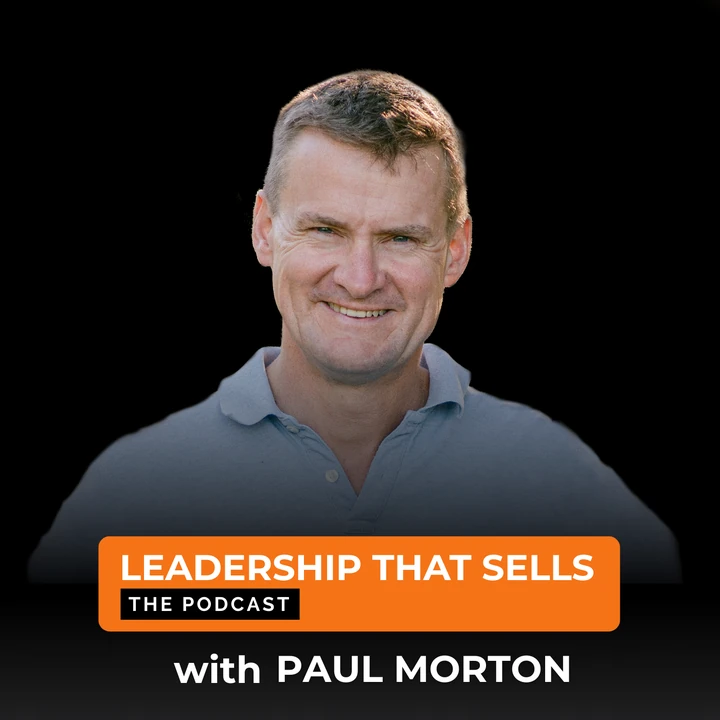
How to be centered as a manager and a human. Beware of your ego
with Steve Fiehl
Show notes
Your ego leads you to bad decisions and inauthenticity. Being centred can stop that happening.
Steve takes us through his way to observe your thoughts, clear your head and bring your real self to your management role.
He also shares that his biggest mistake was how he went about building a culture of empowerment.
Find Steve on LinkedIn: https://www.linkedin.com/in/steve-fiehl-4562412/
Web: https://www.stevefiehlphotography.com/
Insta: https://www.instagram.com/stevefiehl/
————
When you’re ready, upgrade your leadership here:
Transcript
Automated transcript. Speaker labels and spellings may contain errors.
Paul
[upbeat music] Hello, and welcome to the Practical Leadership Podcast where I interview great leaders and try to extract their wisdom and their experience for you to learn from, and hopefully avoid making their mistakes. If you want to upgrade your leadership skills in 25 minutes, check out practical-leadership.academy. My guest today is Steve Fille. I'll ask him to introduce himself in just a minute. We're going to dive into the ego today and how it can lead you to making bad decisions, and how to notice when it does, what to do about it, how to stop it happening, and being aware of your thoughts. And also, how his attempt to build a culture of empowerment was not everything it was cracked up to be.
Steve Fille, thank you for joining me. Can I ask you briefly, would you introduce yourself?
Steve Fiehl
Yes, sure. I'm glad to be here today. So I'm Steve Fille. I've been an entrepreneur during about 15 years. Uh, and the name of the company CrossKnowledge. CrossKnowledge has become the European leader in e-learning solutions for corporations. So now I have sold the company, and I became a business angel to teach what I learned and help new generations of entrepreneur to, to succeed. And also a social photographer to discover something else than business.
Paul
Mm.
Steve Fiehl
And maybe build up my creative side. So I had to become a leader to ensure the success of the company because I think that people have to be managed, but they need to be led, and I had to learn this from day one.
Paul
When you said people have to be managed, but they need to be led, can you break that down a little?
Steve Fiehl
Yeah. What I mean, I think, is that they, they have to be managed to ensure the, the, the success of the company because you set up goals, then you have resources. The women and the men are the human resources of the company, so you have to, uh, set a direction, give them feedback, delegate, uh, give them goals, et cetera, you know. So this is why, of course, they have to be managed. Uh, but when I said that they need to be led, I think it's more from the heart. You don't, don't just want to be managed. You want to be led. That means you need to, you need to express yourself, and you need to be helped by someone to do so. Uh, you need to like him or her in a sense, uh, when you go to your office every day.
But when we do something, when, when we con- contribute to a company, we do it for someone, uh, who is the boss or the big boss, and this someone will envision you, will inspire you, will give you the energy when sometimes you're lost or when you're a bit fed up. And you think of him or of her when you work. This is something very strong, I think. You don't just do your job just because you have to do your job oth- oth- otherwise, you, you, you quickly get bored, and you end up resigning. You, you also do your job, of course, because, uh, or thanks to your colleague because you like your colleagues. You, you, you, you like belonging to a community. But this, this idea of having a leader who inspires you, I think it i- is very important.
You need that because people don't do ju- their job just because they are asked to do so. It has to come from, from within, from the bottom of their heart, and this is when they are the most efficient and when the company is the most successful.
Paul
You've heard, I'm sure, uh, autonomy, mastery, and purpose, you know, Daniel Pink's thing. And he said that he thought he got it wrong with the purpose. Autonomy and mastery, yes, I think that's the management side. You give people the job to do. You, you let them develop in what they're doing. But the purpose, as you say, you have to envision them, and there's the two levels there perhaps. The big purpose, the changing the world purpose, the doing a greater thing that's greater than you, and then the small P purpose, the reason you get out of bed every day, your colleagues, your, your relationships with people.
Steve Fiehl
Yeah, exactly. But it, it, it seems to me that the, the danger with the, with this big purpose is sometimes that the company, uh, have understood this, and they invent sometimes a big purpose that is not embodied naturally and with authenticity by their leaders. So when you feel that someone, I mean, the leader really believes that we will achieve the big purpose, you work day and night for him or her. Think about, uh, Elon Musk with this giant poster of Mars at the entrance of, of SpaceX. And next year also on, in, in the, in the very, very soon, uh, SpaceX will send human beings on the moon. So it's really vision that is, that is working, and he, he's, he's someone who strongly believes the vision will become true one day.
So it's a, so there is a huge b- difference between a, a vision, uh, that is just somewhere, you know, in the, in the annual report, and a vision that a leader will repeat day after day, that will drive his decision or her decisions, and that will inspire people every morning.
Paul
Helping people get out of bed.
Steve Fiehl
Yeah, exactly. [laughs]
Paul
Hmm. So-
Steve Fiehl
You're the morning coffee.
Paul
Absolutely. So once you're out of bed, and you're into the office, or you're online these days, when you have given advice to first-time people managers, what have you said?
Steve Fiehl
I think I, I, I told them the greatest learning that I had myself. It's about being centered. That is, um, maybe unusual, an unusual term, so I will try to explain. This means beware of your ego. And what do I mean exactly? In fact, when you're a child, you build a sort of armor to make sure you're loved, you are recognized. So some, uh, I'll give you a few examples. Some people, for example, do not express their feelings because they are afraid to be considered as weak. Other people are always doing something, setting up new goals, achieving, achieving, achieving. They are sort of an achievement machine. Because not achieving anything means becoming worthless. This is what they believe. Another example, people who always want to help others because they want to be useful, because they think that if they are not heroes, they will not be loved.
Of course, this all comes from our parents, from our origins, the way we have been, uh, educated, and it has become a, a very strong part of our personality, so it's very difficult to get rid of it. And when you start managing people, your ego is boosted. So this armor is, is your ego. Your ego is boosted because, look, I'm recognized, I'm powerful, uh, I, I, I'm taking decisions, uh, regarding other people, and if I've been chosen, that means I, I'm loved, I'm recognized. If you manage with your ego, you start making the wrong choices because, for example, you force someone to do something because you are the boss, or you do not express your emotions because you think that you are the manager, you can't be weak, right?
So every time you will choose the options that reinforce your power, even if these are not the best options. And what I learned through my journey to leadership, uh, in fact, is to start noticing when my ego was calling me and pushing me towards the wrong side. Exactly as in Star Wars, you know? Which is a metaphor of the ego. It's the dark side of the Force.
Paul
Mm-hmm.
Steve Fiehl
When you start being someone else than an ego-driven person, it's a miracle because you become a leader immediately. So that's, this is my, I think my strongest advice. When you start noticing your ego, when you start noticing your patterns, when you, and, and you realize you can just be someone that is somewhere else, that is beyond your ego, then you become a leader.
Paul
So how do you do that?
Steve Fiehl
I think a, a, a very practical way to achieve this that is very powerful I f- I found is some- something that you may know, that is meditation. So meditation may be considered by s- some people as a sort of a, almost a spiritual exercise. But in fact, it can be done in a very simple way every morning or at the end of e- of every day. What I do is I just take 10 minutes, not more than that. It's enough if you repeat it very regularly. But just take 10 minutes just to do nothing. You sit somewhere in a quiet environment. You just become aware of your breath. You breathe normally. And then by doing nothing and observing your breath, you start observing your thoughts, and all the thoughts you have in your brain.
Like imagine you look at the sky, and it's a very cloudy day because there are a lot of thoughts. And the more you observe your thoughts, the more you will discover that they will, that they, that they will take you. They will, they will drive you. A thought goes to another thought, et cetera. So I don't want to, to give a, a meditation lesson, but one very simple way is to let them go. Let your thoughts go. And then exactly as with the sky, you will start to see the blue sky. So the f- so the blue sky has been always here, but it's been hidden by those clouds, and your clear mind has been always here, but it's been cluttered by your thoughts. So the, when you start observing your thoughts, you will become a bit more quiet, and the next time you will be in an interaction with someone, you will start noticing progressively that maybe you don't listen 100%, that maybe you are preparing what
you will say, that maybe you are taking the wrong decision. Just becoming, you will become, I think, more aware of yourself. That, I think, for me, the first, the, the cornerstone of leadership, becoming aware of yourself, of your patterns, of your thoughts, of the way your ego is driving you. When you start doing that, just taking 10 minutes every day for yourself, you will free up yourself, and you will become a much better person, someone more authentic. You will take your time. You will become probably more human. You will increase your listening skills. You will probably take much better decisions just by becoming more patient, more self-centered, more aware of what's going on. So it looks simple, but of course it's a long way. But you, you don't have to force anything. It will come very naturally. Just by having this kind of practice, this 10 minutes practice every day.
Paul
That's wonderful. I'm, I'm feeling more at, at ease already just listening to you.
Steve Fiehl
[laughs] Thank you. Thank you.
Paul
I, I must, I must share that, uh, it was a, a session that we had together. I, I don't think I mentioned it at the beginning, but, uh, you and I used to work together. You used, you used to be my big, you were my big boss, you know, the guy-
Steve Fiehl
Absolutely.
Paul
And it was, uh, a wonderful session that you led together with a, a few of our colleagues on a hillside in the South of France at a big company kickoff on meditation, and that's really one of the things that started me looking at meditation as well, so I'm grateful for that. So you came to meditation as a way of being aware of your ego. What mistake did you learn most from in your career?
Steve Fiehl
Hmm. Yeah. I, I, I think I got a bit confused with what we call empowerment. Uh, uh, I think I, I, I never had any problems to, to delegate tasks when I was in management. Well, when I was, sorry, in, uh, a manager, but when you become a leader, you are, you are at another level. You try to build an empowerment culture. So you empower people to do a lot of things. What we did at Crossnet at some stage, the sales were so much empowered that they could twist our offering or they could sometimes invent new offerings, provided they found customers for that. So the offering has been, uh, growing and growing so much, uh, probably because of this, uh, empowerment, uh, style, uh, we gave especially to the, to the sales force, but not only.
For example, in the innovation teams, uh, some teams could dedicate 20% of their time for, um, innovation projects. So on the paper, maybe in management books, uh, at Google and et cetera, you may find it's a great idea to give so much power and so much time to people so that they could do their personal projects and bring innovation to the company. But in fact, we were already driven by innovation. Everyone was innovating. So at some stage, it has become chaotic. Chaotic. We had, we were innovating in so many fields that the customers were lost. The salespeople were lost because when they, when they had to be trained, uh, the offer, the offering was so wide that it took you months or years to understand what you could sell.
So it, it led to chaos. And what I found is that when you empower, it has to come with an even stronger vision. You have to set up rules and directions so that you're sure that when you empower, people follow those guidelines instinctively, when they understand the vision in a very deep way. The vision can't be just blurry or vague. It has to be pretty precise. It's not just what do we want to achieve as a bigger purpose. It's also how do we want to achieve this? What do we want to be as a company? What is the way? What are the kind of behaviors we want to see? We want-- What kind of a company do we want to live on a daily basis? And by doing this, you give a much more precise framework. I'm not talking about processes, uh, I'm, I'm just talking about a stronger vision that is more precise. When a vision is precise, then suddenly people do not do what they want, basically.
They can be entrepreneurs themselves inside a, a, a company based on, on entrepreneurship as a value, as a core value, but they have to be comforted and guided by this overall vision so that we are n- we don't, we are not in chaos. So that was probably, um, my biggest mistake as a leader, is that maybe the vision was not enough precise about what we are and what we are not, so that we would have probably avoided this pitfall.
Paul
When you talk about entrepreneurialism as a core value, I think the thing to remember is that entrepreneurs are not cowboys.
Steve Fiehl
Exactly.
Paul
It's very easy to see that an entrepreneur just does anything. Does anything to make the deal happen. Well, no. The best entrepreneurs that I work with are laser focused. They have a very clear, direct, precise vision of what they want to achieve. They're going to Mars. What we're doing doesn't fit that vision. We're not doing it. And if it's embodied by everybody in the organization, that's how you innovate.
Steve Fiehl
Exactly.
Paul
So what's your vision for the present?
Steve Fiehl
[laughs] So, uh, presently, I'm helping, uh, young startups to, to raise funds and achieve their, their own vision. I, I, I'm probably the one who, uh, I'm a very active board member, and, and, and I help those entrepreneurs to, uh, to have a much clearer vision of what they want to achieve. And I remember I, I, I worked with a, a leader of this, uh, company, which was, I would say, 70% brick and mortar and only 30% online, and we designed a vision where they would become 90% online with a B2C, with a B2C approach. And he, he was so enthusiastic, it was so clear that suddenly he got rid of many different activities he was losing time on, and he, he, he became laser focused, as you said, and we succeed to raise a, a huge amount of money to, uh, help this company make this
dream a reality. So, and they are on their way. It's great to see that- It, it can work when you have a clear, a clear vision. Another thing I am on, uh, right now, it's, it's totally different. It's on the photography side. I'm, I'm exploring, I'm, I'm doing portraits of people who will die in the coming months or so because they are critically ill in, in palliative care, basically. And with them, I'm, I'm talking about death. It's, uh, so it may seem a bit, uh, bleak, but in fact, it's very intense, and it may sometimes be very joyful because those people, they have s- so much to teach because they know that they will die, and they have started giving up their ego. Because when you know you will die, I mean, you don't care about your ego. You know that it's the most important things are, are beyond that, right? They don't care about power.
They don't care about, uh, toxic relationships. They don't care about anything useless anymore. They are centered about love, loving others, being loved, and, uh, making terms with themselves. So they are, they are saying incredible things. And for me, of course, it helps me to, to be even more authentic when I, uh, meet them and try to take a portrait of them that is who they really are. So that's, uh, this is a quest for authenticity, I think, there again in this, in this project. This is what photography helps me to do. So very interesting times.
Paul
On your quest for authenticity, on this, this journey of abandoning your ego-
Steve Fiehl
Yeah, exactly
Paul
... I'm guessing it's not something you've always been able to do. If you had to look back to your much younger self, what would you want to thank your younger self for doing?
Steve Fiehl
You know, when I was younger, I, I was much more, uh, I was, of course, uh, anxious. Uh, I wanted to be recognized. Sometimes I was such a disaster as a manager. But, um, but something I could thank my younger self, uh, for doing is, uh, being curious. From the very beginning, I was, I was curious. So I was graduate from the most prestigious business school in France. I could have been working in finance, you know, consulting or at Lor- L'Oréal, and, uh, I choose to be a journalist. And then I gave up, and I spent three years in Asia with a self-made entrepreneur who was, uh, initially an orphan, and he dropped out, uh, school at the age of 15. And he taught me business with Indian, with Chinese people. You know, [laughs] this kind of a, and I, I had a life of adventure, uh, traveling around and, uh, negotiating with people I, I would have never met i- in, if I, if I stayed in, uh, in France or if I've
been in a more conventional career, you know. And this has been for me the best MBA on Earth, and not only MBA, I would s- I would say, uh, a lesson of, uh, of humanity, this guy. Today, I've, I've become a photographer for the same reasons. I try to remain curious. Uh, my first photography project was with, uh, homeless people in New York for my, um, uh, school, my photography school in New York. I had to find, uh, a place with people. Uh, the course was called People and, uh, and Places. So I, I, I choose to, um, to go every day to a center for homeless people where they were taking care of, of themselves and helping them to get back on their feet. So it was a one year, one year and a half program to make sure they could, uh, find again new life, a job, an apartment. So I came to know those people that usually you're a bit afraid of.
I, I, I, at the beginning, I, I was in a sort of a, I was a bit scared, and then I felt compassion. And after some weeks and months, I, I gave up compassion. I, we, we just became friends, and, and we were equal. Because when you see those people in this, in this center, uh, they were clean. They were dressed up as, uh, you and me. Uh, you don't see homeless people. You see a, a man or a woman just like you and me, and then suddenly they get, you get rid of the labels, you know? Once again here, uh, it's because I, I think I was, I was curious, uh, to know, uh, other kinds of people, uh, something I, I, going beyond the surface, opening the doors of this homeless center. Uh, I think it was a, a once in a, in a lifetime experience for me just being ... And it was thanks to my younger self. Uh, it wa- it was about curiosity, remaining young in your mind.
It's a, it's, it's, it's, it's a very interesting quality to, to keep, remaining young.
Paul
Lastly then, apart from stevefielphotography.com, how can people find you?
Steve Fiehl
Well, they can find me on, uh, Instagram, uh, and they can find me of course on LinkedIn.
Paul
Then all that remains for me to say is, Steve Field, thank you very much for joining me.
Steve Fiehl
And thank you, Paul, for this wonderful conversation about leadership and humanity. [upbeat music]
Paul
That's a wrap. Thank you for joining me today. Your homework: subscribe and share this with a friend or colleague. Please leave your five-star review and any comments you have, because that really helps me to improve every day, and it helps people to discover me online. If you want to upgrade your leadership skills in 25 minutes, you should check out practical-leadership.academy. [upbeat music]