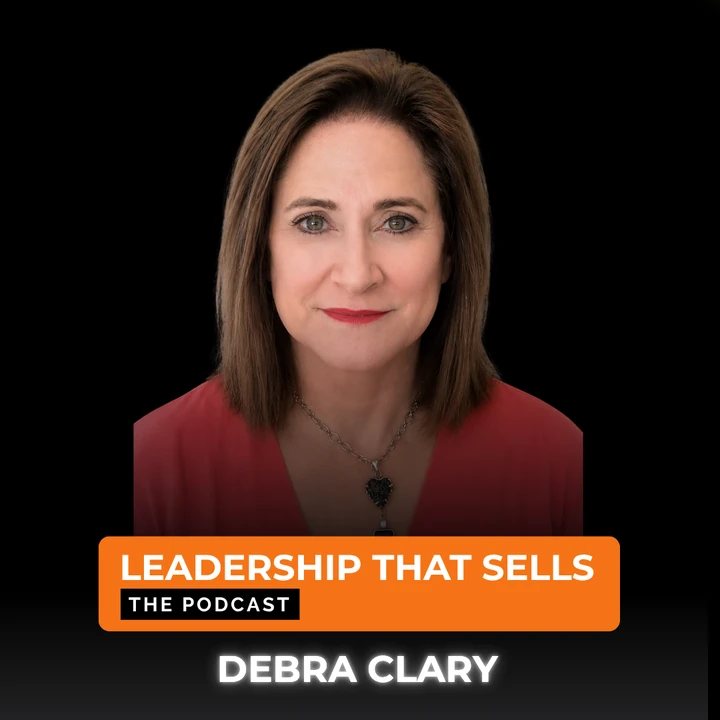
How to Avoid Leadership Certainty Traps
with Dr Debra Clary
Show notes
The more senior you become, the more dangerous certainty gets. That’s the idea at the heart of this conversation with Dr Debra Clary. Most leaders are rewarded for having answers. The problem is that eventually the answers become the thing that limits the business.
What struck me most was the distinction between confidence and certainty. Confidence helps leaders make decisions. Certainty shuts down debate, curiosity, innovation, and often performance. We talked about why employee engagement is collapsing, how leaders accidentally train curiosity out of organisations, and why the businesses that keep asking better questions outperform those that think they’ve already found the answers.
In this episode
A reminder that your job isn’t to have all the answers.
- Bring the people closest to the problem into the conversation before making decisions
- Delegate problems, not tasks
- Create confidence without pretending to have certainty
- Build a culture where new ideas are welcomed instead of defended against
- Ask better questions because answers are increasingly becoming a commodity
Episode highlights
- 03:20 Why the best executives listen differently when the pressure is highest
- 05:35 The alarming message disengaged employees are sending leadership teams
- 08:20 How organisations systematically train curiosity out of people
- 11:10 Why AI makes questions more valuable than answers
- 12:40 The leadership trap of looking confident by sounding certain
- 18:55 The founder who discovered he was the reason innovation had stalled
- 23:05 What AI might be doing to our ability to think for ourselves
Links and resources
Curiosity sounds soft until you realise how many business problems start when people stop asking questions. If you enjoyed this conversation, follow the show, leave a review, and share it with another founder, MD, or senior leader who might benefit from hearing it.
Transcript
Automated transcript. Speaker labels and spellings may contain errors.
Paul
[upbeat music] My guest today is a leadership advisor and Fortune 50 executive who spent decades inside high-pressure decision environments. You wouldn't know it to look at her, but she's been everywhere and done everything. She's worked in healthcare, consumer brands, strategy. She is, however, the author of "The Curiosity Curve." Now, you'll like this because it is research-backed. She's not making it up. It's a framework that examines how curiosity changes as your leadership grows in seniority, and then how that decision quality falls off a cliff. Well, she says flattens over time, but I would say falls off a cliff, frankly.
Dr Debra Clary
Mm-hmm.
Paul
She argues that it is certainty, not ignorance, that stalls executive performance. Now, she's worked in Coca-Cola, she's worked in Humana, she's worked in Brown-Forman as a leader, and now she's helping senior leaders like you think more clearly when the stakes are at the very, very highest. A warm welcome to Leadership That Sells. This is a podcast about the real conditions where leadership and sales actually work and where they fall apart quietly, and sometimes not so quietly. I talk to founders, to chief execs, to sales leaders, and operators who've made decisions when the effort was high, when the pressure was real, but the usual playbooks that they could dig out of their old bag didn't quite fit. Uh, the goal is not to dig in and find slogans or frameworks, but we're trying to surface patterns that we can all learn from, things that consistently create momentum, things that w- try to understand what gets in the way, and then learn from experienced leaders who eventually learn to stop doing some of the things
that we shouldn't, we should also stop doing. So if you're responsible for results and not just ideas, you are absolutely in the right place. And it is my delight to welcome Dr., Dr. Deborah Clary. Thank you very much indeed for joining me today.
Dr Debra Clary
Oh, thank you, Paul, for having me. This is exciting to be with you today.
Paul
I, I, I love the whole premise of... And it's rare to be able to say that because quite frankly, there's an awful lot of books out there that should've been a blog post. In fact, there's an awful lot of books out there that should've been a tweet, right? 240 characters, yeah, I'm done there. Let's move on. But the whole concept of curiosity. It's one of the core things I hire for is curiosity and courage. The courage to ask the right questions and the curiosity to actually want to know the answers, and maybe even sometimes listen. Um, and your, your whole, your whole point about how it's the, the certainty that causes so many problems. Isn't, isn't that always, um... Oh, it's one of those wonderful American authors from the early days who said something like, "It ain't, ain't the things that we don't know that's the problems, it's the things that we think we know but ain't so."
I think it's-
Dr Debra Clary
[laughs] Love it
Paul
... one of them. That's great.
Dr Debra Clary
Yes, yes. I love it.
Paul
So you've spent an entire career. You've moved through some very different operating environments. You've got Frito-Lay, you've got Coca-Cola, Papa John's, great pizza, Brown-Forman. Uh, what were the moments that most changed how you think as a leader under pressure?
Dr Debra Clary
So, you know, I had the advantage of working with great leaders, so when you're in a Fortune 50 company, you have really some top executives, top leaders. So the opportunity to be young in those environments and to be able to watch executives make decisions. And for me, the ones that I think were the best under pressure are those that would bring a diverse perspective into play and ask questions. "What do you all think?" Uh, and being able to listen differently than perhaps other people would. I mean, it's often said that the person with the most information is least consulted.
Paul
Yeah.
Dr Debra Clary
So the people on the front line, you know, the, the salespeople or the people on the, the manufacturing floor is, uh, we try to solve problems without their input. And in my experience and what I saw role model is bringing in people that were close to the problem and to be able to ask their opinion.
Paul
I, I, oh, and how. And it's the coal face, it's the chalk face, call it what you like. Um, you got the people who are actually involved in... They're, they're facing the problem, and then we try to solve it and tell them how to go fix it. Well, number one, there's no buy-in. Number two, it won't work because they, they're not, they're, you're not connecting to what they're seeing every day. And number three, you're lacking information.
Dr Debra Clary
Yes.
Paul
There's three reasons why it's, what you're talking about ain't gonna work.
Dr Debra Clary
Yes, yes. And, and we, we stumbled on this when we did our, our, our research, and we compiled that w- in, in conjunction with Gallup. So Gallup measures engagement across the organization, and they had just released, uh, last fall their engagement report, and in the history of measuring engagement for employees, they'd never seen it so low, and particularly very low for millennials. Millennials are between the age of 29 and 40, and h- very high disengagement. So we brought together a focus group of these individuals. Now, why this is concerning is one is just productivity, and because they make up, like, 35% of the workforce. But more so is that these are the individuals that you would be developing to go into executive roles in the next decade.
So they're signaling, "We're not interested." So we brought them into a focus group, and the thing that came out in multiple focus groups was, "My leader doesn't know me and doesn't care to know me." And I asked, "Well, like, they don't know you run marathons or you like to fly kites?" And they go, "No, no. They don't know that, how I can solve the problem. I have solutions, and I'm not asked about how to solve them. I'm just merely told what to do." So this sense of we're shutting people down. We're not leveraging their, their assets, their mindset, their knowledge. We're simply giving them direction, and that's a recipe for disengagement.
Paul
Do you know when you look at any new hire situation in any organization, the new hires are typically given to the newly baked managers, and that is a circle and a cycle that I think has forever been thus. It certainly happened to me. I was given a fairly crappy manager first time around. I was a very crappy manager first time around until somebody came up and said, "This is actually a profession. You can get good at this."
Dr Debra Clary
[laughs]
Paul
"You can learn how management works." And I was like, "Really? It was even a thing?" I didn't even know it w- I didn't even know it was a thing. I didn't even know it was a domain into which you could l- you should lean. And somebody came along and said, "Your job is not to get things done. Your job is to get other people to do things." You know, that, that sort of fundamental concept. And I'm wondering if, and this is completely sidetrack here b- because we don't wanna really w- wanna go into the grounds of it, but ... No, maybe we do. The, the reasoning behind these things is sometimes, uh, a key into solving them. It, I, I think maybe because if I look at my own career, a lot of the senior leaders that I had were all of a type who would simply either dictate or say, "Go
fix these problems like that."
Dr Debra Clary
Yes.
Paul
They would dictate a ... They would, uh, delegate a task, whereas as we all know, the best thing you can delegate is a problem. And you delegate a problem in a good framework, in the right way, and all that jazz, and you are not only trying to solve the problem better because the person who faces the problem is lower down the food chain, but you're developing the individual themselves. And that delegating of problems, that, that encouragement of curiosity, that delegation of authority-
Dr Debra Clary
Yes
Paul
... as well as giving people the tools and the skills, and I think that's a, I think that's a big old part of this. Well, what, what ... Did your data tell you anything in the reasoning why?
Dr Debra Clary
So, yeah, so I, uh, uh, I absolutely agree with you that leaders do lead in that way. Uh, but you know what? It, Paul, it's not ... We have taught leaders that you need to have all the answers, right?
Paul
Oh, no.
Dr Debra Clary
So if you, if you even peel it back all the way to childhood, so when we are toddlers going into, uh, primary school, uh, we ask about 289 questions a day. You know, why is the sky blue? Is the ... Why is the grass green? You know, those kind of questions. And by the time we're adults, we're asking about five questions a day. So, like, what happened?
Paul
What's for lunch?
Dr Debra Clary
Did we, did we learn it all? No. We are taught to be incurious. So you think about, right? So you think about, oh, d- whatever you do, don't open Pandora's box, right? Uh, the curiosity killed the cat. Sit in your seat. Raise your hand. And we are taught how to have, to answer questions, not to actually have questions, right? So we are taught to be incurious. Then we go to the university. We get these degrees, and then we're rewarded for that expertise. So if you're an accountant or a medical doctor, uh, you are paid for those skills. And by the way, we have so much constraints on our time, and we have so much we have to get done, is that we go to efficiency. We go to speed. And so we just answer the question or we tell people what to do. And our data shows that employees do not thrive in that environment.
Paul
I'm gonna do what everybody does at this point in time and invoke the mighty AI and say not only are we buggered because we don't know how to teach people how to lead, but we're gonna be royally buggered because we are now leaning heavily into AI to think on our behalf. So you get leadership going to Chat, Claude, Grok, APT and saying, "What do I? How do I? Where is the? What is the?" So they're stopping thinking. Their teams are stopping thinking. Everybody is stopping. They're, they're no long- They're not stopping to think. They are, they're pr- they're preventing themselves from thinking. And one, one of your core ideas as I understand it is that organizations don't typically fail because people stop doing.
They stop, then they fail because people are no longer interested. They're no longer curious. That curiosity collapses. It's just ... It's almost, um ... I don't know what the m- the, the biggest word I can think of is, but i- i- it's existential. It's existential for humanity. Our lack of curiosity is like, "Well, I don't need to know how fire works. I'm gonna live in a cave." That sort of level of self-perpetuating doom. However, there's great hope. I have great hope. Go on.
Dr Debra Clary
Absolutely.
Paul
How does that look like? What does that look like? How do we prevent this? When you start seeing the signals, what are the signals you see?
Dr Debra Clary
So the ... I mean, the g- here's the good news is that anyone with a computer or a phone can have an answer, right? So i- answers become equal. Anybody can have the answers. And if you want to continue to have a competitive edge, either as an individual or an organization, it's about having the right questions or the boldest questions. That's the differentiator today, and that's ... And at the, at the, uh, essence of a question is curiosity.
Paul
Yeah. There's a challenge though, right? Um, and I've increasingly struggled with this tension, and it's a tension between ... I'm, I'm increasingly getting some gray hair here, right? And I keep it short so you can't see it. I need a haircut, but keep, keep it even shorter. There's more and more coming out. You get the gray hair, and people look at it, you as somebody with some experience, and therefore with some answers. And if you have some answers, you also then have to project that with confidence. And if I go with too many questions into the wrong circumstance, I and my organization are not rewarded with ... funding, not rewarded with opportunities, not rewarded with, you know, continued employment because people look for confidence based upon certainty. How then can I stay decisive without being trapped?
Dr Debra Clary
Yes. So here's what I, uh, when I- I'm an executive coach. I coach people at the top of the house, if you will, and they come up with that same thing. Like, "Well, I wanna look like I'm confident and that I'm decisive." And I say, "You're absolutely can do that. You can state your opinion about something, or you can state the direction, and then the next thing is, 'But I wanna hear what others think about.'" Inviting people in to, uh, to be additive to the direction that you just said. Or, "I have an opinion, but I would love to hear a counter-opinion to what I'm talking about," right? That's how you maintain that confidence and that decisiveness, but then you're opening up for, "I would like your perspective."
Paul
Do you find, however, there's a, I think there's, uh, I've heard it called the HIPPO syndrome, which is the highest paid person's opinion, right? The HIPPO.
Dr Debra Clary
Say that, say that again, Paul?
Paul
The HIPPO syndrome, highest paid person's opinion.
Dr Debra Clary
[laughs]
Paul
Right? And as soon as the HIPPO opinion hits the table, shuts all the conversation down. "So I think this," says your boss's, boss's, boss's boss. "Do you think differently?" "No, boss, we all think the same." Right? And yes, I think there's great strength, and in fact, I think that's how you build a learning culture and a learning environment is that your boss asks for feedback. But I think there's, the order is important.
Dr Debra Clary
Mm-hmm.
Paul
However, if I go last, I'm not being decisive. How do, how do you frame that? How do you wrap that in without this tension trapping you?
Dr Debra Clary
Mm-hmm. Yeah. So how, how I do it is I will say, "Here's the situation that we're faced with. I have some experience in this area. I have some potential solutions to it, um, but I know that how we're gonna solve this in the best way possible is if we're all exploring the possibilities of this." Right? And it's also, this isn't something if you are an individual that typically gives decisive direction, and now all of a sudden you show up and you say, "Oh, fairy dust, I want everybody to contribute this"
Paul
[laughs]
Dr Debra Clary
In, in the sense of you-
Paul
Yeah
Dr Debra Clary
... you have to work your way in there. And when you have been able to create an environment where people say, "My voice matters. My values matter here," uh, and you, they believe that, and you show up as a leader every time you're with them in that way, that's when you create that environment of I have some ideas, but I know we'll get better ideas if we, if we work together on this. You just have to build the trust with your team.
Paul
I mean, you found, I think it's something like 17% of leaders showed balanced curiosity. So you're then saying that there's a way of getting there. There's a journey to take people on. You don't wanna turn around and say, "Okay, kids, over to you." What were the patterns you saw that separated the really strong decision-makers from everyone else?
Dr Debra Clary
Yes, so, uh, what you're referring to is in the book, we, the research that we did is that there are four factors that make up the curiosity curve. We, it's a curiosity assessment, and they are exploration, openness to new ideas, focused engagement, and inspirational creativity. So we look at this as a system of those four capabilities. So exploration is somebody that is saying, "Hmm, what have we not thought of? What, what is out there that we're not, we haven't considered," right? These are big questions that you're inviting others in. You're asking yourself these questions, but you're also, um, uh, asking others. The next one is openness to new ideas. So when someone comes to you and say, "Hey, [laughs] I've been thinking about this," or, "This is broken.
I have an idea," is you say, "I wanna hear more." Um, inspirational creativity is when you say, "Wow, what is another industry doing that we're not doing?" Or, "What's an i- industry," like, uh, "What is airlines doing that we could apply to hospitals?" You begin to take a look at other possibilities outside of your, what you, your narrow focus. And the last one is focused engagement, and focused engagement is being able to lock in and listen to someone and then take action. So if we lived in a world like we were always exploring, we were frolicking around, but we weren't getting anything done, that's not success in an organization. But if we're always focused and just getting it done, telling people what to do, then we're missing opportunities. So the best decision-makers, I believe, are those that, you know, "Here's the problem.
I would love your input on this." And then those are, for me, are the ones that operate the best under pressure in making decisions.
Paul
That concept, that certainty, hardening under pressure, I think that was interesting when you were writing about that.
Dr Debra Clary
Yes.
Paul
The I'm in the moment, I have to make the decision, this is where we're going. I think, yeah, there are times when you need decisive leadership.
Dr Debra Clary
Yes.
Paul
I think ... Can, can you talk to me about how that might be or seem different? I mean, your experience seems to be quite large enterprise focused. Um, and there are a lot of people out there, um, especially these days, who are out on their own. They're starting up. They're doing their own thing, and I know there's a fair few of them that listen to this as well. Do you have any words of wisdom or good stories that might help these people make decisions better under pressure, not go with the flow?
Dr Debra Clary
Yes. So I, uh, about a y- year ago, I had, uh, he, he, he's an entrepreneur, CEO, found- founder and CEO of this company, small company, and they Found themselves in a situation where, uh, revenue had slowed, margins had began, began to collapse, and they weren't coming to market with new products like their competitors were. So you would agree, Paul, that [laughs] is a bad situation to be in.
Paul
Yep.
Dr Debra Clary
And he said, "Can you come lead a two-day strategy session?" And I said, "Would love to do that, and would you be willing to take the curiosity assessment?" That also gives me an idea of what is the system around curiosity. So we did this two-day strategy session. They had taken the assessment, and when I was sharing the results, under openness to new ideas, there were 10 executives that took this assessment, all reported to the CEO. All right? All of them scored high but one person. So the distribution curve is high on openness to new ideas. One person was low. So I started asking the group, "Well, how is it that you're not going to rank high in openness to new ideas?" And it was crickets. Nothing being said. And then the CEO raised his hand, and he said, "Guys, that's me. That low openness to new ideas is me." Of course, they knew it, but nobody was, no one was gonna point, point it out to him, right?
Paul
Yeah.
Dr Debra Clary
And he said, "You know what I'm realizing is that I'm the founder. I think I have all the answers. I know what to do. This is my baby. This is my life." And then I said, "How's it working for you?" And he said, "Not well," 'cause look at the, the business results. And so we were able to, in the moment, have a conversation about how the team could listen more to one another and really move forward on some of the new ideas that they had been, um, that they, they had brought up. It's the idea of understanding what's my current state? What, w- where am I on the curiosity curve? Where might my certainty be causing issues, and how can I make a shift? And that's the work I do. I work with leaders and executives to understand current state and to think about ways in which they can put the curiosity curve to play in order to drive performance.
And in our research, the ... how this all started was I had this hypothesis that curiosity was missing in organizations. And so w- I asked the research team to look at is there a correlation between leadership, performance, and curiosity? That's all I wanted to know. That was ... My, my hypothesis was it was missing. And three months later, they came back and said, "How'd you know?"
Paul
[laughs]
Dr Debra Clary
And I said, "Three decades of navigating complex systems." Research, if you have a leader that has a high level of curiosity, you have a higher level of performance. They're directly related. And when I found that out, I said, "People in the world need to hear this." They need to under- leaders need to understand that if they can change the way they interact, that they can create a culture of curiosity, they're gonna improve performance. I mean, I would not be doing this work if it were just this is a nice to have. No, it's essential in terms of growing your business.
Paul
I think especially in the world where access to information is not the problem. If access to information was the problem, we'd all be billionaires with six-pack abs.
Dr Debra Clary
Mm-hmm.
Paul
It's ... That was solved 25 years ago with Google. I think even analysis and curation is no longer a problem with AI tools. I think the curiosity to apply our intellects in the right way at the right time, I think that, as you say, is rightly a differentiator. Decision-making is a differentiator. Empathy. These things that machines can't have, don't have. They don't have experience. They have regurgitation. Um, is there an AI angle to all of this? I have to ask these days, I'm afraid. Is there, is there some sort of interpretation, interpretive thing that you can throw against the wall that's coming our way with overuse of these tools perhaps?
Dr Debra Clary
Um, you know, I think that's definitely a, a question that's worth answering, and I, at this point, I don't know that we know.
Paul
Ah. Don't think anybody has an answer. [laughs]
Dr Debra Clary
Yeah. The, the, the, the sense of, um ... What I w- worry about is the atrophy of the brain. Uh, so what is, what's happening to our, our brains when we're no longer searching. So we know when we're searching for answers, uh, psychologists call it, um, novelty. When we're searching for novelty, I call it curiosity, is that the brain lights up. And when you're getting, when you're seeking that, dopamine is going off, and dopamine is good for our, for our brains, right? Dope- dopamine is good for us. And I wonder if we're short- shortening that dopamine hit when we get instant, uh, answers by using AI. That's what I, I worry about what might happen to us long term.
Paul
Yeah. Well, I think the short-term gains are, uh, astonishing. There's some ... The, the m- new mathematical proofs coming out every other day of problems that have been around for 400 years. It's absolutely astonishing. New material science, protein folding. It's just amazing what we can do. And yet, and yet where we're gonna be in a few years' time if all of the entry-level positions have gone because that curiosity that we demanded people exercise on the way up the ladder has been also short-circuited, and we've, we've allowed our own to atrophy. Big questions. Deborah, as we wrap this up, is there perhaps one message that you would want to leave our planet with? If I give you the world's largest Sharpie and 1,000 billboards at every airport in the world, what would you write as one message to leave behind?
Dr Debra Clary
Be curious.
Paul
Dr. Deborah Clary, author of The Curiosity Curve. Links to the desc- and to the book will be in the description of this, as to everything that Deborah does, which is outstanding and highly to be recommended. Thank you very much for joining me.
Dr Debra Clary
Thank you. [upbeat music]