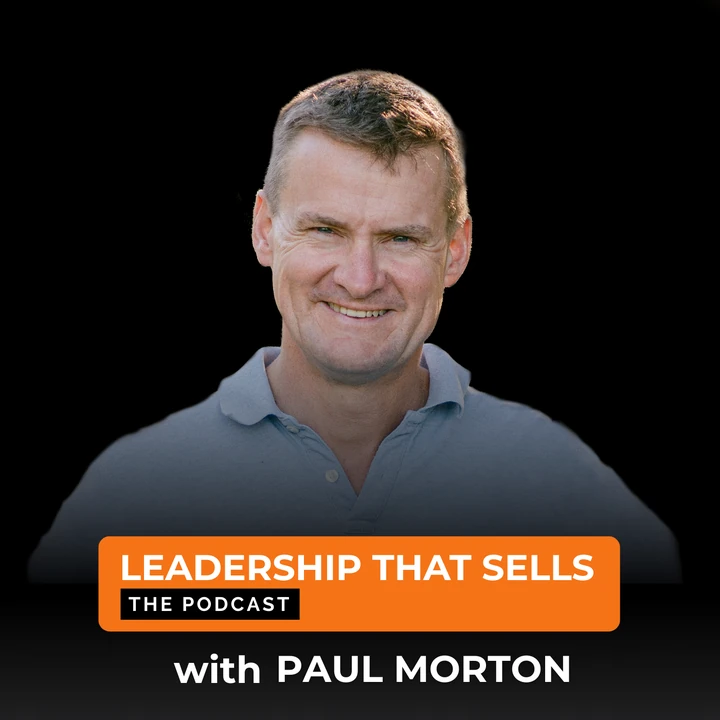
How to express your genius
with Myles Downey
Show notes
In this great episode I had the pleasure of chatting with Miles Downey, a top-notch c-suite leadership coach, author, and consultant. We delved into the fascinating world of coaching, exploring the similarities and differences between coaching leaders in business and coaching in sports.
One of my key takeaways from our conversation was the importance of self-reflection for leaders. Miles emphasised that taking the time to reflect on one’s own actions, strengths, and areas for improvement is crucial for personal and professional growth.
We also touched upon the lack of training for new managers, which is the perennial problem. Miles shared his insights on this issue, highlighting the need for organisations to invest in proper training and support for new managers. After all, we can’t expect them to hit the ground running without a bit of guidance?
Miles has quite the knack for helping people understand who they are as leaders, building up their willpower, and developing a mindset for success. And he’s a firm believer in having an insatiable desire for learning. According to Miles, continuous learning is the key to staying ahead in this ever-evolving world of ours.
https://mylesdowney.com/myles-downey/
https://www.linkedin.com/in/mylesdowney/
————–
Introduction [00:00:05]
The host introduces the Practical Leadership Podcast and welcomes Miles Downey as a guest.
Similarities and Differences between Coaching Leaders in Business and Coaches in Sports [00:01:38]
The speakers discuss the similarities and differences between coaching leaders in business and coaching coaches in sports.
Importance of Self-Reflection for Leaders [00:05:39]
The speakers discuss the importance of self-reflection for leaders and Miles Downey explains his process for helping leaders understand who they are.
Understanding Identity [00:08:18]
Miles Downey shares a story about a client who had a profound realization about teaching and understanding that each person needs to be taught different things. Once you have clarity of identity, you can ask yourself what that looks like and develop strategies, tactics, and behaviors.
Enabling Genius [00:12:57]
Miles Downey talks about his book, Enabling Genius, which is based on his experience of coaching people to use their own resources, imagination, and intelligence to make progress and gain confidence in themselves. He explains that the book is about understanding one’s unique individual genius, which is the embodiment of one’s potential.
Coaching on the Tennis Court [00:10:24]
Miles Downey describes a program he runs where he takes people onto a tennis court and gives them principles about how people learn. He explains that coaching is not about teaching or instructing but about helping people learn for themselves. He emphasizes the importance of paying attention to people and putting in place a little bit of structure to help them learn.
Building Willpower [00:15:54]
Miles Downey discusses the importance of building willpower and how it can be increased through multiple elements, such as clear goals and invoking personal identity.
Mindset for Success [00:16:46]
Downey explains how building a mindset for success is crucial and can be developed through continuous learning and experimentation.
Importance of Learning [00:17:23]
The speakers discuss the lack of training for new managers and the importance of learning as a skill that is not taught in traditional education systems. They also touch on the benefits of simple mental techniques, such as meditation, for improving clarity and focus.
The Importance of Self-Reflection [00:23:36]
Miles Downey talks about the importance of clear, axiomatic, and useful information for everyday people and the need for self-reflection for leaders.
Thanking the Young Miles [00:24:03]
Miles Downey talks about his past and how his naivety and innocence led him to where he is today.
Transcript
Automated transcript. Speaker labels and spellings may contain errors.
Paul
What are the similarities and differences between coaching in business and coaching in sports? Are we taking enough time to reflect on our actions, our strengths, and the areas we have for improvement? Let's find out what Myles Downey has to say in helping people understand who they are as leaders, building up their willpower, and having that insatiable desire for learning. [upbeat music] Hello, and welcome to the Practical Leadership podcast, where I interview great leaders and try to extract their wisdom and experience for you to learn from and hopefully avoid making their mistakes. Check out practical-leadership.academy because you want to help your new managers succeed with hybrid or remote working. [upbeat music] Myles Downey, thank you very much for joining me.
Myles Downey
Great pleasure.
Paul
Accomplished tennis player, C-suite leadership coach, author, consultant, man about town. I'm doing you a disservice undoubtedly. Would you please introduce yourself to both my listeners?
Myles Downey
Well, thank you, and, and good afternoon, morning, or evening, depending on when you're listening, uh, those two listeners. Um, yeah, I've, um, I've been in the world of coaching since... well, probably there wasn't a world of coaching, so I've, I've written about it in a number of books, which are, um, sell well and are, like, I get nice feedback on. Uh, but mostly it's what I do is I'm out there, um, working with people who, some cases lead large businesses, some smaller businesses, some business units. But so I ... And I do something that I call leader performance coaching. I'm there to help people succeed. And because I'm quite good at that and because I've got a bit of a reputation around it and because I've trained coaches, I also get to do odd jobs like work with, um, Eddie Jones and his coaches at, at England Rugby.
So it's, uh, there, there are those bits that are, are kind of the really fun bits that get mixed in with it all.
Paul
So when you're talking to the, the English Rugby coaches and you're talking to the C-suite execs of some highfalutin company, what are the similarities and differences between the two?
Myles Downey
It's, it's, it's quite a great question, and I, I think you should have given me about a week's warning. Um-
Paul
Oh, sorry
Myles Downey
... I d- ... No, no, no, no, no, it's, it's fine g- as long as people are patient with me. Um, there's, there's, there are similarities, um, and, but they're, they're fairly profound in the sense that they're, they're buried deep within the person. So mo- most people who, um, who adopt a leadership position, and, and when you're a coach to the England Rugby team, um, or part of that team of coaches, you are leading, um, other usually younger men, um, usually. Um, and most people when they show up as a leader don't really know who the hell is showing up. They're kind of a, a conglomeration of people they've admired or worked with in the past, so kind of the sins of the father is being visited upon the children, um, that.
Um, and then whatever they've picked up at whatever training they may or may not have done. Um, and then, and then there's how they respond in the moment. But it, but they... One of the things that I do with leaders and with people in s- in s- in senior coaching roles is I help them understand who they are. And if you have a profound sense of who you are, the confidence that comes from that, because what you do then is an expression of who you are rather than some damn trick that you've been taught by an inept trainer in some small windowless room somewhere. Um, so it's, so, so that, that's a commonality. I work with leaders to understand what their unique genius as a leader is and coaches to understand what their unique genius as a coach is as the, as the foundation point of what they then go and express in the world.
Forgive those last few words. They, they, they're overly flowery. Um, but, but that's what it... That's, that's, that's what's common. What's, what's different, of course, is that, um, is that at the, in sport, in the world of sport, you're, the, the, the, the response to what you do is immediate and before you. Often in the world of business, the response is months or even years down the road, so it's more difficult to course correct if you're, um, if you're a, a leader in business.
Paul
Hmm. Hmm. I think there's a, it's one of the Psalms, isn't it? It's, um, Psalms or Proverbs, probably Proverbs. "A man who's wise in his own eyes," uh, somebody actually who knows themselves, you know, it's the know thyself.
Myles Downey
Hmm.
Paul
You know, that's got to be a good starting point.
Myles Downey
Ah. Lies in their own, lies in their own... Lovely line. Yeah, yeah, yeah.
Paul
Hmm. Hmm.
Myles Downey
Brilliant line.
Paul
Hmm. So who shows up? I mean, I've always said, you know, this amalgam of people who you've, who you've had yourself as managers, and typically people's first impressions last, right?
Myles Downey
Hmm.
Paul
And their first impressions of managers are typically their first managers, and their first managers are typically in their first management role, because who do you get to lead the first people you have in the company but the most junior managers, and what's that impression? It's crap.
Myles Downey
And not only that, I'm gonna cut in, is, is that, uh, 71% of people who are given a first job in the UK of managing others receive no training. No training.
Paul
It's as low as that? [laughs] I thought it'd be much h- 71%? I think I've, I've seen that stat somewhere. I know that.
Myles Downey
Re- receive, receive no training, so, you know, only, like do, do the maths, 29% get any training.
Paul
Taking socks and toes off.
Myles Downey
Yeah, no, no, no, no, no.
Paul
I'm working. I can't go past 10 without taking my socks off.
Myles Downey
Yeah, yeah.
Paul
71% of new managers get no training. Um, I'm not surprised by that. I mean, but a big thing that I tried to aim this around is, is it's called the Practical Leadership Podcast, right?
Myles Downey
Hmm.
Paul
It's the idea that we can bring something practical to leaders typically who are dumped in this, either because founders of new companies or whatever, and all of a sudden they've hired 27 people, and rather than being an engineer, they have to manage and lead or have been dumped, as you say. "Congratulations, you're promoted." To what? "Managing that team over there." Uh.
Myles Downey
But they hate me. [laughs]
Paul
[laughs] Or, "I used to be one of the plebs, and now I'm one of the supreme beings."
Myles Downey
Yeah.
Paul
"How am I supposed to manage my pals?" Or, or, or, or, or.
Myles Downey
Mm-hmm.
Paul
All these things. Yeah. Okay. Who shows up? Who shows up?
Myles Downey
Yeah. Hmm.
Paul
Yeah. How do you-
Myles Downey
But it does-
Paul
You talk about training courses.
Myles Downey
Yeah.
Paul
How do you, how do you dig that out? What's your, your magic sauce for helping people to understand who they are? Self-reflection, for example.
Myles Downey
Well, I, it's, it's, um, actually, it's, it's kind of now a well-worked process, a set of, a set of questions with a little exercise stuck in the middle of it. Um, and, um, and obviously it's never stuck to rigidly. But the questions are things like, um, you know, as, as a leader, what do you enjoy doing? And some of them are very simple. They get a bit more complex. As a, as a leader, um, what d- what, you know, what difference do, do you think you make? Um, uh, as a, as a, a leader, um, what, what are you becoming? As a leader What do people come to you for? So there's a s- there's a set of questions that I've got. And then I do a little bit of magic, which is I get people to, um, as much as possible, relax, probably close their eyes.
Um, and I, uh, in, in that kind of more relaxed mental state, I take them on a little journey where they, they remember a time when they were w- with a team or, or, um, a leadership position. So it could be at any point in your life. Could be back in-
Paul
Cup of tea
Myles Downey
... if you went to university or ... Cup ... Exactly. So any moment where, where, where you, um, inadvertently or otherwise ended up being, um, in a leadership position or ... And, and, and it worked. And I get them to go back to that in their, in their memory, and I get them to picture it, and then I do this trick. I, I say, "I get, get, get that image of you in, in your mind leading to disappear and have that im- that be replaced by a symbol of you as a leader." And people don't believe it's gonna happen, but every time, the imagination, their intuition gives them an image, a, a, a symbol that's often s- significantly profound. And what I've done is it's a very simple trick. I've taken them away from their kind of rational minds and their thinking and their, and the filters they have to exclude useful information. And ... 'Cause the, the, the imagination just goes straight to the point, and it, and it gives them something fresh and new.
And then you pull all that together in- into some kind of a statement about who they are as a leader. Um, I, and I'll give you an example. Um, um, I worked with a guy about, um, seven or eight months ago. A very talented, um, younger man, but, but, but, but, um, so in his middle 30s I would guess. Um, and he, um, he was taking up ... He was in sales, very, very successful. Went to a ... H- headhunted into a bigger company with a more diverse team, blah, blah, blah. You get that kind of picture. Did an exercise very similar to we've described, and the image that came to him, to his surprise, was of his school days when there was a very good teacher who happened to wear a, um, a, uh, a, a jacket, you know, with a kind of a, a tartan cross, a, you know, a, a tweed jacket. That's the word I'm looking for. Excuse me. Um, and, um, and this image of the tweed jacket came to him, and he ...
and, and he was there sitting with his eye- his eyes closed, and his eyes just opened, and he looked at me and said, "That, that's the essence of it. I, I need to teach, and I need to understand that each person needs to be taught different things." And it was just like ... So, so it was like ... And, and you know, in, in-
Paul
Wonderful
Myles Downey
... a year's time we may do that exercise, and it may be something completely different because he'll have moved on into a different part of his life. So we change, so we need to account for that. But it was absolutely profound. So when he goes into the place of work, he goes in if, if, you know, if he panics or whatever, I'd say, "No, no, no. I'm a teacher. Breathe. What do I do? Ah, it's clear." So once you have the clarity of the identity, the beauty is that then you ask yourself, "So what does that look like?" And that gets you to strategies, tactics, and behaviors.
Paul
Mm.
Myles Downey
S- and, and, and once you know what those things are, it's, "Oh, relax. You, you know, you know what to do." And, and suddenly you become a point of clarity in all the nonsense.
Paul
Yeah. I like-
Myles Downey
Very much
Paul
... I like your framing. I like the framing of what do you enjoy doing, which is always my triage question. If somebody ... I was talking to somebody yesterday.
Myles Downey
Ah.
Paul
So what's, what's, what's, I'm coaching them, right?
Myles Downey
Yeah, yeah.
Paul
And, [laughs] and if you're listening, you know who you are. Um-
Myles Downey
[laughs]
Paul
And he was saying, "Oh, you know ... " He's, he's doing really, really well. Number one sales bod. Super, super guy. Really empathetic, really wonderful human being. But asking, "Ah, I've got to become a leader to get on." And I was thinking, do you not really question that? Really question that. 'Cause if you don't really enjoy the people part, number one, as a sales guy, you might not earn as much as a sales leader.
Myles Downey
Mm.
Paul
But you've got to really burn for the whole making people better.
Myles Downey
Yeah.
Paul
What do you enjoy doing? And then what do you enjoy doing? What difference do you think you'll make? How are you ... Well, what is that difference? Are you gonna be a pain in the bum that micromanages? Are you gonna lead people to a destination where they wouldn't get on their own? 'Cause that's leadership.
Myles Downey
Yeah.
Paul
Or are you becoming your journey?
Myles Downey
Yeah.
Paul
Why do people come to you? Uh, if they don't come to you, that's a question that's part of your-
Myles Downey
[laughs]
Paul
... how you get there. Mm. Nobody's coming to you.
Myles Downey
Yeah.
Paul
There's a reason.
Myles Downey
Mm.
Paul
Right? Ah, it's lovely. That's a very profound piece. I do like that.
Myles Downey
Yeah.
Paul
Thank you for sharing that.
Myles Downey
Yeah.
Paul
Thank you for that.
Myles Downey
And, and it, and infinitely practical. That's the-
Paul
Mm
Myles Downey
... that's the fun of some of this stuff, is that you, you have to go to a different place that's profound. But actually it comes down into what I'm gonna do tomorrow.
Paul
It's ... I mean, uh, I, I've studied, um, hypnotism and persuasion and influence for many, many years.
Myles Downey
Right.
Paul
And that's a hypnotic metaphor, right? So that's the definition-
Myles Downey
Right
Paul
... of what you just described.
Myles Downey
Yeah.
Paul
I scribbled it down actually as you're going. It's a hypnotic metaphor. You're actually putting people into-
Myles Downey
Mm-hmm
Paul
... it's not actually hypnosis, although it kind of is. It's delving-
Myles Downey
Yeah
Paul
... into that subconscious where you are allowing yourself to remove those filters and access what you know is already there.
Myles Downey
Yeah.
Paul
And I think that's-
Myles Downey
Yeah
Paul
... a big part of coaching.
Myles Downey
It's the essence of coaching.
Paul
I, I don't need to know the answers. In fact, I can't.
Myles Downey
Yeah.
Paul
In fact, it's sometimes even better if I don't know the answers.
Myles Downey
Yeah, yeah.
Paul
I can find a way.
Myles Downey
No, I, and by the way, so just so you know, I take that to such extremes that in fact in, um, in July I'm running a program where I'll take people onto a tennis court, 'cause it's true, tennis is a g- a thing that I love. But the point of it is ... Now, they come ... It is, um ... What, what's going on is I'm taking people onto a tennis court, and I'm giving them some principles that re- that are about how people learn.
Paul
Mm.
Myles Downey
So there's a k- there's a distinction here between teaching and learning.
Paul
Oh, mm-hmm.
Myles Downey
And most coaching that we see out there is teaching-
Paul
Yes
Myles Downey
... or instructing, whichever way you like to ... But if, if I put people on a tennis court, 99.9% of them can't teach tennis. So what I'm doing is I'm putting them in a place where they are reliant ... For there to be a successful lesson, they are reliant on the other person's innate capacity to learn. Because let's face it, nobody taught you how to walk. So and it's, and it's, it is just ... I mean, I've had people in tears by lunchtime when they suddenly see that, that without, without being clever or smart or insightful but just by help- paying attention to people and, and putting in place a little bit of structure, people learn for themselves. And it's, for many people, profoundly moving.
Paul
There's a thread that goes back to your knowing yourself, um, and a- appreciating how people learn there. I, I, I can sense that the way that you know yourself, I think, is by being interested and in, in others And appreciating people around you for who they are because a part of knowing others is by knowing yourself, and there's-
Myles Downey
Yes
Paul
... this circular connection here.
Myles Downey
That's great.
Paul
If you want to understand humanity, you start by looking at yourself.
Myles Downey
That's great. That's absolutely... You know, I've never s- I've never said that, and it rings absolutely true. Yeah.
Paul
Mm.
Myles Downey
I love that. Thank you.
Paul
Mm. You wrote a book, Enabling Genius, available at-
Myles Downey
Ah
Paul
... all good bookstores, and the link in the description right now. Enabling Genius, and you did a bit of research behind that.
Myles Downey
Yeah. Yeah.
Paul
Do you wanna tell us what that means?
Myles Downey
Well, um, so that process that I described, getting people to the tennis court, that's, that's the foundation of what I do. I, I help people use their own resources, their imagination, their intelligence, whatever else, to, to make progress, and that gives them confidence in themselves and, um, a, and competence beyond me.
Paul
Mm.
Myles Downey
Uh, so I don't have to be around them. That doesn't make dependency. But I also have kind of, you know, 30-plus years of experience of coaching. Um, and, and what happened was o- a- a- a- about 10 years ago, less than that, but about that, um, one or two of my clients at the same time were given really difficult jobs, and what they realized was that in order to get there, they had to go well beyond what they were currently delivering, currently performing. They had to kind of reach into the outer edges of their potential, if you like. And that was the request to me. It's like, oh, how, how the hell do I help them explore those outer edges safely? 'Cause it goes beyond what I already ... I had some inklings. So I pulled together a group of about 20 people that I knew and loved, um, and we spent about a year looking at, at, um, s- the literature, but also at people that we were, um, attracted to who had demonstrated signs of greatness in their life in one way or other.
And we asked, and the, the game was could we find a pattern in what a, in, on their, on their, on their journeys to greatness, if you th- that sounds terribly cliched. Um, but could we find a pattern?
Paul
Mm.
Myles Downey
And it came down to, um, four things, and the first was what we've just been talking about, understanding identity, who you are, your unique individual genius. At this point, I gotta say what I mean by genius. See, it's when you say to somebody they have potential, their eyes glaze over, and the words just blow in one ear and out the other. It, it, it doesn't register anymore. It's go- yeah, yeah, I've got ... If you say you've got genius, they go, "What?" And some people get really cross. They, they don't, they don't ... You, you know those guys who wear kind of blue surge blazers with buttons and, and they're kind of president of the local tennis club. They, they don't like that, people stepping out of line and expressing their genius, so they get cross. 'Cause you see, essentially society is supposed to suppress you, um, and, and, and make you compliant. So it, it, it gets some people really cross. But the, but the, the, what's, what I'm saying the genius is is it's the expression of your potential.
It's the embodiment of your potential. So g- your genius is the embodiment of your potential, and once you've made that real, once you can touch it and mold it, then you can do something with your potential. If you just leave it as this abstract thing, it's nothing changes. But if you s- if you say, you know, so, you know, on the tennis court, I have my unique individual genius. It's really clear. Um, big zen cat. I hit the ball incredibly hard. I hit it deep into your backhand, and I'm, 'cause I'm left-handed, so that, that's the big bit. The zen bit is about how I manage myself. Um, and by the way, that I discovered something a, a little while back was that, that I was keeping this very solemn zen-like face, which was incongruent with which was happening inside 'cause I was giggling 'cause I was having so much fun playing tennis.
So I started giggling 'cause w- I mean, I didn't start giggling. I just let it out. And cat is, is kill it, pounce. So I, I'm not willing to run around the back of the court hitting the ball back and forth all day. That's a waste of time. I'll get in, and I'll get myself into a position where I can hit a winner within three shots. So it's like I stand on the court, I know exactly what I'm supposed to be doing. So again, so, so the, so the genius bit is really important to understand. That sense, that confidence that comes from knowing who you are and, and the strategy that come from it. So identity, genius. The other was will. So, um, extraordinary will to, um, continue on through pain, to pres- persevere over the years. And what most people don't fully appreciate, that is to say they understand it somewhere in their minds but not as a working everyday principle, is that will is something
you can build. You can increase the level of, of the quotient of will that you have, and, and that can carry you through, uh, uh, difficult times towards your goals. Um, and then the, the, the third key element is mindset, building a mindset for success, and again, that is something you can build. And the, the fourth thing is they're all, they're all held together in these people who do extraordinary thing, who demonstrate greatness. They're all held together by an insatiable desire for learning. So they continually learn and develop, um, from, from one moment to the next, try things out, experiment, whatever else. So it was those four things. So that, that, that then meant that I could go into my clients and say, "Okay, guys, let's, let's really, let's really push." So yeah.
Paul
You said there, point two is you can build your will. Now, my, my sense of willpower is that it is in the moment perhaps, I'm just thinking this out loud, you bear with me. In the moment, I think it's finite. You have the, the, the metaphor, the, the, of, of a bucket of willpower and a, and a ladle, and you're ladling it out, and you're using it as you go, and when it's done, you just need to wait until it fills back up again. It's not finite. But perhaps you're saying you can train it to make the bucket bigger.
Myles Downey
Yeah. I m- yes. Yes, that's a good, that's a good way of looking at it. Yeah.
Paul
Mm.
Myles Downey
So, so by, by drawing in other things into it, by, by understanding that, um, we have a tendency, uh, as human beings to try and reduce things, something, things to just one element. You know, the answer to, you know, uh, to, to the problem, you know, the one thing. And most things are, um, are complex and multiple. So my, my image of will is like a, a braided rope. It's a whole number of things that are woven together that make something m- much stronger than, than, you know, the collective individual strands. And so, so there are things in there like, you know, the, the, the, um, and some of these are small things. There was the guy, I, I think his name was Pugh, P-U-G-H, the guy who swam all seven oceans. Um, you know, uh, that involved him swimming in the, um, at the poles, both poles.
Paul
Mm.
Myles Downey
You know, he, he was subject to, um, threats from killer whales. Apart from the extreme cold, you jump into water that cold, and the body's instinctive response is to draw in oxygen. You do that when you're in water, you drown. So he had to complete ... So it's the training he went through. But one of his, one element of his, of the way he built his will to persist was out of his Englishness. So, um, y- I, I do a similar thing out of my Irishness. It, it's, it's part of, um ... And, and he ... So he would, he played music, you know, as, as he went through some of his, uh, swims. Um, he, he invoked his father, who I think had been in the, uh, in the, the English army, you know, the British Army. So he'd, he'd, he ...
That was one of his strands. Another strand was that he was doing something great for humanity because he was trying to bring, bring attention to the, the plight, the state of the oceans. Uh, a- another one was having clear goals about, you know, where he was headed and what his direction of travel was. So you can, you can, you can braid together multiple things to make your, that will stronger. And then there are exercises you can do. Um, uh, uh, a guy called Assagioli, who was the father of psychosynthesis, describes, um, visualization exercises where you, you, you s- you imagine your hand drawing on a blackboard, um, numbers and trying to re- you know, the kind of, in chalk on a blackboard, and, and, and just increasing the, the span of numbers you can retain in your, in your mind's eye. But the act of doing that actually builds will and resilience doing it.
So there are just so many things you can do that most people don't know about. [laughs] Um-
Paul
It's, I mean, so I think training your mind-
Myles Downey
Yeah
Paul
... um, is one of the most found, most impactful and just straightforwardly damned easiest things you can do.
Myles Downey
Yeah.
Paul
Really easy.
Myles Downey
Yeah.
Paul
It doesn't take much. You're not having to try and learn how to run a marathon.
Myles Downey
Yeah.
Paul
I mean, I, I got somebody the other day, I had them meditate, and I made, I pro- he said he'd promise he'd do it three times over three days. And he sent me a text message and just the word was like, wow. Just that.
Myles Downey
Good. Oh, good.
Paul
Just wow. It's for five minutes.
Myles Downey
Yeah.
Paul
That's all it was. And it was just the difference in his, the clarity of he had a very, a busy mind. He couldn't focus, all this other stuff.
Myles Downey
Yeah.
Paul
But look, just do this wee thing.
Myles Downey
Yeah.
Paul
Totally wee thing. Did it day one, day two, day three, and the difference was wow. 'Cause it's, we're not used to it. And you know, like, uh, was it, um, 80% of the results of anything come from the first 20% of effort?
Myles Downey
Yeah.
Paul
So maybe I'll come-
Myles Downey
Yeah
Paul
... up for a tennis lesson one day. My son's getting too-
Myles Downey
[laughs]
Paul
... he's far too good. He's only nine as well.
Myles Downey
Yeah. But, but it go- goes back to the whole, this whole thing about, about, you know, what our, our education trains us to jump. I, I used the word compliance earlier, trains us to jump through hoops.
Paul
Mm-hmm.
Myles Downey
And most of what we learn at some level is feckall use. Um, and, and, and, and, and forgotten afterwards. Okay, you learn some things about, you know, how to study maybe. But you don't learn really important things like meditation, how to pay attention, how to concentrate. Most people have never been taught how to concentrate. It's a skill.
Paul
Uh-huh.
Myles Downey
And not only is it a skill, it's probably the most important skill you possess.
Paul
Learning is a skill. Nobody actually ...
Myles Downey
Yeah.
Paul
I mean, my kids, I s- I, I, I relate a lot of things back to, to, to my, my children.
Myles Downey
Yeah.
Paul
And it's a g- it's a wonderful s- reflective thing to watch your children develop and grow over time, and you're thinking, "Ah, that's why life is like it is, because kids come and th- this is how they discover things." My daughter's going through SATs here in England just now. They're the most pointless set of nonsense exams you can imagine.
Myles Downey
Mm.
Paul
It bears no resemblance to nothing they're ever gonna do-
Myles Downey
[laughs]
Paul
... and they're no use, and they're not recorded, and the only people who it matters to are the teachers in the school who get up-
Myles Downey
Oh
Paul
... or down, right? So and, and the, the kids go through all this stress. I've been telling my daughter she can basically go on holiday, and I don't give a shit. I mean, she does.
Myles Downey
Yeah.
Paul
So hopefully she can. But the, the whole ... We don't teach people how to learn. They go to school, but they don't learn how to learn. Nobody teaches them how to learn. You need to learn by rote, like you said. You just, the, the autonomic handwriting things, these mental techniques. They're so simple.
Myles Downey
Yeah, yeah.
Paul
I tell you, we should do a session on that. Here, top five ways of learning.
Myles Downey
Yeah, yeah, yeah. Absolutely.
Paul
Ah.
Myles Downey
Absolutely.
Paul
Get a bit ranty there in old age.
Myles Downey
No, no, no. I think it's, uh ... Well, it's your podcast.
Paul
[laughs]
Myles Downey
[laughs] Yeah. But I mean, it, it's what we're, what we're touching on is, is the thing that is the reason that I got into the coaching world in the first place, which was that, the, the thing that, that upsets me the most, and I mean physically, uh, upsets me, is, is that, is s- seeing people wasting their, their, their, you know, abilities and not expressing themselves. Or the thing that I hate even more than that is others who stop people expressing themselves.
Paul
Mm.
Myles Downey
Because it's the most precious resource there is, your p- your, your, your genius.
Paul
Uh, it's, and it's ... I like that, your genius, your, your, your resource of your genius. Genius is the expression or the embodiment of your potential.
Myles Downey
Yeah.
Paul
That's lovely. Genius, your will, your mindset, and your-
Myles Downey
Yeah
Paul
... desire for learning.
Myles Downey
Yeah.
Paul
I think that's a fairly good recipe.
Myles Downey
Yeah.
Paul
It's a fairly good recipe.
Myles Downey
And it's simple enough to ... It's simple enough, you know, that, that, you know, you can, you can ... Some of the stuff we read during the course of that pro- you know, was the, the, kind of the more academic stuff. It's like, okay, so somebody enjoys writing academic stuff, and some of it's useful, but most of it's not applicable-
Paul
Mm
Myles Downey
... um, for, for the everyday person. The hope was to do something that was clear, axiomatic, obvious, usable.
Paul
Is there something that you might like to thank the young Miles for doing that got you where you are?
Myles Downey
I was, I was a very ... I'm, I'm brought up in Holy Catholic Ireland. You know, a g- for the most part, a good boy, compliant and whatever else. But I think there was a, a part of me that, that knew that that game was complete nonsense. Um, I almos- I almost ended up an architect. I did end up an architect. I sat in the office. Um, and what the young Miles did was, was kind of not believe. And, and one day, the other, the other Miles and, [laughs] and his, their paths crossed, and I, I, I realized that this, you know, life is, life is too long to sit in an architect's office doing, you know, doing drawings of window details or something. Um, and, and I, you know, it was gonna take me, you know, 15 years to be a partner in that show, and that may be for some people. If that's what you're after, then go for it. Don't, you know, don't ... But it wasn't for me.
So I think, I think that naivety and innocence was, went hand in hand with a kind of a strange courage. Um, and yes, if, if I had the opportunity to say thank you, that's what I'd, I'd thank that innocent for that.
Paul
The strange courage, naivety, and innocence-
Myles Downey
Yeah
Paul
... of young Miles.
Myles Downey
Yeah. I didn't know I was gonna say that, but it's, it's true.
Paul
Goes back to the kids. Approach life like a child, with the curiosity, the passion, the intensity of a child.
Myles Downey
Yeah, yeah.
Paul
And approach other people like that as well. We went on holiday, and my kids were going up to other kids and saying, "Do you wanna play?" And the other kid was like, "No, yo no hablo ingles."
Myles Downey
[laughs]
Paul
And it's like, "That's great. I've got a ball." [laughs]
Myles Downey
[laughs]
Paul
Problem solved. United Nations at your house.
Myles Downey
Yeah. Yeah, yeah. Yeah. Yeah.
Paul
Yeah. Tell the, tell the, tell the way. Where can people find you, Miles?
Myles Downey
Very easily. My, my name is the, my name Miles is spelt with a Y. Um, and if you, if you, if you Google Miles Downey, you'll find me pretty damn quickly it would seem. Um, but I've, I've got a website called, um, www.milesdowney.com, and you can, you can contact me at miles@milesdowney.com.
Paul
Yeah.
Myles Downey
And I love hearing from people, so yeah.
Paul
Milesdowney.com. Thank you very much indeed for joining me.
Myles Downey
It's been a real pleasure, Paul. Thank you. [upbeat music]
Paul
That's a wrap. Thank you for joining me today. Your homework is to leave your five-star review, and please, any comments you have, you really help me to improve every day, and it also helps people to discover me online. You should check out practical-leadership.academy because you want to help your new managers succeed with hybrid or remote working. [upbeat music]