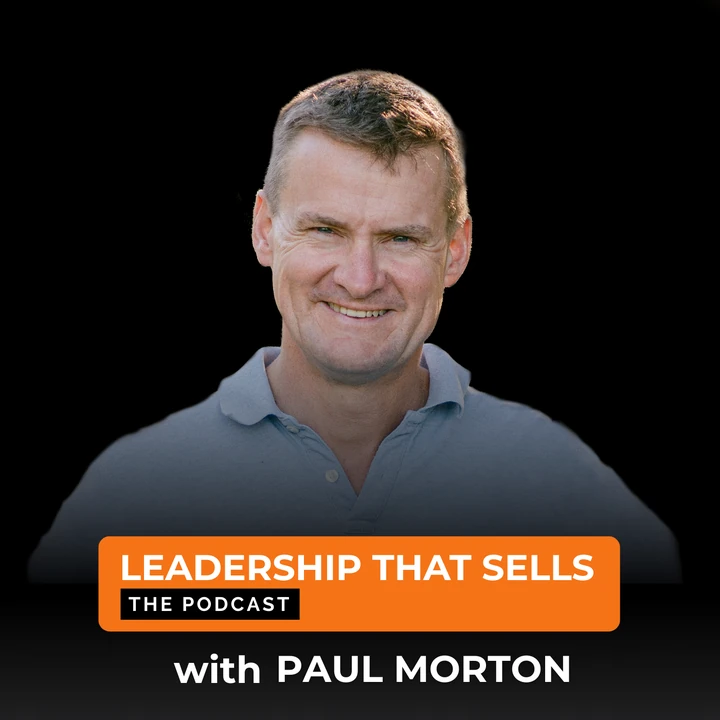
How to select the right person to promote
with Osmin Callis
Show notes
Technologist to banker to founder, crypto trader to venture studio MD, Osmin Callis has managed to chart a course through her career to walk the red thread of technology that has interested her from an early age.
She’s thankful that she did the hard work when it mattered when she was younger person and talks about how important it is to build trust before you do anything else.
Her approach to selecting people to manage others is refreshing – it’s not always the “best” in role that’s going to do well in the management hot seat.
She thinks we should look for empathy, approaches to accountability and an ability to get the best out of people. It’s an underrated skill set she says.
Join me for another fascinating conversation!
You can find Osmin here:
https://www.linkedin.com/in/osmincallis/
https://twitter.com/CallisOsmin
https://www.blockventures.studio/
————–
When you’re ready – upgrade your management skills at:
Transcript
Automated transcript. Speaker labels and spellings may contain errors.
Paul
[upbeat music] Hello, and welcome to The Practical Leadership Podcast, where I interview great leaders and try to extract their wisdom and their experience for you to learn from and hopefully avoid making their mistakes. If you want to upgrade your leadership skills in 25 minutes, check out practical-leadership.academy. [upbeat music] Osman Kalis, thank you v- very much for joining me.
Osmin Callis
You are very welcome. Thank you so much for inviting me.
Paul
Could I ask you, would you be so kind as to introduce yourself?
Osmin Callis
Sure. So I am the managing director of the Block Venture Studio, which is the newly created arm of the Blockdojo global blockchain incubator. My job is to work with corporate partners who really, really, really want to innovate and have a, a limited understanding of the, the different technology domains that they could be taking an interest in, they should be taking an interest in, but not the expertise to be able to delve deeply. And we help corporates who want to innovate to look at how they can leverage the capabilities of blockchain in their innovation efforts. So the best way to see the venture studio is almost like an outsourced innovation arm.
Paul
I'd love to know, how did you get there? Because you went from a regular job at Credit Suisse to, into starting two businesses in fintech and then onto cryptocurrency trading. Then you've got the Blockdojo incubator, and now you've started the venture studio, and you're building, uh, building and then selling these startups. And I love the fact that you've got a background in languages as well. Me too.
Osmin Callis
Ha.
Paul
Linguistics degree from SOAS, right?
Osmin Callis
That's right.
Paul
They don't give them out for free, right?
Osmin Callis
[laughs] That's true.
Paul
So you, you build this career with technology as a function, and evidently you're a strong tech leader. So I'd love to hear your take on, well, your story, but how you got there.
Osmin Callis
Mm-hmm.
Paul
But then also, is there something different about managing entrepreneurs, 'cause you have to do that through the, the incubator, and technologists? So what's that?
Osmin Callis
So my, my bridge into the blockchain space was when I was, as you mentioned, the, the, the two companies that I, I set up, uh, working independently essentially once I left the financial services industry. One of the activities that I was doing was financial analysis for high net worth clients. One of them simply asked me one day, "Hey, what's this Bitcoin thing, and should I be getting involved?" And I was stumped. So that kicked off a whole raft of research activities. I fell down a rabbit hole, and yeah, I've, I've never resurfaced. [laughs] Yeah, once I recognized the, what this, the, the uniqueness and the, uh, the opportunity in terms of being able to develop products and services which use that, next thing for me was to incorporate that into what I'd already committed to, which was the, the, the, the fintech, uh, initiatives. Um, but then some s- as life does, you know, it's, uh, everyone's got a plan until you get punched in the face, right?
Um, and so [laughs] such a horrible, horrible phrase, but so-
Paul
Oh, true
Osmin Callis
... so true.
Paul
True.
Osmin Callis
And the thing that I was, the things that I was working on unfortunately, um, couldn't continue for various reasons. So I ended up being headhunted by a, a research and development organization. Oh, and by that time, having gone from, I started my career as a, a, a software, uh, analyst programmer developer, I'd actually successively become more and more client-facing and more commercially s- s- sort of focused, to the point where the company that I joined was a, uh, research and development pioneer in blockchain technology.
Paul
So in this journey that you've taken then, at what point did you end up having to manage people?
Osmin Callis
I've managed people pretty much from my finan- days in financial services, where I was, uh, assistant vi- vice president at Credit Suisse. It was round about kind of lower middle management. Joined there in 2005, so 17 years on and off.
Paul
So in that journey then, at that moment when suddenly you just realized, "Oh, I'm responsible for these people's work, not just my own," if I could give you a magic wand, what would you have wished that somebody came to tell you about? What was the advice that you'd wished you'd had, or perhaps that you in turn would give to somebody in that position?
Osmin Callis
Great question. That managing people is a skill, and that just because you are really good at your job, you might be a, a, an engineer, you might be a, uh, I don't know, an, an accountant, um, you could be a beautician, doesn't matter what the domain is. Just because you're really good and you have a set of skills doesn't necessarily mean that if you are asked to look after other people that have the same skill set, that, that will automatically translate, and it'll be just as good as looking, uh, after other people with the same skills as you. You might be better off as somebody who is executing as opposed to somebody who's, uh, overseeing, first of all. And secondly, that that oversight has a, a, a unique skill set that I think is vastly underestimated, uh, possibly globally, definitely in all the, the domains
I've ever interacted with. Um, and that actually far more, um, I think, focus and, uh, investment needs to be made in the, the, the whole sort of management piece of, uh, of an organization.
Paul
Hmm. You just hit on one of the reasons that I do what I do
Osmin Callis
Yeah
Paul
Well done. Um-
Osmin Callis
Well, having, having been badly managed at different points, and badly managed other people, and then have-
Paul
Oh, no
Osmin Callis
... having had conversations with maybe two people in my career who for me are like beacons, it's these kind of conversations that have helped me to essentially see the light in many ways
Paul
Yeah, I think, I think some-
Osmin Callis
I'm getting too religious about it
Paul
... it's not quite an epiphanical, is that a word? Epiphanical experience, but going through the journey-
Osmin Callis
Yeah
Paul
... of being appallingly badly managed by people, either where the, it's active bad management, or just passively being ignored, and honestly, I'm not even sure which one I would prefer if I had to. Having that in mind is quite a powerful, uh, driver for not doing that to other people. And as you said, badly managing people, oh yeah, been there. I, I, I, I talk about leaving a trail of destruction behind me. All these poor victims of my early management experiments. It's like, "I'm so sorry." You think about them-
Osmin Callis
Yeah
Paul
... I'm so sorry what I did to you in the past.
Osmin Callis
Oh my gosh, yeah.
Paul
You know?
Osmin Callis
Right, right.
Paul
God. I, I, my, my first, I was thinking about it the other day actually, I remember my first meeting. My first meeting as a manager, I had this agenda that was like 18 pages long, and we got to lunchtime, and one of my colleagues, uh, the guy who was working for me, 'cause he, he's a bit older, he came and said, "You've got to stop. You're killing us. You're killing..." So we just abandoned it there and then. You know, I did.
Osmin Callis
Good idea.
Paul
So-
Osmin Callis
Excellent. Excellent story.
Paul
So managing people is a skill, and I think it's possibly one of the biggest, as you said, this, this, the biggest mistakes I see when I go around and I talk to different c- people in different companies, and you see, "Oh, but we pr- we promoted the best engineer. We promoted the number one salesperson. We promoted the number one person in this task." And what you end up having is you've lost the number one performer, because they're now your manager, they're not performing.
Osmin Callis
Yeah
Paul
And if, uh, if you're lucky, they're good. If more likely than not, they're average. If you're unlucky, they're bad. You've got a badly managed team. So you're gonna lose your number one performer, and you're going to create an exodus from your team who's now badly managed.
Osmin Callis
Right.
Paul
So the challenge, it's so difficult to actually try and look, and this is my question, I'm getting there in the end.
Osmin Callis
Mm-hmm.
Paul
It's, it's so difficult to try and find, how would you go and find the person? What would you ask to the person to find out, are you going to be a good manager? I know you're a good performer, 'cause I can see that result. How are you gonna find a good manager?
Osmin Callis
So, uh, are you asking how I would, uh, get a person to self-assess their management capability? Is that, is that what you're asking me?
Paul
Well, you have to promote them.
Osmin Callis
Right.
Paul
It's your responsibility. You've got team of however many people. One of them is going to be the new manager of that team. How do you pick? What do you f-
Osmin Callis
Got it. Got it, okay. Um, so to answer that, um, I'm going to reference something that really struck me that I came across a long time ago, which was a guy did a, uh, a bit of research around, um, primates to figure out which, uh, the, what the characteristics, the traits are of the alpha of the group. And then off the back of that, a whole series of almost, I guess, urban myths were born about what it means to be an alpha male. He revisited that work sometime later, and I think partly because he felt driven to clarify a few things. That the alpha male was not the person who bullied, that shouted, that cajoled, that forced people to do their bidding, and that basically abused their, their power and kept everyone sort of, you know, cowering in a state of terror at any time because they, maybe they were quite unpredictable or whatever.
Actually, what marked the, the individual out as the alpha male was their high empathy and their willingness to mediate disputes between other members of the team. Now, funnily enough, just this morning I was thinking about, okay, well, what happens when my team grows and I'm going to maybe want to put somebody in a, a, a slightly more, a, a position of oversight for various reasons? How am I gonna do that? I was literally thinking about that this very morning, and I didn't have an answer. So what, your, your question has actually helped me to answer that. Um, and so it would be along the lines of how do they get the best out of other people, or more precisely and specifically, h- what opportunities have I seen or have they taken to demonstrate empathy? How have they smoothed any disputes? Um, not just that. Do they have a bit of skin in the game?
Do they take initiative, or do they wait for things to come to them? Because when you're problem-solving, they do start to kind of take a little bit of accountability. So that's the, the second thing. Then the third thing that I am looking at is how they manage failure, how they take responsibility for things that go wrong, and also what they do when things go well. And this is as much about me and my own management style actively taking responsibility for failure, and then looking for opportunities, hard as it is, to actually share the credit. So the credit is never actually yours, but the failure is always all yours.
Paul
So you're looking for someone who can get the best out of other people, someone who can demonstrate accountability, empathy, and understand that it's all their fault, and the success is never their fault. There you go.
Osmin Callis
That's it.
Paul
That's how you go about selecting the right person to promote as a manager. Was there, in your career so far, was there a particular event or a mistake of yours or somebody else's that you learned a lot from?
Osmin Callis
Yes Personality types. Um, I have made the mistake of thinking, having said everything I've said, that a more passive personality type is actually more inclined to being managed, and that an active, should we say a proactive personality type, makes a better manager. Not always the case. It's horses for courses. Um, in terms of my own, the, the, the, the thing I guess that was a, a pivotal catalyzing experience for me was by being managed by somebody who I think had a much more kind of laid back style than I personally am, am used to or I, am comfortable with. A lot less expressive than I'm, I'm comfortable with. And so that created a lot of, uh, misunderstanding. Um, the respect was difficult to earn on both sides because I often overstepped boundaries, but then also felt that I was being managed in a vacuum of leadership,
um, at, at, at different times. So I responded in a way that I don't think was particularly effective. So this is me basically being managed, and then somehow I think that the frustration was channeled into the oversight that, that I then had, and I think I doubled down on my radical transparency, um, when I hadn't actually already built the trust. So that was ... I, I guess if I could distill it down, it would be not having built the trust around me, either managing upwards or downwards. That was the thing that I think was the biggest failure.
Paul
Candor without trust.
Osmin Callis
Yeah.
Paul
Mm. And the trust you get from ... Well, I think the, going upwards, the trust is something you get from delivering.
Osmin Callis
Yes.
Paul
You're delivering your job.
Osmin Callis
Yeah.
Paul
And if you do that consistently, you get, the, the reins get longer, right?
Osmin Callis
The reins get longer, but then also you manage, you trust your managers not to hang you out to dry.
Paul
Mm-hmm.
Osmin Callis
Not to be, um, unnecessarily unpredictable, et cetera, et cetera, so that, you know, you know that they've got your back and that they wouldn't ...
Paul
Yeah. That's consistency as well.
Osmin Callis
Yeah.
Paul
Consistency is a big thing.
Osmin Callis
Consistency, yes.
Paul
We all want consistency.
Osmin Callis
Oh, my gosh. That's a huge one.
Paul
We all want consistency. We just want, I think, t- t- tomorrow to be more or less the same as today, to be more or less the same as yesterday. That you're gonna be not necessarily fair and treat everyone the same way, because that's not how the world works, and I don't want to be treated the same as you. I want to be treated how I want to be treated.
Osmin Callis
Mm.
Paul
You know? It's, that's, like kind of goes to that golden rule thing, you know? Treat everybody the way you want to be treated. Eh, kinda. Treat everybody-
Osmin Callis
Yeah
Paul
... the way that they want to be treated. It's kind of-
Osmin Callis
Yes. That's hard, actually
Paul
... it's very hard. You've gotta, you've gotta-
Osmin Callis
Really hard
Paul
... I mean, they've got to trust you enough, as you said there. You've gotta build that trust up first before you can get enough of an insight into them to know. So the-
Osmin Callis
Yeah
Paul
... l- lovely con- conversation I had fairly recently, um, came to the conclusion that you just simply ask.
Osmin Callis
Right.
Paul
How do you wanna be managed?
Osmin Callis
Yeah.
Paul
And lots of people don't know, but they'll go away and think about it. And this, this, this, uh, very smart lady, she then also asked her boss, and she said, rather than asking, she said, "This is how I want to be managed."
Osmin Callis
Yes.
Paul
Ah, it's so simple. I love it.
Osmin Callis
Yeah.
Paul
You know?
Osmin Callis
That's, yeah, that's awesome.
Paul
That builds you. That short-
Osmin Callis
There, I love it
Paul
... circuit to trust.
Osmin Callis
Yeah. Yeah.
Paul
Mm. Mm.
Osmin Callis
Yeah.
Paul
Okay. What are you reading? What are you listening to?
Osmin Callis
So Rest is History podcast. Um-
Paul
I love that one. I, brilliant
Osmin Callis
... yeah, it's very good.
Paul
Yeah.
Osmin Callis
In Our Time.
Paul
Uh-huh.
Osmin Callis
Really like that one. Um-
Paul
Melvyn Bragg.
Osmin Callis
Yeah, the, a bit of Melvyn Bragg. Then, um, Earth Ancient, um, which is a really eclectic series of people who have very unusual ideas about our origins, about the nature of, of reality and all this sort of stuff. I love science fiction. Don't get to read anywhere near enough as I want, and that's one of my things that I'm working on to, um, get my reading back on track. For the first time in, uh, an undisclosed number of years, it's actually quite shocking to me, so I'm, I'm actually too much in shock to even admit it to myself how long it's been since I actually read a book cover to cover, cover to cover, that is. Um, that the, when we were on holiday, read two books, and it was amazing, so I am very keen to, to continue that, that trend now that I've, I've rediscovered and, um, get back into all of the science fiction, all the stuff that I've missed over the last five or six years.
Paul
What would you like to thank young Osman for doing right?
Osmin Callis
Oh, gosh. I'm always thinking about what I've done wrong. [laughs] Good question to ask. Uh, or to answer, sorry. Um, what did I do right that I, um, that I, that I'm thankful for? I would say to begin with, somehow staying aligned with my interest in all things scientific and technological, um, and choosing a career that's consistent with that natural interest and curiosity of mine. Um, I'd like to thank my younger self for all of the, the hard work that I put in at the points when it really mattered, actually. Um, and being willing to go the extra mile. It wasn't always the case. Um, but there were, there was a point where I think I had a little bit of a, a, again, a bit of an epiphany, and I'd also found something that I could really get my teeth into and that I, yeah, that I, I dived in.
I mean, it wa- I'm, I ... It wasn't that long ago, so I, I'm not sure I'd call myself the younger self for deciding to segue into blockchain. I would definitely thank myself for that, actually. I, I remember distinctly having a conversation with my husband. I stood in our kitchen when we were living in the southwest of England, and I said, "I want to get into blockchain," and I knew which company I wanted to work for. It was the one I was talking about at the, the, the top of this, um, this piece. And I think, yeah, thanking myself for that.
Paul
And lastly, as we wrap up, how can people find you?
Osmin Callis
I'm on LinkedIn. Um, just, uh, search for Osman Kalis. You could also search for the same name on Twitter. Um, our company website is www.blockventures, with an S at the end, .studio.
Paul
And I'll put these links in the, the notes to this as well. That'd be great.
Osmin Callis
Lovely.
Paul
So people can find Osman, and all that remains for me to do is to say, Osman Kalis, thank you very much.
Osmin Callis
Thank you very much, Paul. It's been a real pleasure talking to you today. [upbeat music]
Paul
That's a wrap. Thank you for joining me today. Your homework, subscribe and share this with a friend or colleague. Please leave your five-star review and any comments you have, because that really helps me to improve every day, and it helps people to discover me online. If you want to upgrade your leadership skills in 25 minutes, you should check out practical-leadership.academy. [upbeat music]