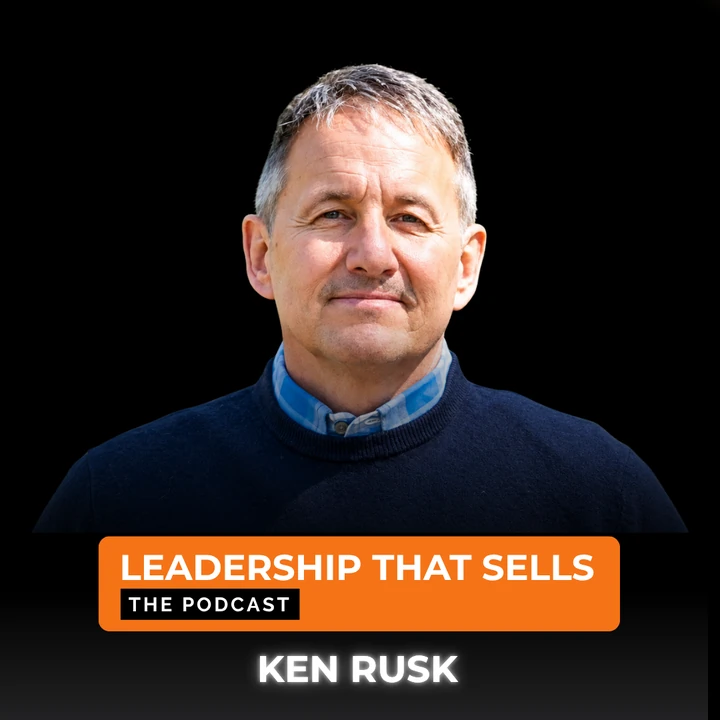
How to Turn Employee Goals Into Growth
with Ken Rusk
Show notes
I don’t buy the pretence that a good hire should stay forever. I want them to do good work, build the life they want and help the business move forward. Sometimes that relationship ends with them leaving. That doesn’t wipe out what they contributed.
Ken Rusk returns with a practical way to connect personal ambition to business performance: personal timed pathways. I push him on the dependable people who don’t want promotion, the danger of backing an individual at the expense of the team, and what to change in your one-to-ones when targets are being missed and there’s no extra budget.
In this episode
Here’s what I’d put to work:
- Ask what each person is working towards personally. Turn one ambition into a personal timed pathway: a clear outcome, a deadline and an action already under way.
- Give people authority over revenue and costs in their area, with a financial stake in the decisions. Let them solve problems you once thought only you could solve.
- Give the pathway board an owner. Ken’s chief cool officer keeps it active; after two weeks, check which plans are clear, written down and actually moving.
- Separate knowledge, desire and ability when someone isn’t delivering. Don’t let how much you like them replace a difficult performance decision.
- Be honest when someone wants more than the business can provide. Recognise what they’ve contributed rather than pretending every successful relationship must last forever.
Episode highlights
[04:11] My test for autonomy: what can your people decide without you?
[07:22] A dependable nine-to-five employee can be a rock star. Promotion isn’t the test.
[09:17] A holiday, a deadline and weekly savings: what a personal timed pathway actually looks like.
[12:39] The first mistake: trying to make everyone’s progress your responsibility.
[22:20] I’ve backed the individual and done the wrong thing for the team.
[24:41] A great employee leaves. Have I failed, or has the relationship worked?
[27:00] Missing target, no extra budget. What changes in next week’s one-to-ones?
Links and resources
- kenrusk.com: The website Ken shares for more about his work and books.
- @kenruskofficial: Ken’s Instagram account, where he discusses culture.
- Rock stars and rain makers: The book behind our conversation about culture, retention and the chief cool officer.
- Blue collar cash: The book Ken and I discussed on his previous appearance.
https://www.amazon.com/dp/006298960X?lv=shuf&channelId=500&plpRedirect=mhFallback
Thanks for listening. I’d appreciate a rating and a review; follow the show and share this episode with a founder or MD who’s trying to keep good people without standing in their way.
Transcript
Automated transcript. Speaker labels and spellings may contain errors.
Paul
[upbeat music] My next guest started digging ditches at 15 and accidentally tripped up one day and built a half a billion dollar construction group. Now he's tackling one of the most expensive leadership problems that there is, which is how you find and how do you keep the business people that your organization depends upon. Welcome to Leadership That Sells. This is the podcast that we talk about the real conditions where leadership and sales actually work and where they fall apart. I love talking to founders, to chief executives, sales leaders, operators who've actually had to make the decisions. When they were doing their best, the pressure was heavy, but all the playbooks they had in their pocket didn't quite fit what they were trying to do. I don't wanna trade slogans or frameworks here. What I'm trying to do is to surface patterns, things that repeatedly create momentum, and then look and find the things that get in the way, and then what experienced leader- leaders es- essentially stop
doing. If you are somebody who's responsible for results, not just for ideas, you are absolutely in the right place. It is my delight to welcome back to the show Ken Rusk. Thank you very much indeed for joining me.
Ken Rusk
Hey, thanks for having me. It's, it's good to see you again.
Paul
Likewise. Likewise. Now, we spoke last in, I think it was June 2024, a couple of years ago, and we're talking about your book then, Blue Collar Cash. Now, that's a concept that I've given to my kids, 12 and 15, and over here in the UK, apprenticeships are the big thing. In fact, almost to the point where it's harder to get the best apprenticeships than it is to get into university, which is a wonderful place to be. But, but, ah, all things are not that. You told me leaders should be the people who are making themselves as irrelevant to their businesses as possible, and I love that. What were people struggling to put into practice that led you and John to write Rock Stars and Rainmakers?
Ken Rusk
Well, well, first off, uh, one of the things that we, in our, in the research for the book, one of the things that we came across was just how expensive it is to hire one person-
Paul
Right
Ken Rusk
... and then have to lose that person, and then have to replace that person. You know, y- you, you think about putting an ad, you know, on, like, Indeed or one of those services, and that's one thing, and then you hire somebody and, you know, it takes just a little bit of your time, and then you train them for a couple of weeks. But when you start putting the money to it, you know, we're talking about 2,500 to $4,500 per person every time you hire somebody and then lose them and have to do that again. So I just, I was shocked by that because a, a typical small business might go through 15, 20, 30, 40, who, who knows how many people, um, in a year's time. You start adding that up and multiplying that by the money, it, it's a significant amount of money, and also it's, it's a significant amount of wasted time. And I think, I think that's what we really wanted to help people with, was, you know, it, it's one thing to try to, you know, look at the cover
of the book, which is the, you, the front door of your company, right? But it's another thing to have the book match the cover [laughs] and be as-
Paul
Oh, yeah
Ken Rusk
... exciting as the cover is. And so it, w- we, we just got to the point where we're like, "You know what? We have to help people because they might not even realize that even though they have a pretty d- pretty good job to offer someone, the culture surrounding all of that is just, it's torpedoing them, and they don't even know it." So we, we wanted to come up with, you know, 10 easy plug-and-play ways to just kinda figure out how you can do what you need to do to make culture happen, to make it a cool place to work and have people kinda hang around.
Paul
That's brilliant. In your business, one assumes, of course, that you are building the book not only in research, but on your own, you know, your own practical things, what you've done, right? What is it that people in your business are now deciding on without you, the sort of things that you were the, you, you thought that you were the only person who could make those decisions?
Ken Rusk
Well, y- you know, that's a great question, and I, I love the conc- concept of the intrapreneur. And, you know, people talk about entrepreneurs, and that's great. Yeah, we, we all should aspire to, to, um, to create great things for ourselves. The intrapreneur is an interesting character because he or she has the ability to run their own department within your organization, and they feel like they have enough autonomy to do the things they need to do to make that, that, that, um, you know, division or that department happen. So I really love the fact that y- the, the guy, you know, the guys and gals around me now, they're making decisions that create revenue, that, that, that curb costs and, um, continue to push, you know, the, the, the profit margin, um, to a reasonable place.
And it, it's, it's great because the, the decisions that they make not only affect the whole company, but they affect them personally because they're financially tied to those decisions. So it's, it's unbelievably empowering to watch people do the things that you only thought you had to do, you know? And, and it's, it's, it's, it's so much more, um, it's so much more what a true entre- entrepreneur really should do, is surround himself with amazing people who can make decisions to solve problems. And so that's what I love about it, because you get back to, um, you know, kinda working on your business versus working in it [laughs] just 24/7. And you get to drive things like innovation and, and you get to drive, you know, the, the direction of the company, where it's going. And you get to look, you know- A, a mile out, two miles out, five miles out, to see what the future holds for you, rather than getting stuck in the, in the trenches.
And that's what I love about the, the concept of an entrepreneur, and we, we work on that every single day.
Paul
So then, on the book, what's the difference between a rockstar and a rainmaker? And does that change how you actually lead these people?
Ken Rusk
Well, a, a, a rockstar is somebody that, again, you can put them in a position, and they're gonna create a result that's better than you might have even created yourself. Or they're gonna take something to a place further than you even imagined it. Okay? Um, and, and, and that's ... Those are the ones that you smile about, because, you know, you get to watch these people work, and you're like, "Holy cow, that ... This is better than I would have even thought or imagined it."
Paul
Yeah, yeah.
Ken Rusk
And it's, it's a wonderful place to, to be, to, to have some rockstars in your building. The rainmakers are the ones that they, they bring in the revenue. Those are guys that, guys or gals that go out, and they create the sales that you need to have so that you can, you know, generate the revenue so that you can do the things you need to grow the company and, and to scale it. And so there is a difference between a rockstar and a rainmaker. A rockstar is someone that can just get anything done you need them to get done. A rainmaker is someone who really brings in the revenue. And, um, you need both of those people, kind of front of the house and back of the house, to make this whole thing work.
Paul
But then where does the person who just quietly does really, really good work, who just wants a nine-to-five and really doesn't have any interest in promotion, but they just do a good job, where do they fit?
Ken Rusk
As long as they are chasing something personal for themselves within the company, then they're fine. Um, and, and don't forget, you know, what you just described, someone who does great work and, and, and just wants a, a kind of a nine-to-five thing, they could be considered a rockstar [laughs] because you can count on them to do the right thing.
Paul
Dependable, yeah.
Ken Rusk
Yeah. So, but for me, you know, e- everybody has to be chasing something personal for themselves. And I, I, I love it. You know, I used to say this all the time. Um, if you can find someone that says the following sentence, "Wow, I can get what I want for myself personally with and through this company. I can see myself therefore creating the life that I want for myself, so therefore I'm gonna hang around," th- that's, that's ... Y- you've got something there. So i- it, it's, it's, it, it's kinda like putting people in position to be autonomous, um, across the board. And w- the beautiful thing about them having personal, like instead of saying goals, I call them personal timed pathways.
Paul
Mm-hmm.
Ken Rusk
The more people that have those timed pathways within your organization, the more they're gonna push for results which aligns with the company's goals. And you said it earlier, if you can get personal goals, personal timed pathways, and company timed pathways to be in synergistic form-
Paul
Yeah
Ken Rusk
... get out of the way, 'cause that's where momentum is gonna come from, and then look out. It's gonna be really, really great.
Paul
Now, you're, you're talking then about these ... You're turning personal ambition into timed pathways. Can you walk me through how a manager would do that? You can give me an example of an employee or something.
Ken Rusk
Well, I, I have ... Right outside this wall behind me, I have a big black glass board, and on that board we use these neon-colored markers like you'd see at a restaurant, okay? And th- the ... You'll have somebody walk up to that board, and they'll literally say, "I want to go to Spain in December of 2027. It's gonna cost me $4,000. I'm gonna save $80 a week, and I'm gonna start today, and I'm gonna go to Spain one year from today." And then they sign it. And so they've not only created a timed pathway which is crystal clear, but then they've put it into play, because they've gone to the payroll clerk and they've said, "Take that 80 bucks out of my check every week and put it into this separate account." They've committed to doing this not only for themselves and their family, but they've committed in f- in, in front
of all their peers here at the office. So, you know, 200 other people get to walk that hallway and go, "Wow, so-and-so's going to Spain next year. That's really cool." And so there's this sharing and this cheering on kind of thing that happens. So that is what I call a personal timed pathway, and the reason I call it that is because it has to be crystal clear, there has to be a path, it has to be in action, and it has to be live. And it, you know, it, it has to have a timeframe to it. And the cool thing is you get somebody to do that one time and it's successful, you don't ever have to teach them how to do it ever again, because now they're like, "All right, Ken, thanks for the info. Get out of my way. Let me do it." Um, I, I've got a gal here that started by paying off her father's $2,500 debt that he loaned her for, uh, money for a car. And since then she's bought two new cars, she's buying her second house, [laughs] she's got- gotten married, has a couple of kids, and she just knows how to do it all on her own.
I don't have to coach her anymore. And that's really what you're, what you're looking for i- when it comes to that type of process.
Paul
Teach a woman to fish, right?
Ken Rusk
Absolutely, 100%.
Paul
So what do you think, then, changed in their working week? So is it, was it, uh, reliability, sustainability? What is the thing that changed how they work?
Ken Rusk
Well, first off, w- we, we try to make this place really cool and fun and energetic and colorful, and we work on sights and sounds and smells, and we work on everything. And so, y- you know, we want people to walk in the door and feel like they're coming into a family environment and a fun environment and a, and a, a supportive environment. And everybody knows that everyone else has their back. Uh, y- if, if you said, "You know what? I wanna learn Spanish," okay, great. Uh, if you said, "I wanna break 90 on the golf course," okay, cool. Let's figure out a way to do that. Everyone supports each other in the things that they do, and I know that sounds altruistic, but it, it, it really is true. Because it's kinda selfish, you know? And when I say selfish, I mean that in a good way.
People are working on themselves first and the company second, and that's the beauty of it. Because everyone can be a little bit selfish in front of everybody else, and it's, it's cool because everyone's getting what they want out of this thing called, you know, our relationship, our work relationship. And yeah, that's what makes it great.
Paul
So if I'm gonna say, "Thank you, Ken. That was a great show. Goodbye," and then I'm gonna go off and try this myself, what is the easiest mistake I could make? What should I watch out for?
Ken Rusk
The biggest mistake is trying to do it all on your own because i- if you are the rainmaker and, you know, you're out running around trying to create revenue, then y- you gotta have somebody back in the home office that's doing these things. So literally, one of the first steps of the book, um, is to find that chief cool officer, okay? This is the person who, who s- who is in your office every day, and they're in charge of making the place cool, and there's 10 ways to do that, okay? [laughs] So there's probably more, but we concentrate on 10 simple plug-and-play ones. And so I, I think people try to go, "Okay, I'm gonna go implement all this stuff myself this afternoon," and that doesn't really work because you're supposed to be out there, you know, leading, driving, driving this company forward.
So having somebody that's grounded within the company that's well-liked that can become this chief cool officer, that is a very important position because they're going to drive all of these changes. Some changes happen in an hour. Some changes happen in a week or, or, or a couple of months. So but they have to be constantly on in charge of these things. They have to be monitoring the timed pathway boards and encouraging people to get on there. And, um, I think the biggest mistake would be you, you trying to take it all on yourself.
Paul
Well, well, when you've done this, when you see this working in your own company, and obviously it's working well, what do you see changes in an individual's performance or in, like, the company's retention, and how long does that sort of stuff take?
Ken Rusk
Well, first off, some of the changes are so immediate that you just see an, a, an, an increase in happiness, an increase in people's a- a- ability to be open with each other and ability to talk with each other and share some of their personal, uh, chases, their personal time pathways. So that's fun because right off the bat, you know, it kinda lightens up the whole atmosphere. Secondly, you start to see people, you know, when they start planning one, two, three, five years out and they start planning these things, there's a contentment that all they have to do is show up, make results happen, and these things are going to happen, so there's a confidence that comes from that. So you've got happiness, you've got content, you've got, you've got confidence, and then you have almost this, this, um, i- i- it, it's almost like
you've got a self-drive going on, okay? Where that person is now split into two people, the one that's doing the work and the other person that's cheering themselves on because they know the result is coming as long as they just do what they need to do. And so it, it's, it's just a really cool feeling because, you know, y- you don't really hear a lot of drama anymore. You don't hear a lot of, you know, um, uh, negativity at all. Um, mostly it's, "Hey, what are you after? This is what I'm, I'm after. Let's go get it." And that definitely leads to longevity. It leads to loyalty. It leads to slowing down the hiring process. I mean, it's, it's, it's really good stuff.
Paul
Do you find, however, that, that somebody's individual, their, the, the timed pathway, their, their own individual goal that they want to go after, is there ever a point where that conflicts with what they should be doing at work, you know? "Yeah, I wanna go off and play golf all day." Yeah, I mean, that's really good, but you've actually gotta go out and sell stuff, you know?
Ken Rusk
Well, obvi- you know, the, the, i- yeah, i- and that's a good point.
Paul
Kinda how do you get that merge?
Ken Rusk
The, the, the thing you have to remember is that what drives your ability to do all these things is to have, you know, be financially stable and, and to have focus and to [laughs] so all these things that you wanna do. And, and again, you have to kinda remember this. So if you have a human being, there's 24 hours in every one of their days. And, and, and, you know, if you put it in the most basic terms, they're working eight hours a day. They're sleeping eight hours a day, hopefully, and then there's eight hours of something else. Well, we are very open to learning about what that other eight hours is, you know, hobbies and sports and how they take care of themselves and, you know, their spirituality.
Whatever it might be, we're interested in that other eight hours because you need to know who these people are in order to have this w- this mutual beneficial relationship of, of chasing after timed pathways. And so yeah, I mean, e- everybody recognizes that, you know, it, it takes a certain amount of work to create the result that you want, and you have to respect that, that's for sure.
Paul
Yeah, I know that when I go into a company and, uh, it's normally to try and turn things around or try and fix things, and there's normally a few people that you know you can't do without. Company's in a bit of a mess. What do you do? You need to talk to them about where are you today and where do you wanna be the day after tomorrow, you know? So if I can help you go on the journey from here, not to the next thing, but the actual, as you said, it's the goal after the goal, and this is how we're gonna get there together. That's the sort of thing that, that helps people to stick around, I think, so you get that retention piece.
Ken Rusk
I- there's, there's no doubt. I mean, m- most people live, you know, we're, we're kinda conditioned to live reactively, okay?
Paul
With the mood. Yeah.
Ken Rusk
Yeah.
Paul
Rent to buy.
Ken Rusk
You walk out the door and it's cold out, so you put a jacket on. Okay. I mean, there's reactions happening constantly to us. It, it's, it's a whole different ballgame to start thinking proactively. And I know that word is used a lot.
Paul
Hmm.
Ken Rusk
But i- if you get someone to say, "Okay, so I'm not living for Friday anymore, I'm living for 52 Fridays from now," [laughs]
Paul
Yeah
Ken Rusk
... you know, it, it's a whole different way of, of looking at your life. And so y- you know, I, I ... All I can tell you is, is we've got a company full of ditch diggers here, and there's a lot of them that have been here 10, 20, 25, 30, 35, almost 40 years now.
Paul
Hmm.
Ken Rusk
And they, they, they do that because they recognize they are in control of what their life eventually looks like. And I think what happens is you get, you know, things like your teachers and your guidance counselors and your parents and everyone trying to come at you and telling you what your life should look like. And you're like, "Well, wait a minute. I, I'm the only one who really knows that. I'm the only one who really knows what my favorite car is, my favorite color is, my favorite vacation is, my favorite house is, my favorite dog is, my favorite sport might, might be."
Paul
Yeah.
Ken Rusk
"Why am I relying on other people to make that picture for me when I, I can do it myself," right?
Paul
I mean, I, I ... Everything you're saying, um, it speaks very much to my whole, my, my personal way of working with people. I, I consider that, you know, the organizational pyramid's the wrong way around. You're actually at the bottom of it, holding everybody other up, holding everybody up, regardless of where you are in the company.
Ken Rusk
Sure.
Paul
So you're st- you're supporting people, but your job is also to maintain the kind of the standards of the company itself. Can, can you tell me ... I mean, you must have had this 'cause you've been around and trying this for a long time. Is there somebody that you've perhaps believed in, invested in, but they just weren't meeting the standard that they set themselves or the standards that you set? How, how, how do you decide whether you keep on backing that person?
Ken Rusk
Well, that, that's an awesome question. I, I, I, I invented this, [laughs] I think I invented this a long time ago. It's called the three-legged stool, and I always look at them as, you know, i- if you have a three-legged stool, if you take one of those legs away, the stool's gonna fall over, right? And those are knowledge, desire, and ability, okay? Each leg. One is knowledge, one's desire, one's ability. You take any one of those things away and the, and the, the stool falls. The problem is you could have somebody that has the knowledge. They've learned it. They've read the manuals or they've studied or they've trained or they've, you know, f- followed other successful people within the company. So they have the knowledge. And they might even have the desire. They're there early.
They're fully ... You know, they look great every day. You know, they take care of themselves. They're a happy, healthy people, and they, they're, they're nice to be around. But they just can't dunk a basketball. I mean, you know, and you need them to do that. You know, I, I, I recognize fully at five foot nine that I can't dunk a basketball, so I don't even try. But if I n- if I had to find someone, I, I could find someone to do that. And that ... And I think that's the issue 'cause those people, they're, they're the toughest ones in the world because you love everything about them except the result, right? [laughs]
Paul
Mm-hmm.
Ken Rusk
So i- it, it is tough. But i- if you just look at it in those three simple terms, knowledge, desire, and ability, you can always put knowledge into someone. You can't necessarily put desire into someone, but hopefully you can try. But the ability thing, that's a tough one. So if you look at it in those three simple terms, it'll help you kind of dissect each person in your organization and go, "Okay, I want this more for that person than they want," and that'll drive you crazy, okay? If, if you want it more for someone than they want it for themselves, man, that's a long day in the office. So yeah, keep it simple.
Paul
I mean, if you ... 'Cause as well, these, these are, you know, human beings and all that good stuff, and you're really, as part of building these pathways with them, you're really digging into their, their family goals, their financial worries. How do you ... 'Cause this is something that I struggle with. 'Cause I go for the ... I, I wanna help. I wanna do the right thing for them, and I've done it bef- in the past where I've done the wrong thing for the business or for the team. How do you stop that knowledge of their situation, their desires, from clouding, you know, difficult decisions, difficult performance decisions?
Ken Rusk
Well, I, I, I just ... I, it ... To me, it's always been the ... I, I, I... It's always the same question. It just always comes down to the same question: Why are you here, and what do you want? I mean, it, you know, it's, it's just that. And then, you know, where people fall short is they, they tend to dream about the things that they want but never have any clear idea of how to get those things. So they become these some days. Someday I'm gonna do this, and someday I'm gonna do that. You know, I think the biggest, the biggest word in the English language to excuse something away is the word someday because someday never comes. And so what, what we encourage people to do is just to draw these things out in, in very clear, colorful, concise detail and then create pathways to each one of those things that they
wanna manifest into their life. And then if it's powerful enough, those difficult decisions aren't gonna need to be made, okay? Um, and there's also this. If somebody has a life that's bigger than what you can provide for them through your company, you need to be willing to say that. You know? You need to be willing to say, "Lookit, I ... You know, y- you, you, you've done great things for our company. You want more than this company can give you. I just want you to know that If you need to find a place that can give you these things, I'm okay with it because I've, I've enjoyed this, the experience and the time I've had with you, and you've done good things for our company. It's been a mutual successful relationship.
So y- y- j- I think there's just a whole lot of honesty that has to come from this-
Paul
Yeah
Ken Rusk
... and, and, and a whole lot of transparency. And, and again, I, I, I don't ever cloud those, those conversations. It's always very clear. Why are you here? What do you want? What does it look like? How can I help you get there? If I can help you, fine. If I can't, fine. Um, and it seems to eliminate those things.
Paul
So suppose if, if, if you're helping someone and you help them build their ideal life and that leads to them then leaving your business, would you say that that's a, y- the approach succeeds or fails?
Ken Rusk
Oh, that's absolutely a success, for sure. Because there's no way you're gonna get to that situation without them having benefited your company for one reason or another. I mean, y- you're never gonna get to, you're never gonna get to a rockstar leaving your company if he or she wasn't a rockstar for your company [laughs] along the way. So, and, and you just have to be willing and able to know that that's, that's part of life. I mean, you know, even your kids, when they g- [laughs] when they grow up, they eventually leave the nest, right? So, uh, I, I'm never afraid of that because the, the system is so powerful that it'll create a new person like that along the way. And, um, it, it... But the opposite is true too, though. I mean, if somebody really, i- if somebody really creates great results for you and they can see their life booming within your organization, you know, they're gonna hang around.
Um, and that's what's fun.
Paul
I used to call it the tour of duty. You know, you're hiring someone, and of course, in, in most corporates, you, you pr- you have this pretense that, "Yeah, I'm gonna hire you, and you're gonna work here forever."
Ken Rusk
Right. [laughs]
Paul
Which, which is not.
Ken Rusk
Right.
Paul
You get four years, four years on the role, really. You know, one is teaching you where the toilets are and how the coffee works.
Ken Rusk
Right.
Paul
Two is getting used to the job, doing it well. Three is mastering it, and four is getting ready for the next year, getting-
Ken Rusk
Yeah
Paul
... ready for the next role. And hopefully, the next role is something else in the business. But if you keep doing the same damn thing every year for, for f- for, for 40 years, you end up somebody coming and saying, "I'll get 40 years of experience." No, mate, you don't. You've got 30 years of doing the same things 30 times. You've d- the s- you've lived the same year for 30 years. That's not 30 years of experience.
Ken Rusk
Right.
Paul
That's a different thing. And-
Ken Rusk
I, I think, I think the, I think the, the one caveat to that is if, as long as their life is improving constantly and they're chasing new things all the time, that can sustain. It, it-
Paul
Mm
Ken Rusk
... it does here. Um, but you're right. If you don't, if your life isn't changing at all, if it's not constantly improving and changing, um-
Paul
Someway, someway
Ken Rusk
... yeah, in s- in some way, you're gonna get that stale for sure, and that's gonna, that's not gonna end well. Yeah.
Paul
Very quick practical question for you then. So I'm a sales manager. I've got half a dozen folk. Uh, I'm missing my quarterly target. I've got no extra budget. What am I supposed to change in the one-to-ones I have next week?
Ken Rusk
What are you supposed to change for next week, you said?
Paul
Yeah. I've-
Ken Rusk
Okay.
Paul
Yeah. It's what, it's what, um, you know, this is, this is the situation. Sales manager, small team, targets are getting missed. I can't spend anything else. What can I do?
Ken Rusk
Well, the first question I would ask you is, what does salesman number three want? Why are they here?
Paul
Mm.
Ken Rusk
I guarantee you you won't get the answer to that question. [laughs] What does salesman number six want? How far along is he or she, and when will that goal be realized? Um, what about salesman number one? What is she or he chasing? Um, how clear is their goal? Is it energized? Is it live? Is it on the board? And how soon will they hit that goal? Uh, 'cause y- y- those answers, the, the questions, the answers to those questions won't be there. Salespeople, especially salespeople, they're always chasing something, and they're typically very selfish people in a good way. Um, they're, they're trying to make revenue happen for themselves first and the company second, and that's okay. But if those rewards aren't crystal clear on all six of those salespeople, that's probably why you're missing the number.
Paul
Nice answer. What should then we be looking for in a month's time to know it's working?
Ken Rusk
I would just go look at the board. I'd say, "Here's your blackboard. Here's your markers. I'm gonna come back in two weeks, and we're gonna see who started what chases, who started what time pathways, how many of them are live, how many of them are crystal clear, how many of them are written down. And, um, I'm gonna watch you manage that board. And if you need help, go find the chief cool officer and he or she will help you get that figured out." [laughs]
Paul
Do you have yours up on the board outside?
Ken Rusk
Oh, yeah, absolutely. We're, uh, we're finishing our new headquarters, which should be done in October. This is one of those goals where it was a five-year goal. I mean, I, I don't do a lot of five years. I do, I do six months, one year, three year, but not a lot of fives. And, um, this was a five-year goal. We're gonna move in, uh, hopefully at the end of October, so we're, we're excited about it.
Paul
Oh, fantastic. I'll need to come and visit.
Ken Rusk
Yeah, for sure, anytime.
Paul
Where can, uh, our listeners find Rockstars and Rainmakers and find out some more about what you're doing?
Ken Rusk
Well, if you go to kenrusk.com, K-E-N-R-U-S-K.com, you'll see what we're up to over there. I'm also on, on, you know, Instagram and all those things, @kenruskofficial, and we talk a lot about culture there and stuff. And, um, we have a lot of fun with it. I have some people... I'm not a social media person. I have friends that help me do that, um, that are amazing at it, so all I do is talk, [laughs] which is great. Um, but yeah, if you look up, uh, kenrusk.com, you'll, you'll see what we're doing. And, uh, and the, yeah, the book comes out at the end of the year, and we're real excited about it.
Paul
Excellent. And, um, i- if, if this one goes down as well as the last one, I can, uh, I can only imagine the impact that you're gonna keep on creating around, around the world of business and beyond. Thank you very much indeed for coming and sharing your wisdom. I really appreciate it. Thank you.
Ken Rusk
Yeah, a- anytime. It's been great being with you again, and, uh, I look forward to seeing you sometime in the future. Thank you.
Paul
Thank you. [upbeat music]