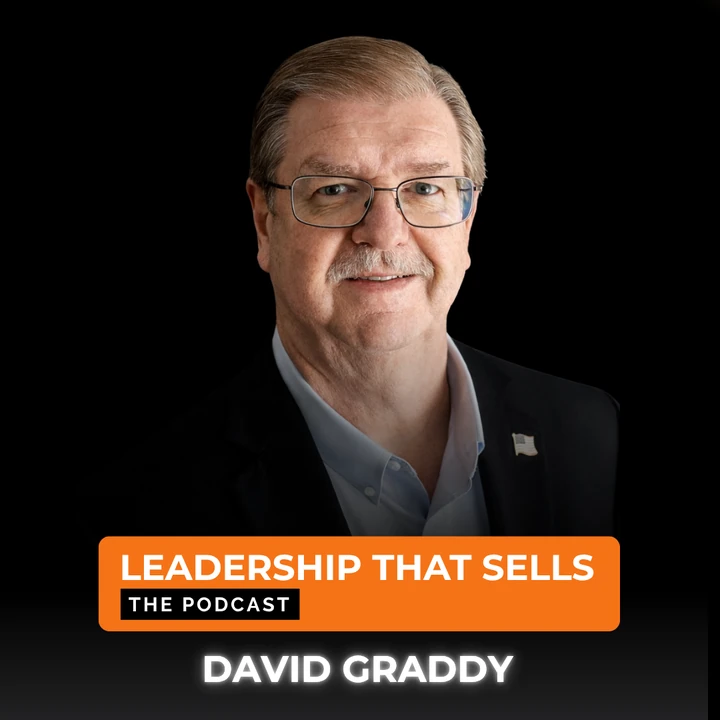
How to spot leaders before they emerge
with David Graddy
Show notes
Most people wait for permission to lead. That’s the mistake.
This conversation with David Graddy is a reminder that leadership isn’t a promotion. It’s a pattern of behaviour. And if you’re not already doing it, a new title won’t suddenly fix that. In fact, it’ll expose it.
We get into what actually gets noticed inside large organisations, where people trying to “step up” go wrong, and how to develop leadership capability without overstepping and damaging trust. If you’re responsible for performance, this is the difference between spotting future leaders and missing them entirely.
In this episode
If you want to build leaders before they have the title, do this:
- Look for attitude and output first. Potential without delivery is noise
- Give small, contained opportunities to test leadership in the real world
- Watch how people behave in teams, not how they talk about leadership
- Set boundaries clearly. Overstepping kills trust faster than failure
- Develop the fundamentals early: communication, integrity, problem solving
Episode highlights
[02:30] Leadership starts before the title. Most people just don’t act like it
[05:04] The uncomfortable truth: being promoted exposes poor leadership fast
[06:11] Why aspiring leaders fail by overstepping their authority
[08:20] Trust is built by operating right at the edge of your permission
[12:05] The risk leaders create by over-controlling decision making
[15:00] How to actually spot future leaders in a commercial team
[16:52] Why good people leave: lack of opportunity, not lack of pay
[18:29] “Leadership is easy until you meet people”
[21:20] There’s no such thing as business ethics. Just ethics
[27:03] The one line that sums it up: lead where you are
Links and resources
- dgraddy2@cox.net
- http://www.linkedin.com/in/david-graddy
- https://www.johncmaxwellgroup.com/davidgraddy/
If this made you rethink how you spot and build leaders, follow the show and share it with someone responsible for building a team, not just hitting a number. And if you haven’t already, leave a review. It helps more than you think.
Transcript
Automated transcript. Speaker labels and spellings may contain errors.
Paul
[upbeat music] My guest today is a leadership coach with over four decades inside complex organizations. He spent his career watching how people actually step into leadership. Now, that's long before they're given the title. He's worked in aerospace, he's worked all the way to retail, and he's seen what gets noticed and what gets ignored. And interestingly, he's a jazz saxophonist in his spare time, and he now helps professionals lead from the middle. David Kubadi, thank you very much indeed for joining me.
David Graddy
Thank you, Paul. I appreciate you having me on the podcast.
Paul
Well, welcome to the show. I mean, this is the podcast where real conditions, uh, we investigate real conditions that where leadership and sales actually work and where they all break down. And I talk to people like you, CEOs, founders, and operators who've had to make decisions where they put a lot of effort in, there was lots of high pressure, but all the playbooks that they came in with didn't typically fit. And the idea is we're not gonna hear, we're not gonna swap slogans, we're not gonna swap frameworks here, but we're looking to surface patterns. What are the things that create momentum, and what gets in the way? What experienced leaders eventually stop doing as well. So, thank you, and my question to you from your book is after your 40 years inside, inside some seriously large organizations, including Boeing, when did you first realize that leadership is not something that's tied to your job title?
What was the hardest thing that got tested when you noticed that?
David Graddy
That is a great question. And my answer goes back to early in my career working in retail. I worked for a gentleman who made growth of the people who, that he led the most important thing. And whether you had a title of stockman working in retail, it's cleaning the floors, while sweeping the floors and, or you were a member of the management staff, you had to consistently drive results, but bring your people along.
Paul
Hmm.
David Graddy
And for me, leadership stepped away from being just, "Hey, go do this. Hey, go do that. Do this task," and it became a matter of growing your people and being grown as a person who is not a me- member of the management staff. I think that's where I really landed on my philosophy of leadership from a, from a you need to start now. I use the old saying, "Begin leading where you are, not where your title says you are."
Paul
Hmm.
David Graddy
That's kind of, that's become my, my kind of my mantra right at, at the moment and throughout my whole, for my whole career because you, you can do leadership actions and activities, communicate better, show integrity, problem solve, train, train others to do things, and work, work together and serve people as a leader even though you don't have that title.
Paul
Yeah.
David Graddy
And that's what I think we, we miss a lot of, um ... There are many leaders who look at their employees, the people they lead, as a means to get something accomplished, and they lose out on bringing them along as leaders and identifying them as leaders. It only gets to a certain point, and that was the thing that I, that I realized from, from Tim, that he liked to grow his people. He was the best at it. And m- and coming out of that is when I really grasped it was more to me than just do a job. It was growth. It was bringing your people along. It was getting them involved. It was building a team. There was a lot of things involved in leadership that were more than just telling people what to do.
Paul
Mm-hmm. Hmm. I think I remember being, um, vaguely on the edge of possibly maybe becoming a manager once, and I was thinking, "Oh, that's such a good job title to have, being a manager." Um, and I was in a race with a friend, which, which one of us, different company, would get the manager title first. I don't remember who won, and as you said, didn't matter a damn because when I got there, I di- wasn't any good at it at all. In fact, I was appalling. Absolutely appalling. I still look back in the trail of destruction that I've left behind me. You know, all these damaged, damaged people that I just messed around with [laughs] which was exactly as you said, "Here, do that." No idea about, you know, how you, how you bring people along, how you bring people up.
Now, your, your core idea, this leading before you get the job title there, is, is, uh, I think very real. But in practice, when you see people trying to lead before they get their title, what do people consistently get wrong when they try this? What's the, what's the mistake that people always make?
David Graddy
Wow. Another good question. The, uh-
Paul
I do my best. [laughs]
David Graddy
The, the, the- [clears throat] I think they try to overstep. They see a leader that does one, two, three, and they wanna do that, but they don't have the... They may not have the knowledge, they may not have the training, they may not have the position in the group. Um, a lot of people I've seen over my career, you know, every group has an informal, that informal leader that kind of takes control of all the meetings even though they don't have that title of manager. They will step up and, um, give advice whether they want, whether it's asked for or not, but they're the informal leader. Every group has one. And a lot of things I've seen, people I've seen that have been in that, they've tried to overstep themselves and go past what their
place can be. You have to learn to l- to lead within the s- the structure and, um, hate to say it this way, the box that you, that you reside in as an organization. And having someone, unless you're given that and you're empowered to do those things and do those extra things, that's probably the thing I have seen the most of for someone who's trying to be a leader but has, doesn't have the title yet.
Paul
Hmm.
David Graddy
Learning those, learning those boundaries. You can't overstep your boss.
Paul
Yeah.
David Graddy
You know, you, he may, you may be able to make a decision to a point, but you better know where that point is because if you take that next step and that was outside the bounds and, and it boomerangs on you and comes back, your boss comes back and says, "You weren't supposed to go that far," you can get yourself in trouble. So the, the people that I see trying to lead that don't have the title have a tendency to overstep, and it's just knowing, learning that boundary that they can't, that they can't go past. Because the idea is not have anything come back to your boss that's gonna trip you or the organization or the boss up in some way because you made a bad decision or you made an incorrect move.
You should know, you should learn that, that level that you can go to.
Paul
Yeah.
David Graddy
And as you build up to that, it's kind of like parenting. Uh, my dad always said, "You... I'll give you as much rope as you can s- as, as you can, as I think you can take. And once you get to the end of that rope, if you don't go past it, I'll give you a little more. I'll give you a little more. I'll give you a little more." So you build that trust. If you do the same thing in this situ- in the situation of trying to learn to lead, know your boundary, because if you do good within that boundary, you get a little more, and then you get a little more. And that's where you become more empowered to do ju- just the job that you were supposed to do, but they start stepping you out and giving you opportunities to do other things because that's how you build, you build your trust with your boss and with the, and with the team that you're, that you're part of.
Paul
That is, I mean, that's a very, very interesting point. The... And it's a... I suppose it, it's, it's difficult to try and formalize that. It's not as if you get a manual that says, "These are the 10 decisions you can make in the... You can... And these far, thus far and no further," in any role really, but it's almost like a learned sense. You, you tune into radio permission set, and you know that this is the frequency, this is as far as you can work. I'm not sure that I have that authority sort of thing. I mean, I'm, I'm working as the chief executive of a small company right now, and I know I can pretty much do anything, and yet I need to take some stuff to the board, and yet there's, I have a boss.
Everybody's got a boss. There's still a, there's still an area of, um, permission and, I don't know. What's, what's the... This, it's called RACI, isn't it? Re- responsible, accountable, um, consulted, and informed. You won't be... There's, there's the different elements of, um, where you can work and what people need to be pulled into. Uh, anyway, there's, it's an interesting concept.
David Graddy
Going, knowing how far to go-
Paul
Yeah
David Graddy
... and, and knowing what to learn, to me, there's, there's basics in, in... that you can learn before you get there. One, integrity.
Paul
Mm-hmm.
David Graddy
That should be throughout the organization no matter what your position is. You need to learn to communicate. Communicate is... Communication is the most important thing you'll be doing 'cause you're communicating with your bosses, with your team, with your clients, customers. So communication. Learn problem-solving skills-
Paul
Mm-hmm
David Graddy
... before you g- before you get there. Learn how to prioritize and, and schedule things and, and do projects, and lay out projects, and lead them.
Paul
Mm-hmm.
David Graddy
There's things you can do before you get that position. It's just what are those things within the confines of the company or the organization that you're working with, and then grow to that. And there's all sorts of ways you can grow. Uh, some bosses won't let you grow or will limit you as what you do bec- because that's their method of control to, "Hey, I want you to do this." But you can... There's books, there's conferences, there's, uh, you can get mentors. There's all sorts of ways you can grow, but there are things when you can't, you can't do. This is with stepping outside the box, and I gotta go look at decision-making that way. The job will have decisions in it that you'll make as you go along, but your decision-making will cap out at stuff you don't have responsibility for.
Paul
Hmm.
David Graddy
That's what one thing you cannot step over, unless the boss gives you that availability to do that or that, that empowerment to do that. So- A lot of people don't think along those lines. They'll just do, or they won't do 'cause they don't know and they won't ask.
Paul
That's the other side. That's the... I mean, you're, you're talking here, it's like the third rail of decision-making. You know, don't step in that 'cause you're not allowed to, but somebody's gonna go and turn the power off and let you do this. The other thing is because it's electrified, because this decision that you wanna make is, is, it could potentially go wrong, you don't go anywhere near it. So you, you almost restrict the... You res- y- you restrict their creativity, you restrict their authority so that stuff doesn't get done. You, you hold them back. I wonder if that's a risk.
David Graddy
It is. From a, from a, a person that's, that's not the leader's perspective on, on, on that, you can always, if you work yourself into a, into a position where the leader really trusts you, you can impact the decisions you, you don't make by be- being the one to provide him information. "Here's your options. Here's, uh, the good and the bad of that situation or that, or that decision," which is so that you, so that you can hopefully have a boss that says, "So which one do you think you would like to do? Which one do you think we should do?" And you can give your opinion, if it's asked. But just going back to knowing that ceiling, knowing what you can do and where you can go. So it's kind of, um,
it's a, it's an interesting, it's an interesting dance that you do-
Paul
It is
David Graddy
... in, in that situation because, um, some people overstep-
Paul
Mm-hmm
David Graddy
... and they get clipped. Uh, some people overstep and they get their boss clipped.
Paul
Yeah.
David Graddy
And that's the one thing you don't wanna do, is put your boss in a bad situation. That's the worst possible thing you can do.
Paul
Career limiting move, I think it's called, isn't it?
David Graddy
That's what I call it.
Paul
Now, if you are then somebody, and I talk to a lot of people who run commercial functions, so that's sales, revenue growth, that sort of thing. How should people in those sorts of roles identify and then develop these, uh, pre-title leaders, okay? These early stage people and, but do it in a way that's actually gonna move performance rather than just culture. 'Cause sales, these, these commercial things are all measured. It's all tightly monitored. It's all... It's, it's a performance function.
David Graddy
Well, first you start with, my opinion, you, you start with attitude. Who's got the right attitude? Who's positive? Who's always there? Who's where they're supposed to be, doing the job? Who produces the results? That's kind, that's kind of baseline for me, is you... Are you... You don't want someone that's not gonna produce the result, deliver the report, make the sales quota. They, they won't usually be the ones to step up and, and be who you will pick-
Paul
Mm-hmm
David Graddy
... when you're looking at a potential leader. So you start with that, and from there it's delegating and giving opportunities. John O- if John over here is going to work through, y- you have a project going on, "John, I got an opportunity here. I need you to be a part of this team." If you're not just getting this done over here, you're also u- utilizing John to see what he can do. Can he work within that smaller team as a short-term things, three, three months, they're, they have a specific thing to produce, and you can see if they can handle that. If John can do that, "Well, can John do, go over here and actually lead this ac- this activity for a little while?" So you start giving opportunities because you may s- think, "Well, John's really good," but you see him in action, okay, boy, he really needs to work on his communication skills.
He draws everything to him because he, because he, he leads like he works, and that is, "I do everything." So you see what they do, and you can start tweaking, or it may be something which they can't do that, so you pull them back and you put, plug somebody else into one of these, and you start testing and looking at who you have on your team. Too many leaders that I have worked for, you're, as a member of the team, you're there to deliver a product. That's it.
Paul
Yeah.
David Graddy
And they, and they don't, and they, and they can miss out on some really good people, and a lot of good people leave organizations because they don't get those opportunities.
Paul
Well, I think it's that the people leave, don't leave companies, but they leave their manager, they leave their leader. Not always, but they leave because of the relationship that they have or that they don't have with that manager, and I think that relationship has to cover things like, you know, I want to get better. I want to grow. If I'm not growing, I'm static, and things aren't static. Things that live are not static. They don't just continue, they decline. Nothing continues flat. It declines or it grows.
David Graddy
Well, the, the... There are... You'll always have people in your organization that are the eagles. The, they're the people that, that, the 20% that really drive everything and do, and, and, and they get a lot of stuff done. They drive a lot of what happens. And you have what I call the ducks. They're the, they're there, they're steady, they're going across the water. They keep things going. They produce the results, a- and most of, and a lot of them will not wanna be leaders.
Paul
Yeah.
David Graddy
They're good being ducks.
Paul
Yep.
David Graddy
So you try to make them the best ducks they can by making-
Paul
Mm-hmm
David Graddy
... sure they have what they need training-wise, what they have informationally to do the job right, and y- and you, and the encouragement and the recognition to do those things. 'Cause not everybody wants to be a leader. Some people just don't wanna mess with it. That's just kind of the world
Paul
You can't blame them. [laughs]
David Graddy
Sometimes. We, I always ... I, I joked the other day that, um, leadership is easy until you meet people.
Paul
That's it. It's-
David Graddy
And that's what makes it tough
Paul
... I think it's like any organization or any- anybody who does anything. It's, um, y- the most efficient hospital in the world is the one with no doctors, nurses, or patients. The, the fastest, bestest running schools in the world, no teachers or kids, you know, as [laughs] as-
David Graddy
Yep
Paul
... I mean, that's how you want it to work, want it to work. If you look at your book, Leading in the Trenches, what part of your framework actually changes how someone is perceived by their boss, by their senior leadership, and not just how they see themselves?
David Graddy
That's tough, uh, to consider because I ... The book has three specific areas that I think you need to have when you wanna grow into le- in leadership position. One is a foundation. You have to have values, how you handle things, what your foundation of knowledge is going into that leadership. You also have to know the actions that you're gonna take, and as that leader, and then you also need to have a continual growth plan, 'cause leadership is not a destination. It's not a, it's not a ... It's a journey, not a destination. You're always on it. And if you don't have one of any of those, if you have two but you don't have a third, you're gonna fall short. And y- instead of being on that path with all three, you're gonna veer off.
If you, if you have the foundation and the action, but you don't have the growth plan, you're not gonna know how to get there. If you have the, the, like a, uh, the action and the growth plan but no foundation, you won't have a starting point.
Paul
Yeah.
David Graddy
And so it's, it's not just one thing, it's, it's a, it's a, a cluster of things. And if you're missing pieces, you can ... If you, you can be the best communicator, the best decision maker, but if you don't have a ... If you're not showing good integrity on a consistent basis, you bust your trust with your team, and eventually-
Paul
Ah, yes
David Graddy
... everything, everything will, will sour.
Paul
Yeah.
David Graddy
If you, if you're, if you're working in a, in a, um, s- a sales or a, uh, like a, a help desk type situation where you're the, you're the person solving the problems for people, and if you don't have communication skills, that is not a good place for a person that doesn't have people skills to be. Or [laughs] that's, that's me. Uh, 'cause I've been in that situation. You have to be able to deal with people, especially people that are upset.
Paul
Yeah.
David Graddy
And if you work in retail, you'll always have people upset at you. I know, because it's happened to me. So the, there's ... It's, to me, it's, it's, um, any one thing can impact everything, and, and it can impact the whole thing. And if you, if you take it a step past just leader- leadership, um, I go back to a story John Maxwell told at a conference I was at where he was, he was talking about, um, he was having dinner with three executives, and one of the executives asked him, "Why don't you write a book on business ethics? We could really use that." This is when Enron was going on and all the stuff was happening about bad companies, and everybody hated-
Paul
Mm-hmm
David Graddy
... CEOs. And, and he, and the, and, but, now the other two guys joined in and, and John, uh, told them, "I can't write a book on business ethics because there's no such thing." And they went, "What do you mean there's no such thing?"
Paul
Mm-hmm.
David Graddy
There's only ethics.
Paul
Ethics.
David Graddy
You, y- if you, you can't have good ethics in business and bad personal ethics. You can't ... One will bleed over to the other, whether that's, uh, in your spiritual life, your, your physical, your health. You, if you cheat anywhere, it will impact another part eventually. And that, and that is, uh, that is so true.
Paul
Yeah.
David Graddy
You have to, you have to be ... It's just w- ethics is and integrity is just, it's, it's a whole, um, whole concept.
Paul
I used to, for shorthand, would always try and hire on courage, on curiosity, and integrity. So it's-
David Graddy
Yeah
Paul
... the integrity part is, as you, you put it, the foundation piece. It's can I trust this person? What would you say is the cost of backing the wrong horse, either misidentifying somebody with potential or just overlooking the right people?
David Graddy
Well, first you, you, when you, when you miss an opportunity to grow somebody that could be a potential leader or have an impact in the organization, you potentially stunt where the, where the organization or the company or the group can go. There'll always be someone coming up, so there, there's usually someone out there that will come in and everything. But if you miss somebody, you're, you, you impa- you have a potential to impact the organization.
Paul
Mm-hmm.
David Graddy
Secondly, you impact the person.
Paul
Yeah.
David Graddy
And, and, and, and there are so many people out there, and this is the funny thing, that don't realize they have the potential to be a leader-
Paul
Mm-hmm
David Graddy
... and do the things that, that, that are out there that, that they could im- they could have a major impact on. Uh, my, my, uh, executive I know w- told me a story of, of a, um- He, his job was to find leaders. This is in retail. [clears throat] Excuse me. And he, he had, um, he oversaw a group of stores in a re- in a retail, retail chain, and he had one that had an opening in it for a, for a store manager, and he knew there was this, and this is a pretty good size store, and he had this, uh, manager at a store that wanted ... that he thought she would be really good in this position, but she was at a much smaller store. She's very comfortable, very successful, ran a real profitable store. And my [clears throat] excuse me, I'm sorry. And, and he went to her and said, "Hey, I have this opportunity for you. I want you to consider taking it. I think you'd be great for them." "Well, I, I don't know.
I just ... I'm really doing good here, and I wanna really see some things through." And she showed a real hesitancy, and, and Mike said, "I understand that. Making that step is tough, but I tell you what, I know you can do it. I think you have that potential to do it, and w- don't worry about what you don't know. I'll help you there."
Paul
Mm-hmm.
David Graddy
"I'll get you what you need if you make the jump." And she did. She took that step, and now is, has blossomed. And so it's, it's what you can miss, what you miss as seeing that person grow-
Paul
Mm
David Graddy
... much less the organization. That's important, too, and what it can do for the organization, but to watch that person grow. Because she's making so much more impact in that bigger store over all those people, and the impact ... So it's, it's, uh, it has a ... Not picking somebody has a, has a multitude of, um, impacts that can range. It's like a ripple, drop of, drop of pee in a, in a body of water and watch it just ripple. A good leader ripples. Um, and it just can, it keeps, it can keep going.
Paul
I like that. I like that. The continual impact. If I were to give you, just as we come in for a land here, if I were to give you 1,000 billboards and the world's largest Sharpie, what message would you write on them all for everyone to see?
David Graddy
I would probably go back to the statement I made at the f- at the front end of the podcast. Begin leading where you are, not where your title says you are. I think that is absolutely important, because more people could lead and be leaders before they ever have a title or a position, just by their actions, by their integrity, by the things they could accomplish and help, help their team accomplish and their organization accomplish. I think that's, that's the thing we miss the most, and I think if, if we worked at it as, as leaders, bringing people along so that everybody could reach that potential, it would be amazing what we could do.
Paul
I like that. I like that. Where can we find you when we need you? We're gonna put a link to the Leading in the Trenches book into the description here so we can, people can find David Grady, author of. Where can we find you?
David Graddy
Um, very simply, my website is lead@davidgrady.com. Very simple. If they wanna email me, there's a contact through that or directly at lead@davidgrady.com, and I'm also on LinkedIn.
Paul
Good. What's the, what's exciting for you right now?
David Graddy
Starting to write the second book. That, that next thing is, is really, really interesting to take it from where it was, 'cause when you re- if you read the book, the last chapter is, what's your next move?
Paul
Mm-hmm.
David Graddy
Do you stay doing leadership within the team, or do you take that step and become a leader and of a team? And so that takes that next step, being a leader of a team, and it's kind of exciting to sit down and start thinking through that process, running through the outline. I'm a couple of chapters in as far as the writing goes. So that'll be coming out probably in the fall.
Paul
Excellent. Well, we will look out for that. It just remains for me to say, David Grady, thank you very much indeed for joining me.
David Graddy
Thank you for having me. This was great. [upbeat music]