Show notes
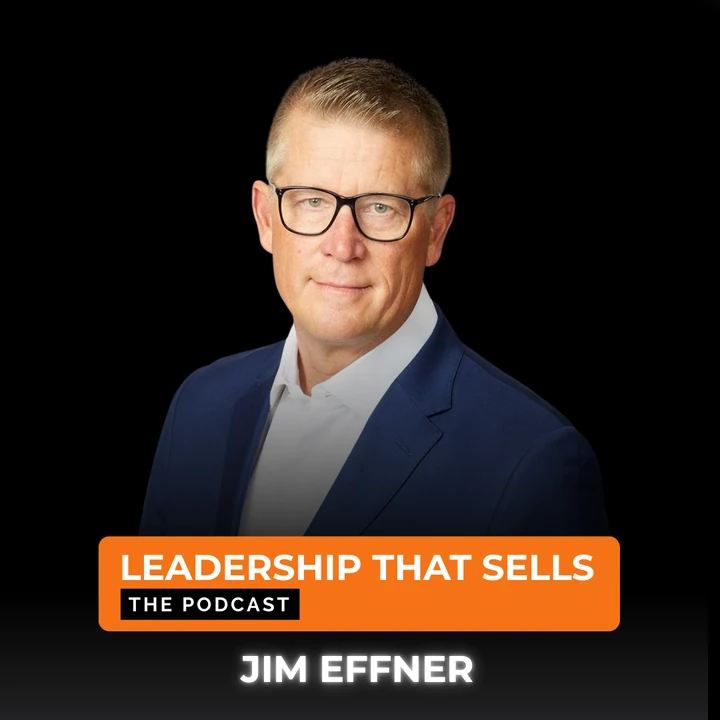
What separates top producers from everyone else? In this episode of Leadership That Sells, I sit down with master sales trainer and performance coach Jim Effner to find out. Jim’s been at the top of the game as a top-producing advisor and now as the coach who helps financial professionals break through their own ceilings.
We go deep on the three essential levers of sales success: mindset, systems and language. Jim explains why most people overlook mindset, how to build unshakeable confidence through competence, and why you’ll never outperform the person you see in the mirror. Expect powerful truths on how to rewire your beliefs, ditch scripts for language mastery, and create the environment that fuels consistent high performance. This one’s packed with quotable, practical gold.
How to master mindset, language and systems to unlock elite sales performance
- Start with mindset: Know your ‘why’ and keep it front and centre. Your mind leads, your body follows.
- Environment is everything: What you read, who you hang out with, and what you listen to shapes your mindset.
- Confidence comes from competence: Reps don’t need scripts, they need to know their language so well it flows under pressure.
- Practice, drill, rehearse: The top performers crave feedback and accountability they ask to be tested.
- Transformational growth starts in the mirror: Change the belief about who you are and where you’re going, then commit to the journey.
- Serve first: Sales isn’t about pushing. It’s about understanding someone’s goals, solving their problems, and letting your own success follow.
Timeline summary
[01:52] – Start with your ‘why’ real mindset work begins here
[03:00] – “Our mind leads and our body follows” the foundation of success
[04:35] – The three levers: mindset, systems and language
[07:14] – Why environment is your most powerful mindset tool
[08:28] – Fast recovery = elite sales performance
[10:44] – Belief shift: you become who you see in the mirror
[13:10] – “Don’t drift” how to avoid settling into mediocrity
[15:06] – Language mastery isn’t about scripts it’s about earned confidence
[17:36] – “Salespeople wing it” and it’s killing their results
[19:09] – How great managers build confidence through testing and accountability
[22:00] – Humble confidence and service-first selling
[24:05] – Let go of shame: sales is service at its best
[27:00] – Know what fills your tank and walk away from what doesn’t
Links & resources
Transcript
Automated transcript. Speaker labels and spellings may contain errors.
Paul
[upbeat music] My guest is a master sales trainer, and he's a former top producer, which is always good. He's actually done it. And he's now turned into a performance coach. He helps, uh, financial advisors, amongst other people, rewire their mindset, 'cause we all need our mindset rewired, master the language, and of course build the powerful systems that unlock elite level sales success. Welcome to Leadership That Sells. This is a podcast that helps you lead first and sell more, and that's because most sales teams today are not really teams. They're what we call teams in parallel, and most managers are still leading them like it's 1999, like they're leading a football team, when in reality what they've got is, like, a team of Olympic golfers.
You know, they're all playing the same sport, but they're on different pitches. And now that mismatch is the root of all your biggest problems. It's coaching that doesn't land. It's pipeline reviews that feel like interrogations. Your A players are off being lone wolves. So what we've got is a leadership power-up for your managers. Not another heavy training manual you need to learn. It's a light, fast reset that gives them a really simple model to lead the team they actually have. We help them set the target with absolute clarity, build the flag with a shared identity of success and high performance, and then the leaders hand over the map to coach for true autonomy. Now, if you're ready to have a go at that and fix the model, grab our free Parallel Team Playbook. It's short, sharp, and built for senior leaders just like you, and you can find it at the Practical Leadership Academy.
Jim Efner, thank you very much indeed for joining me.
Jim Effner
Well, thanks for having me. It's an honor to be here.
Paul
Pleasure. Thank you. So short, easy question then. How do you teach someone to master the mental game of sales?
Jim Effner
Well, I think first and foremost, you gotta start out with getting them to understand how important it is for them to be in tune with their, their why, you know? And, and when I say their why, I wouldn't say necessarily having an elaborate vision, mission, purpose, although those are, those are important.
Paul
Yeah. Yeah.
Jim Effner
I know people that don't have those formalized, don't have those in a frame, don't read those every single day, but they still know why they get their feet out of bed every day, and they know where they're going, and they know why it's important to get there. And once they're fueled by that, um, they're empowered, and, uh, I think that's step number one in mastering their own mindset to be built for success because we all know... I mean, I'm 58 years old, I've been in this business for 37 years, and every year it just gets more and more clear to me that our mind leads and our body follows, and there's no behavior that can be achieved before one can visualize it, feels if they deserve it, and believe that it is likely to happen.
Paul
Visualize it, feel like they deserve it, and believe that it's actually likely to happen. I like that. There's, um, Daniel Pink, he talks about, uh, people being motivated by autonomy, mastery, and purpose. So being able to do stuff on your own 'cause you, you're independent. Mastering something, getting better at it, and having that purpose, that reason to get out of bed. Now, I think he came back later and he said he was talking about changing the world as your purpose, which is great, but that doesn't get you out of bed. What is it? What's the small... You- that's the capital P purpose. What's the small P purpose, you know? Not letting your colleagues down, actually enjoying doing what you're doing, that sort of stuff. So you're, you're trying to get somebody to think about their why, which is, people have talked about that quite a lot.
Now, you then wrap that into what you call the three level, three levers, or the three levers depending on your accent, three levers of, uh, sales success. You get mindset, right?
Jim Effner
Yeah.
Paul
You get the systems you need to follow-
Jim Effner
Yeah
Paul
... and the language you use. And I like systems rather than aiming for goals, you know? 'Cause I think if you aim for a goal, you're immediately a loser. "I'm gonna, I'm gonna lose 10 pounds." Well, you haven't lost 10 pounds, that means you're a loser, right? You're not, you're failing at your task. However, my system says eat healthily and go for a walk at lunchtime. And lo and behold, over time these things happen. So you've got the mindset that you're talking about, the systems you put in place, and the language. What is the lever that most sales lever, sales leaders underestimate do you think of the three?
Jim Effner
Well, I would say by far mindset.
Paul
Mm.
Jim Effner
Um, all three are very important. Um, it's really hard to have one and not have the other two. You have to focus on all three. That's why our institution, P2P, incorporates all three of those into all the different workshops, seminars, training, and coaching that we do. But I would say the most difficult and the one that is the most underestimated in terms of its power and its importance is the first one, the mindset.
Paul
I mean, we're surrounded, I'm surrounded by, you know, self-help. We're surrounded by people saying, "Oh, it's all about your, your attitude, your..." What, what's the, what's the thing from some long dead guru? He said, "Your, your attitude de- determines your altitude," and all that jazz, right?
Jim Effner
Yeah. Yeah, exactly.
Paul
Why are we still... I mean, before we go into actually how you fix it, my why is that w- why are we still not understanding the, that, that, that that's the game changer? Is it just 'cause I've never changed my own game?
Jim Effner
Well, I mean, first of all, I'm not a psychologist, right? Um, but I've been very successful in business for a long time. And as I said earlier, I've understood more and more every year how important mindset is, how important to have an empowered mindset is. But also, I think we'd by, be naive if, uh, we thought it happened in logical space, and you understand it, you read it, you know it's important, so then you just embody it and you move forward. Well, it's not that simple.
Paul
Hmm.
Jim Effner
You know, we've all been programmed over years, since early childhood, of a bunch of things that have filled our mind that, you know, debilitate us, break us down, give us doubt, make us feel undeserving. Uh, things add up over time. There's baggage. There's all that kind of stuff. There's, like, what I call tether straps that pull people down, that don't allow them to see what really is possible. And so you have to have a very conscious, uh, level of awareness to say... Yeah, I, b- let me, let me put it this way. At a lot of different seminars, a lot of different workshops, a lot of different platforms, speeches I've given, people have come up to me and said, "Man, you have an incredibly power- powerful mindset. How do I get that? I want that." Right?
People understand that if I had that, I'd be so much more successful. Well, I'd be a billionaire if I could just snap my fingers and say, "Well, just do this," and you have it, right? It's a process, it's a journey, it's time. But there are things you can do that you can control, and I would say the biggest one around conducive to an empowered mindset is your environment. So it's, now this is a plug for you, it's, uh, what podcasts do you listen to? What books do you read? What people do you hang out with? What firm are you a part of? What neighborhood do you live in? You know, how do you divorce Debbie Downers? There are energy builders-
Paul
Mm-hmm
Jim Effner
... there are energy, uh, vampire.
Paul
Yes. Vampire.
Jim Effner
How do you surround yourself with people that think positively, that think big, that have an abundant mentality, that are conducive to you becoming more of that way? So your environment is very, very, very important. And that's just one of a conscious level of awareness that can lead towards a better empowered mindset. But it has to be a commitment. It has to be important. It has to be a priority. And it has to be front and center.
Paul
As a, I think my mom always said, "If you show me your friends, I'll show you who you are."
Jim Effner
Yeah, exactly.
Paul
You show me-
Jim Effner
And that's... And, and by the way, the other thing that tears down mindset, which is really too bad, um, I guess I could say I understand it, but one could feel very empowered in whatever line of work they're in, and feel as if they're on a run, and their feet don't touch the ground. And what I would say is really important is all of that has to come from within, internally. And then something goes south, or really south, in the external world where, let's say a, a deal goes south, a commission gets reversed, uh, a potential client shares something that's very frustrating, and all of a sudden they're in a ball in a corner.
Paul
Hmm.
Jim Effner
And it's like, what changed in your world? Nothing changed in your world. Why did you go from an empowered mindset, feeling really on top of the world, to all of a sudden having a self-pity party for yourself in a corner for a week? You know, you, you cannot allow other external forces that you can't control to really have an impact on your internal power.
Paul
Yeah. Yeah.
Jim Effner
You know? But that's easier said than done. People do. And they also say that people that are very successful, psychologists have written this a lot, is they have a very, very, very, very quick recovery time.
Paul
Yeah.
Jim Effner
In other words, like, a very, especially in sales. You have an individual in sales that's really, really, really successful, uh, n- not only are they over something that happened that was bad an hour ago, they forgot it even happened.
Paul
Mm-hmm. And if you think about it, it's not just, it's not a self-defense tactic. It's not a, "I need to look after my mental health," all that sort of stuff. That's actually a, it's a very practical, uh, valuable... It's like it's part of your s- one of the sales stages, you know? You hit-
Jim Effner
Right
Paul
... close/lost, and there should be this boxing glove that come- comedically comes out of the CRM, whops you in the head, and you go, "Ah, I don't remember anything. Right, time to get back to work."
Jim Effner
Yeah.
Paul
Because if you don't do that, you end up very easily dwelling on things. You end up going round and round in your own head, "Oh, why did they say no to me? Maybe it's me. Maybe it was the color of my non-existent tie," or whatever.
Jim Effner
Yeah. That's exactly right.
Paul
Do you think that's one of the biggest belief shift? I mean, what, what would you say is the biggest belief shift that has changed that sort of trajectory for people? Somebody coming from an average performer, and then you're talking to them, you're helping them recommit to themselves. What's the biggest belief shift that you could make?
Jim Effner
I think the biggest belief shift is the genesis of transformational growth is having a connection to something that you want, um, beyond just wishful thinking, that is far beyond anything that you've ever achieved, and you're really embracing progress over perfection, and you're connected to where you're going, why you wanna go there, and the joy of the journey. And now it's just a process of taking every step in the right direction. But it's, it's the man or the woman in the mirror, right? It's when we get up-
Paul
Mm-hmm
Jim Effner
... as a guy, you wake up every morning and you're shaving and you look at the mirror, it's like, who do you see? You know, you see $100,000 a year person, a million dollar a year person, $10 million. 'Cause who you see is who you're gonna become.
Paul
Yeah.
Jim Effner
And so I think the genesis is being able to really control who's the man in the mirror. Who do I see? What am I capable of?
Paul
Mm-hmm.
Jim Effner
And really connecting to that's where I'm going. I might not be there yet. I might not be there for three, four, five, six years, but the old me, I'm sick and tired of that. I just divorced the old me.
Paul
Mm.
Jim Effner
I'm no longer that person. I'm the person that's going here. It might take me a while to get there, but I think that- that's the genesis of transformational growth, and that happens to different people at different times for different reasons, but it's the connectivity to that that helps them avoid all the things that are natural to a human being, which is to settle, to try to become comfortable, to try to build walls in a comfort space. And real growth, real growth and transformational growth is gonna be full of all kinds of discomfort. But once you have clarity on the why and the vision, then and only then you can become comfortable with the uncomfortable, knowing that you're alive and you're on the right path.
Paul
It's, uh... I don't know if it's a, it's a thing for you, but it's a very British thing. Somebody says, "How are you?" "Fine. Fine."
Jim Effner
Yeah.
Paul
"I'm fine." No, I'm not. Stubbed my toe, and I've, I've, I've lost 20 pound yesterday on the way home. And, and, and all these things are going wrong. But there's the, the, the idea, I think, that you use is, "How are you?" "Outstanding."
Jim Effner
Yeah.
Paul
"How are you?" "Magnificent."
Jim Effner
Yeah. Never been better.
Paul
"Sparkling."
Jim Effner
Yeah.
Paul
You know? But, no, it's not even just-
Jim Effner
It's like that
Paul
... well, that it, it's anything that just rolls off your tongue is not the thing you want to say. You're looking for... It's like an internal pattern disruption for your own psychology-
Jim Effner
Yeah
Paul
... to the point where you can... So, "How, how are you?" "I am dancing on ice floes in the North Pole heading towards Santa Land, man."
Jim Effner
Yeah.
Paul
"That's how good I am today."
Jim Effner
Yeah.
Paul
And whether you're telling that to the rapidly aging fellow you look in the mirror as you shave, [laughs] or you're actually responding to a genuine request, uh, inquiry from someone, I think it does you good more than anyone else. 'Cause, of course, we listen to ourselves more than we listen to anybody, which is good 'cause nobody else listens to me. You know, one word to my kids and they do as they like. But I think you, you mentioned it there, the natural human predilection to do what I call drifting. You drift. We just drift. It's like a very slow, very stately pinball. You go ping from one thing, and then you go ping to another thing, and eventually it just rattles down to the bottom, and bloop, you're dead.
Whereas if you actually grasp that little spring ball thing and you become the pinball wizard and you're whacking around the ball, because you, you know that you're gonna be buffeted, but you've chosen to, you've chosen to, uh, I don't know, use the energy you get from these, these buffeting events in your life and not to drift, but instead to chart a course.
Jim Effner
Right.
Paul
That's a belief shift.
Jim Effner
Yeah. That was a statement you made. I agree with that.
Paul
You te- There's one thing you talk about, which is language mastery. That was one of the three things, right? So you've got the, the idea of, um, mindset, systems, and language, okay? Systems, we... I'm sure there's somebody else who'll talk to you about that one day. I'm an aficionado of language. I love using interesting language. When you talk about using language, your, your language mastery, what is that?
Jim Effner
Well, first of all, let's talk about what it's not. All right? It's not, uh, a script. It's not something that one is taught in a sales firm to memorize, and, uh, that's not real. It's not authentic. Um-
Paul
Mm
Jim Effner
... it's not genuine. It's a memorized script that when you state it to other people they can tell that you're reading from the inside of your forehead. You know? It's not, it's not that. Okay? So then let's talk about why language is so important, and let's also start with why it's not. Why it's not is that if I say something that's so articulate with passion and purpose and energy and emotion that is caught to you, that all of a sudden you're gonna buy everything I wanna sell you. You know? No, you're gonna buy things from me because you trust me. You're gonna buy things from me because you feel like I understand you. You're gonna buy things from me because of the experience I give you, and if none of those things are positive, no matter how eloquent my language is, it doesn't matter.
And so in sales, people have to understand what is the fundamental foundational purpose of really good language, 'cause it's not so people will buy. What it's for is what holds almost every salesperson back from reaching their true God-given potential, is a lack of confidence, and the reason they have a lack of confidence is because, to one degree or another, they have a lack of competence, and they're not a master of their trade. And so for example, if you, you mentioned golf a little bit. You know, if you are, um, and I know they don't call it the British Open anymore, they call it The Open. So if you are making a three-foot putt as a PGA player, uh, in The Open on Sunday, um, you have a lot of confidence because you have a lot of competence, and the competence is in the form of skill set of making that three-foot putt, and the reason you do is 'cause you did it 20,000 times in practice.
So you walk up to that putt, your knees aren't buckling. You're not shaking. You're thinking it's nothing but the back of the cup. That's a tremendous amount of confidence, which is increasing your performance. All right? It's the same thing with a basketball player shooting a free throw or anything else. Salespeople wing it. They don't have good language, which ruins their confidence. And so what- I preach, we preach in all of our workshops is in all the core areas that you have to engage with your clients and your perspective clients, you should know your language upwards, downwards, sideways, backwards. I mean, you could wake me up in my sleep at 3:00 in the morning, in my deepest REM, and put a flashlight in my face and say, "Give me your prospecting language. Go." And it would just flow, because I've done it 50,000 times, right?
Um, reps need to become a master of that. Why? Because they will increase confidence, and as they increase confidence, they will gain courage. As they gain courage, they will take extra steps in the right direction and begin the journey of progress. And then progress will feed on each other, and ultimately will lead to transformational growth. But it starts with confidence in no matter what you're selling. And a big, big, big component of confidence is competence, and in sales, competence is how I communicate with you.
Paul
The best manager I ever had had this interesting tendency of pulling people out of the lunch queue and saying, "20 minutes, my office." And he would just drill them, and it was almost like he was pulling them out towards, uh, you, you're next.
Jim Effner
Yeah.
Paul
He was doing it with love, and he was doing it with, with, with compassion, but he was still doing it, and people knew, you knew that this was a, this was... It was, in part it was, "Uh-oh, I'm up," but it was also, "This guy actually cares enough to spend his lunch break working with me to drill me on the language." Drill me on, "What's your pitch for... This is the situation you're about to walk into. Here's the guy, this is the thing. What are you gonna ask him? How are you gonna position this? Where are you gonna take this?"
Jim Effner
Yeah.
Paul
And it's just, ah, okay.
Jim Effner
Yeah.
Paul
If you can do it in those awkward situations, you can do it for real.
Jim Effner
Yeah. Yeah. There needs to be a lot more of that, Paul. There needs to be a lot more of that. But you talk about a mind shift change. You know, uh, you state that, and by the way, I love that. I call that accountability. I call that testing.
Paul
Mm-hmm.
Jim Effner
I think that's a huge proponent that's missing in sales training, uh, in the corporate world, in sales training. Uh, they never get tested. They're never held accountable. Uh, a lot of sales training is done in what I call an information dumping. They get a lot of stuff, get a lot of stuff, get a lot of stuff, and then you just keep getting a lot of stuff. But they're never brought back in the loop to see, "Hey, the stuff I gave you three months ago, did you use it? How good are you at it?" And your manager that you just gave that story of, um, did that, so good for him. But a mind shift changed. I'm assuming that gentleman was probably a lot older than you, a lot more seasoned, a lot more, uh, ex-
Paul
20 years on me
Jim Effner
... and there was probably a certain level of intimidation and fear that you might have had-
Paul
Yes. Yes
Jim Effner
... by being in his office. So a mind shift change for a young man back in the days when you were that, as opposed to somebody going to the lunch line and getting picked out. What happens if somebody young like you at that time went and knocked on his door and said, "Hey, I've been really working on all my language, and I heard you're really good at holding people accountable and testing. Can I, can I sit in your office and can you test me, and can you give me feedback?"
Paul
I don't think anybody ever did that.
Jim Effner
No.
Paul
But wouldn't that have been amazing if he did?
Jim Effner
Yes. Yes. And that's how most young salespeople need to think.
Paul
Yeah.
Jim Effner
So we do ro- we do role play at our seminars-
Paul
Mm
Jim Effner
... at our workshops.
Paul
Love role play.
Jim Effner
People crawl under a chair.
Paul
Yeah.
Jim Effner
You know, people crawl under a chair, and um, you know, I randomly call on people openly and have them role play on what I gave them the last seminar. And I say when we're all done with that, I said, "Now how good would you have been if you would've walked in, and as soon as I started saying, 'I'm gonna, I'm gonna pick some people,' you stood up with your hand raised tall and said, 'Can I go first?'" How much better would you be?
Paul
Pick the craft. Pick me.
Jim Effner
You know?
Paul
Pick me. Yeah. Here I am. Send me. You know, that's it. You, with humility, and with trepidation and fear, because that's natural. But, you know, come on. Bring it on, 'cause I wanna bring it. That, that's, I mean, that is such a good attitude shift. It's-
Jim Effner
A good Bible-
Paul
Yeah
Jim Effner
... quote
Paul
I know. [laughs]
Jim Effner
Lord, send me.
Paul
Here, here I am, Lord. Send me. Send me. I, do you know what? There's a, from a sales leadership point of view, I mean, I, my, my whole, um, m- my, my whole take on the whole of s- all, all parts of sales leadership is servants. It's service, service leadership, and you are there to serve your teams, and your teams are there to serve the customers. And, you know, what better example than the man himself, you know?
Jim Effner
Yeah, yeah.
Paul
But-
Jim Effner
No question. A- and I, I'm, I'm, I'm totally in align with you, but i- in that, along that line, you know what a great saying is that I heard once years ago, and it was so good it stuck with me, is if I'm selling, and I'm selling to you or to anybody, and my mentality is to the extent I help you meet all of your needs-
Paul
Mm-hmm
Jim Effner
... all of my needs will be met.
Paul
Of course.
Jim Effner
And so therefore what I wanna do is I wanna solve your problems, but I first have to know you. I gotta get to a- you know, understand you. I gotta get to know what you're trying to accomplish. And then once I understand that, if I can identify the problem and I can help you solve it, my needs will always be met.
Paul
Yeah. Yeah. And it is, it's, it's not hard. I mean, it's, it's something you hear. I wanna say it's a thing I talk to a lot of junior salespeople about, but it's really not. It's actually everybody, whether it's a founder or even the most grizzled chi- chief revenue officer, sometimes you have the same conversations. It's do you realize that what you're selling is not the thing that's in your hand, it's the thing that happens after you've sold it, number one? And do you realize that selling is actually a thing of beauty? It's elegant. It's el- it's, to use your words, eloquence. It's, it's graceful, and it's in service of your customer. They can't be served, they can't do better, unless you sell something to them, unless you help the buggers buy. You know?
Jim Effner
Yeah.
Paul
You have to not just be, "Oh, how many colors of the... this would you like?" It has to be something that is in service of, and that takes away all of the, the shame almost. There are still salespeople that I talk to who are ashamed of being [laughs] salespeople, right? Which is, which is insane to me because, you know, a good enterprise sales rep might have to struggle by on, you know, 3 or $400,000 a year, right? What's ashamed about that? But they think of it... Even good salespeople sometimes think of themselves as less than, you know? Because they don't recognize that they're in service of.
Jim Effner
Right.
Paul
Yeah.
Jim Effner
And there's a healthy balance, by the way, too.
Paul
Oh, for sure.
Jim Effner
Because there's a extreme on the other side with overly confident individuals that are very egotistic and cocky.
Paul
Yeah.
Jim Effner
You know? Uh, that's not good either, so it is definitely not a less than. It's definitely having an air and aura of confidence-
Paul
Mm-hmm
Jim Effner
... but I would call it humble confidence, right?
Paul
Yes.
Jim Effner
Humble confidence. Seeking first to serve. Seeking first to help, knowing that your needs will be met. You know, that is, um, uh, that, that's an important EQ-
Paul
Mm-hmm
Jim Effner
... and skill set in great salespeople.
Paul
Indeed. Indeed. We have to bring this in for a landing, unfortunately. I'd love to keep talking with you, but if I was to give you the largest Sharpie known h- to humankind, and the biggest number of billboards you could possibly imagine at every airport in the world, what would be the one thing that you would write on the aforementioned billboards in big letters so that everybody could take one message away from Jim Effner?
Jim Effner
Oh.
Paul
What's your one message, Jim?
Jim Effner
That billboard to say, "The man who deeply cares about the work he does and the impact he makes." That's it.
Paul
The man that deeply cares about the work he does and the impact he makes. Impact, what we're here to do.
Jim Effner
Mm-hmm. Yeah.
Paul
You know what, Jim? I'll take that.
Jim Effner
Yeah. 'Cause the reality is, Paul, um, I'll just explain that a little bit, is the fact that one of the things that gets under my skin is because what I just said is as authentic as the day is long. I'm still a for-profit company. I still cash my checks. I still like getting paid, but when people perceive me to be doing what I'm doing for the benefit of my selfish gain, for the revenue that I'm gonna make, and this, that, and the other, and they don't see the true self-
Paul
Mm-hmm
Jim Effner
... that if I'm gonna work with you, that's an ancillary benefit. The primary benefit is you will gain, you will win. You'll never have somebody that's gonna take more care, more responsibility of doing the right thing for the benefit of you getting what you wanna get, and if they don't see that, um, I, I divorce that relationship really quickly because that's every genen- genetic cell in my body. And, you know, salespeople are gonna face that from time to time. People are gonna think you're selling them just to make money. People are gonna think you're selling to take advantage of them. People are gonna think you're selling them something that's not in their best interest, that you don't care, that you don't understand.
Um, and, you know, that's, that's irritating. That's not me. And I think the wave of salespeople is the older I've gotten, more successful I've gotten, more financial independent I've gotten, the quicker I can divorce those people. When I was in my 20s, I had to tolerate that, you know?
Paul
Yeah, I find that as well. The older you get, the less... I mean, almost the more patient but the less tolerant.
Jim Effner
Yeah.
Paul
So you get, you get patient, sure. But-
Jim Effner
We also get more wise as to what you know you want and need.
Paul
Mm.
Jim Effner
It's like if we're in a relationship, a professional relationship, I need to be appreciated, I need to be valued, and I need to be respected. Now, why? I don't know. I don't care. I just know it's important to me.
Paul
Yeah.
Jim Effner
And when I get that, that fills my tank, and I'll run through a brick wall for somebody that gives me those three things.
Paul
Mm-hmm.
Jim Effner
If individuals don't give me those three things, I don't have time for the relationship. I don't care how much money I can make, you know?
Paul
It's the-
Jim Effner
Yeah
Paul
... the unexamined life is not worth living. Well, you've obviously examined yours enough. You know?
Jim Effner
Yeah.
Paul
That's the thing. You want, you want... And I think another thing for salesmen and salespeople in general is if you want to know how to deal with other people, just look in the mirror. Know yourself. You know-
Jim Effner
Yeah
Paul
... it's not physician heal thyself. It's salesperson know thyself.
Jim Effner
Yeah.
Paul
'Cause if you know yourself, you can, you can... You'll know the others, and you'll know how it all works.
Jim Effner
Yeah.
Paul
Jim, we have to wrap there. And it's been an absolute pleasure talking to you today, Jim. It's been, uh, en- enlightening to say the least. So I'm going to go off, and the next time I shave I shall be looking myself deeply in the eyes and telling me, "Don't drift." You know-
Jim Effner
Yeah
Paul
... "Have the impact."
Jim Effner
Well, it's my honor. Pleasure to be here.
Paul
Jim Effner, thank you very much for joining me.
Jim Effner
Have a good day. [upbeat music]