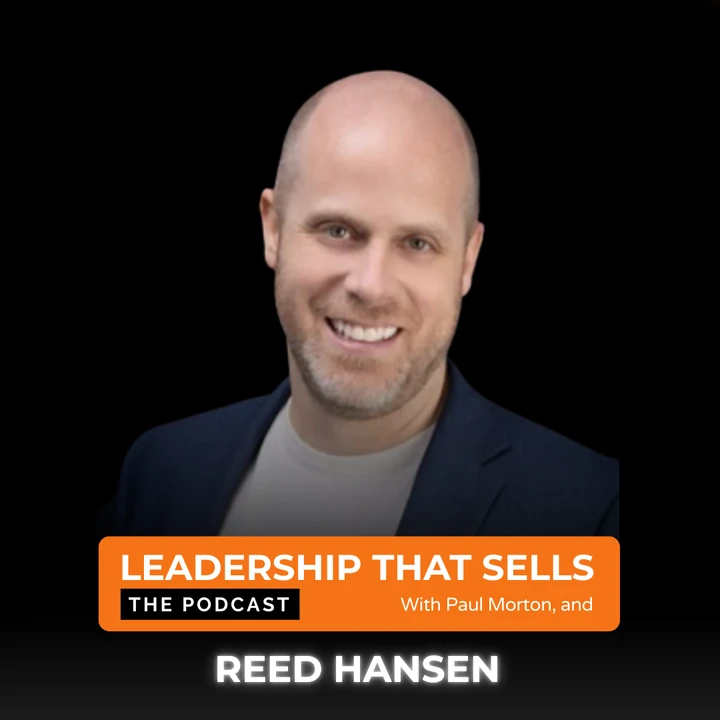
How to Use Agentic AI to Build a Scalable Content Engine
with Reed Hansen
Show notes
We’re all using ChatGPT, Gemini, Claude… but let’s be honest — most of what’s coming out of these tools is rubbish. Generic, unfunny, over-formal slurry. M-dashes everywhere. Worse still, it’s killing brands and cluttering our inboxes with AI-written drivel that nobody reads.
So what if you could build an agent that works like a team member? One that understands your tone, writes like you, and plugs straight into your content engine? That’s exactly what Reed Hansen helps us uncover in this episode. Reed’s a Chief Growth Officer and strategic marketing brain who’s helped everyone from Oracle to fast-growing startups. He breaks down exactly how to build and train an AI agent that’s not only useful — but actually saves you time, scales your voice, and makes you look smarter.
We talk about how most people are doing this all wrong, the real value of AI agents, and how to avoid turning your brand into a slurry cannon. This episode is crammed with practical advice you can use right now — especially if you’re trying to do more with less and keep your content engine running without sounding like a robot.
How to build your own AI marketing agent (the right way)
✅ Define the agent’s role and constraints: Who’s it for? What outcome do you want? Be specific about tone, topics to avoid, and the format of the content.
✅ Train it like a new hire: Don’t just say “write like me” — give it FAQs, onboarding docs, examples, brand voice guidelines, and preferred content structures.
✅ Attach high-trust sources: Feed it with your own high-quality material — case studies, blog posts, sales copy, anything good. Don’t let it guess.
✅ Connect it to your workflow: Use tools like Zapier or Make to push content into Buffer or your CRM. If you’re stuck copy-pasting, you’re not there yet.
✅ Supplement with your face: AI can’t be you. Mix in your voice, your face, your real thoughts. That’s what builds trust and gets remembered.
Timeline summary
[01:54] – Why most teams fail: it’s not the reps, it’s the ICP or the manager
[02:44] – Agentic AI is “the dog’s proverbial” — why it’s the next step beyond ChatGPT
[04:53] – Treat it like an employee: how to shape responses with consistent training
[07:44] – The M-dash and the curse of legalese: where bad AI writing comes from
[08:44] – What people get wrong: not enough instruction, too much freedom
[10:24] – Chat is not enough: agents need to push/pull data to be truly valuable
[11:08] – Three-step framework: plan, build the engine, and connect it
[14:21] – Structuring your prompts: listicles, tables, tone, formats — get specific
[15:31] – Plug into your planner: automate workflows to get daily content out
[20:13] – The AI echo chamber: why we’re amplifying internet sewage
[24:46] – Use AI for hygiene content, but mix in real human posts too
[26:02] – “Put your face on the content” — realness beats slurry every time
[28:21] – Final advice: your face + your voice = your brand’s secret weapon
Links & resources
- The Practical Leadership Academy – Free Parallel Team Playbook
- Buffer – Social media scheduling tool
- Zapier – Automation between apps
- Make – Visual automation builder
If you found this episode valuable, please do me a favour — rate, follow and review the podcast. It really helps us get the word out to more sales leaders who need to hear it. And don’t forget to share it with someone who’s still letting AI write like a UN lawyer with a thesaurus.
Transcript
Automated transcript. Speaker labels and spellings may contain errors.
Guest 1
[upbeat music] So I, I would say there is a place for this kind of generation. It's almost to, to stay in the game. But, um, I would supplement this content, your agent, with frequent, uh, videos, frequent, um, live content or-
Paul
Mm-hmm
Guest 1
... uh, you know, s- custom original generated, uh, content of any kind.
Paul
Mm-hmm.
Guest 1
Uh, you should add some humanity to the mix. And, you know, it's not gonna be every post. You're not going to, to spend your whole day doing this, but if you do this on a regular basis and have sincere content and, and be genuine.
Paul
Mm-hmm.
Guest 1
You know, talk about real issues the, the industry is facing or real challenges, th- that really resonates, and I think that can add some, uh, you know, some real flavor to your brand. The thing that people will tune in for is when they see you as the founder, your original thoughts, you know, are you a person I wanna work with?
Paul
[upbeat music] A strategic growth leader and digital marketing visionary, he's helped startups to Fortune 500 scale fast without burning budget. As the chief growth officer at MarketSurge, he's building inbound machines that drive pipeline while you sleep. Now, that's heaven, isn't it? With wins at Oracle, with Solstice and Northwestern, he's a data nerd, a fluent Italian speaker, and a growth hacker with a heart. Well, welcome to Leadership That Sells. This is the podcast that helps you lead first and sell more, and that's because most sales teams today are not really teams. They're what we call teams in parallel, and most managers are still leading them like they're a football team, when in reality what they have is like a team of Olympic- Olympians, you know?
This mismatch is the root of most of the big problems. Coaching that doesn't land, pipeline reviews that feel like interrogations, and your A players who operate as lone wolves. So what you need is a leadership power-up for your managers, and it's not another heavy training manual to learn. It's just a nice, light, fast reset that gives them the simplest model to lead the team they actually have. We teach them to set the target with absolute clarity, build the flag with a shared identity, and then hand over the map and coach the people for true autonomy. Now, if you're ready to fix the model, you can grab our free Parallel Team Playbook. It's short, sharp, and built for senior leaders just like you, and you can find it at the Practical Leadership Academy. Reid Hansen, thank you very much indeed for joining me.
Guest 1
Thank you so much. It's a pleasure to be here.
Paul
Oh, great to have you, man. Great to have you. Now, we were chatting just beforehand, and you just came up with the sharpest, hottest thing I think I've ever ... without ... That is gonna resonate with everybody here, and the title of these sessions tends to be How To Tie Your Shoelaces Without Falling Over, right? And you had, you had two suggestions, and you ... We threw out the, the rubbish ones that I had.
Guest 1
[laughs]
Paul
And the, the first was how to nail your ICP. Always good, and always one of the biggest, biggest things I ever see. You go into an organization and they're saying, "Oh, my sales team's rubbish." They're not. They're never rubbish. It's normally the manager who's a bit rubbish or their ICP is wrong. They're selling the wrong thing to the wrong person. We're going to assume, for the sake of this conversation, that our ICP is on the money. Okay? We've nailed it. And the topic of conversation today, ladies and gentlemen, is how to create an AI agent that supports your marketing content generation. I might have to abbreviate 'cause I've only got so many words, but, and i- in, in short h- form, agentic AI is the new dog's proverbials. Okay? We're all using ChatGPT.
We're all using these tools to, to, uh, give us frameworks and ideas and help polish what it is we're doing, but the agentic element of this, I'm only just getting into this with the tools that are out there. Talk to me about that first before we get further in.
Guest 1
Sure. Yeah, absolutely. So when you are using a, uh, LLM, and most of these models have an interface that looks like, uh, you know, a chat entry. So you have an open field where you can put in text, whether it's a question or a statement. In some cases, you can upload, uh, data files like a, a Excel spreadsheet, a CSV spreadsheet, or, um, images for reference to, to help bolster your, um, request. And the, uh, the agent ... So when you enter that and you put in the request, you get a return. Now, the, the return is just a general return. It's like asking a stranger this question, but a very knowledgeable stranger that accesses the whole internet very quickly. Now, a ... When you s- start thinking of the agent concept, this stranger now becomes somebody that is very educated on, uh, you know, uh, the, a topic you give him, a set of information that you give them that they always reference back.
So they f- they ... It almost, like, shapes their, their responses based on certain instructions. Like, you, you know, one, one very broad one would be, um, always respond, um, using, um, uh, you know, using a very humorous tone. You know, give me-
Paul
Hmm
Guest 1
... give me a lot of witty responses just to, just to make me smile in every response. And, um, you know, we can debate at how good these A- A- AI models are at humor, but the ... It will respond in every, everything you ask it. It will come back with something, something, uh, humorous or attempts at humor. And, um- But you can take that the next step and train it as if you were training an employee. So the, the idea being is that you can have a, a section, a very customized AI model that thinks like you want it to think, or takes a perspective or a bias that you want, uh, want applied to every request you send. Um, so I'll pause there, and then I, I do have a framework for how to do this, but, um, just wanted to start with a description.
Paul
Right. So I've used the... You, you can kind of create your own GPTs in ChatGPT.
Guest 1
Mm-hmm. Correct.
Paul
You can do the same in Gemini, you can do the same in Groq.
Guest 1
Mm-hmm.
Paul
You can upload a ton of your own material and say, "Write like me." You can upload a ton of information and say, "Using this as your background, your, your... This is your onboarding documents. Extrapolate from and work out how to do something based on this knowledge that I've given you," in addition to all the sewage of the internet that you're basing your, most of your decisions on anyway, right?
Guest 1
Right.
Paul
'Cause, with all these things are trained typically on the, you know, all the, all the gibberish that is out there. Um, when we get to the agentic bit-
Guest 1
Mm-hmm
Paul
... where it's starting to work specifically on specific tasks for you, that's where something like, "Write me some content." Now everybody's done this.
Guest 1
Right.
Paul
Nobody's gonna really admit to it, because their output is typically drivel.
Guest 1
[laughs]
Paul
With em dashes and, "You should further your attempts to continue."
Guest 1
[laughs]
Paul
"Have you thought about fostering the charges ahead?" What? What?
Guest 1
[laughs]
Paul
Now actually, interestingly-
Guest 1
In today's fast-paced world.
Paul
Yeah, indeed. That hits hard. That hits-
Guest 1
[laughs]
Paul
Oh, shit. The, the interesting one... Do you know the em dash? Do you know that long dash, right, that it uses?
Guest 1
Mm-hmm. Yes.
Paul
It is like all... You have these specific artifacts that we find in, in the GPTs out there, and I think it comes from the fact that most of these tools are trained on large English language corpuses.
Guest 1
Mm-hmm.
Paul
And the biggest ones out there are things like the United Nations, the Library of Congress, all the laws.
Guest 1
Mm-hmm.
Paul
The, the European Union, Hansard, which records all the activities of the houses of Parliament over here in English, okay?
Guest 1
Mm-hmm.
Paul
And they're all written in legalese, and the em dash is a big old legal thing, so it appears everywhere, and nobody uses it. Nobody knows how to use it, 'cause it's not an apostrophe, it's not a parenthesis. It's kinda... It's one of those interesting ones. Anyway.
Guest 1
[laughs]
Paul
Back to the agentic thing and write, trying to, trying, trying to get these things to write content that actually resonates with somebody.
Guest 1
Yeah.
Paul
And assuming that, of course, we know who, to whom we are trying to address the aforesaid content.
Guest 1
Yeah.
Paul
What do people do wrong when they start? Let's... Before we get into your magic method-
Guest 1
Sure
Paul
... what do people do wrong?
Guest 1
Well, I think there's a, a few things. You know, one is, um, assuming that... I, I guess assuming too, too much, giving it too much, um, freedom. I, I think, um, you know, the AIs, you know, are trained on, like you said, a massive body of content, and they will, will... If you do not give it very strict, very detailed parameters, I think in the GPTs you can include up to 30,000 characters or maybe even more, plus, um, attached, uh, documents, uh, that, that can expand that expe- exponentially, the amount of, uh, data you can reference in every request. Um, but if you don't take advantage of that, if you just include a paragraph, say like, um, you know, "I'd, I'd like you to act like you're an employee of my company.
Reference this website," and, you know, and then we're good. You know, so not having enough instructions, I think, is, um, you know, I, I think a common failing point. And y- you're really not going to get answers that are that different. Um, uh, you really want to, um, uh, you know, really get into the, into the weeds here. You know, you want it to, uh, have a very extensive frequently asked questions resource. Um, you know, and, and have it have answers exactly the way you, you would answer. Um, you may want to continually refine that, uh, you know, and, and make sure that it's, it's up to date. Like, maybe your, uh, your stance on, on a certain technology evolves over time and, you know, make sure you revisit your agent instructions. But also use the, uh, the attached, uh, da- data that you can send.
So, so the big part of this, you can upload individual CSVs that can be quite extensive. And so if you have, you know, financial data or past blogs that could be formatted, uh, like that, that they could reference, um, it is... You know, you, you absolutely have to do that. Um, I would say also not, um... Another thing is just res- limiting it to chat. Um, I feel like the best agents that you can generate, they are, um, they are connected, so they're, they're actively pulling from a data s- uh, like a refreshing data source, like, um, news of the day from, from web sources you trust. Or, uh, they are pushing data to a system, whether it's your CRM or your social media, uh, scheduler. Um, you know, or your, or your, uh, blog scheduler. Like, the connection is a big part of the equation, and if you just limit it to chat, you are, um, not getting the full value out of an agent.
Paul
Okay. Right. So now we know what we're doing wrong. What do we do to do it right?
Guest 1
Yeah. Absolutely. Well, I think there's a few, um, you know, very high level guidelines that, that you should, uh, consider and, and I, I think we could group it into three steps. And so the first is the, the planning phase, and defining the agent's role and the, the boundaries of what it can create. So- You know, do, do you have a format that you'd like it to work in, and what outcome you'd like it to drive, and who the audience is that you are preparing content for? So this is in the case of our example, creating a marketing content generation agent. Now, you also need to, uh, determine what tone you'd like it to use. I, you know, uh, some people like a humorous tone, some people like a more, uh, maybe a legalese or a academic-sounding for authority. Uh, but ideally it matches your brand voice, and it matches the content that you have already created for your, uh, you know, the, you're educating
people about your brand. And then you also need to set bound- boundaries. So are we going to avoid certain topics? Are we going to, uh, say, limit political, religious references, or are we going to, um, uh, you know, like, maybe for instance, um, we're, we're in an industry where we don't wanna talk about, um, outsourcing, or we don't wanna talk about, um, uh, you know, there, there's, there's forbidden topics essentially that just are either impolite or distracting from your message. Those are important to define. Um, and, and so the planning is really important. And so what you're going to do is use a paid version of Gemini, of, uh, ChatGPT, and go to, go to your settings and, and enable, like, so in the case of ChatGPT, a custom GPT.
Guest 2
Mm.
Guest 1
And, uh, you'll have an interface where you name the agent, you can upload an icon, logo. Um, and then, y- and then there will be a few open fields w- for these instructions. And, um, like I said, you know, you have, you know, thousands of characters to define this, and then further attachments that you can do. And that takes me into the, the second part. Um, you want to have, uh, r- data sources that you trust. So if you have documents that already exist about your products, your offers, uh, maybe case studies, testimonials, um, good content that you have written, um, these are attachments that you can add in addition to that open field. And you want to, uh, also, I would put in your, your field. So you've, you've put a lot of data, you know, kind of like open, uh, open text, uh, free form data that you've typed in.
But I would encourage you to add, uh, helpful marketing structures. So that would be like, um, you know, when we're talking about, um, ads, you know, the AIDA, uh, structure or, um, you know, do you want listicles, uh, you know, with, with bullets, or do you like prefer numbered, or do you, um... You know, I recommend everybody include like tables in their blogs, uh, you know, for SEO purposes. You know, all those kinds of instructions are, are critical. But in, so in, think in terms of you've got your, your unstructured content, but then you want to give it the structured instructions in there as well. Attach, uh, great content that you've already have, and then, um, you want to make sure that s- well, in, in the
case of GPT, I'm not sure about Gemini, 'cause I, it's been a while since I've made a, a Gemini agent. But you can add, um, prompts that are just simple, simple buttons you could tap with your finger or, uh, click with your mouse. Um, just write me a, uh, a, you know, write me a five-minute script for a YouTube video, or make a LinkedIn post based on this link. And, uh, you know, so you're able to click those and just, just perform the action instantly without having to do any typing. So that's what we'd call ... So this, this area I would call is building the, the engine. And, um, you know, making sure that it, it can execute. Now finally, the, um, in the third, the third grouping, I would say this is where you, you optimize it, and this is where you connect
it. So, uh, an agent for marketing content is going to work best if it is, uh, if it is feeding into a, a marketing planner. So as of now, uh, I don't believe that there's a way to just within GPT to, s- you know, s- i- instruct it to post to your, to your LinkedIn profile or post to your business' Facebook page. So you'll need to connect to a third party tool like your CRM, your, uh, like a buffer-
Guest 2
Mm
Guest 1
... or, um, you know, one of the, one of these third party tools that allows you for, for scheduling. And, um, there's a, and you may need to use a, a go between, depending on the integration, you may need to use a go between like Make or Zapier, um, to, to execute. Uh, you know, I, I think in some cases there would, would be a plugin that you could, um, you could literally plug your OpenAI-
Guest 2
Mm
Guest 1
... API directly into, uh, into this for, to feed it. But, um, without the connection, it becomes less, less than optimal. You, uh, you're doing cut, cut and pasting, the formatting gets skewed, and, uh, you, you lose some of the value of the agent. So if you can have an automated connection, that's, that's the dream. That's where this really flourishes. And, uh, y- so you'll, you'll run some tests, make sure that you're getting the, um, optimized style of post for the platform, uh, or the blog that, that looks The most appealing for your website. And then you just, you start scheduling. And so if you have a, um, a program where you're posting every day, then you can, at the beginning of the week, you can just run, run your prompt, your Click prompt
five times and you're good to go. Um, and, you know, you check, check the results, and if you like them, continue. If not, you can go back and refine in the instructions, give it more examples. Uh, but make sure that you're not training the agent in the chat, you're training in the agent- agentic settings for the, the custom GPT, and that will be the recipe for success. But the ideal is you come in and schedule things in advance, high-quality content that goes straight to, uh, straight through, uh, an intermediary to your, your, uh, social platforms. And you've got, uh, you know, essentially, you know, a full-time employee on the case.
Paul
Love it. Love it. I have questions.
Guest 1
Please.
Paul
Right. Um, I was asked fairly recently by somebody about the impact of AI on salespeople and let's say marketeers.
Guest 1
Yeah.
Paul
And I said that if you give the various tools to an A player, they'll become A plus. To a B player, they'll become B plus or A minus. You give them to a C player, and they become D minus, because what you end up doing is amplifying noise. They were shouting at the wall already, now they're just gonna be screaming at the wall or screaming at multiple walls from the rooftops. Already these machines are, um, trained on internet sewage. They really are.
Guest 1
Yes. Yes, they are.
Paul
Okay. They're trained in the sewage of the internet, and if we're not careful, what we end up doing is like the farmers when they're trying to fertilize their field, they're spraying slurry everywhere at high industrial speed and quanti- quantity.
Guest 1
Mm-hmm.
Paul
And what I've seen, because courtesy of the M-dash signature-
Guest 1
[laughs]
Paul
... is I've seen people write me an email that has gone through Gmail's condenser, and I don't read it, but I read the, the two lines, and I'm quite certain that somebody put six words into a, a Gmail tool-
Guest 1
Mm-hmm
Paul
... clicked generate. The email was sent to me. My system went ungenerate or condense.
Guest 1
Sure, right.
Paul
Nobody actually read the email.
Guest 1
[laughs]
Paul
I just read the, "Thanks, Tuesday." That's all I wanted to hear.
Guest 1
Right. [laughs]
Paul
Okay. Now, when I read advertising, infomercial type stuff, which is what we're talking about here-
Guest 1
Yeah
Paul
... um, and we're trying to pers- be persuaded or allow ourselves to be persuaded, or we're trying to persuade other people, the thing that you're looking for is novelty-
Guest 1
Right
Paul
... or empathy or, um, a pattern disruption or something like that. And I completely recognize that in the business that we are in, we are particularly jaded. We're particularly immune. We've been immunized to the, the, the tools and the techniques and the, all this sort of stuff. It's like when they started with the COVID advertising. I thought, "I know what you're doing. You're trying to manipulate me, you bugger."
Guest 1
Mm.
Paul
"I can see it. I can see the tools that you're using, so therefore I'm incredibly skeptical about whatever it is you're telling me. I don't care that you're saying, 'The sky today is blue. Have you imagined that?' No. Whoa, whoa. I want to go outside and check. The sky is, in fact, blue. You're lying sod." When we use these tools, when we use these tools, machines are not empathetic.
Guest 1
Right.
Paul
They're not creative. They're curative. Okay. Yet maybe they'll become, maybe they'll become more, more so as the volumes get higher. It's like playing chess. Kasparov said, "I can't compete with that because it moves fast. It can think faster and knows more moves." That's not w- He didn't, he didn't lose because he was a worse player. It's simply iterated. Okay. How do I not kill my brand-
Guest 1
Yeah
Paul
... by using these tools? How do I speak to people in a way that they'll want to buy from me, the way that they'll want to listen? That, uh, for me, is a huge risk.
Guest 1
Yeah. I, uh, I totally understand what you are saying because, for instance, we, uh, you know, we took our company phone line and, and I, um, just, just to give a little color, our... We were just getting bombarded by robocalls. Uh, and mostly it was Google, your Google listing is inaccurate, and we, it's urgent that we update it. And, you know, it was recording, and so we've turned on all, uh, an automated responder for that, uh, voice AI agent that responds to those calls. You know, we get a transcript of those, and it is, it is actually somewhat entertaining to hear two AI voices, uh, go back and forth and, and, uh, [laughs] they'll say, you know, "Oh, tell me more." And, and so we, you know-
Paul
[laughs]
Guest 1
... we game this a little bit. And so, you know, we, if we know the number, it, it will come into a human, but, [laughs] but, you know, w- how do we, how do we prevent the internet just becoming a platform where my AI agent is talking to yours and/or reading your AI content and... I mean, that Gmail example was-
Paul
Mm
Guest 1
... tremendous. You know, like in the end you don't get anything back of value, it's just a transaction for a transaction's sake. So I would- You know, caveat that, um, you know, when you create a marketing content engine, I, I, I recognize that there are going to be some limitations. And, um, you're going to, you know ... There, there definitely is the potential of the AI sounding robotic. Now, you mentioned the slurry of the internet, and I, I saw that these AI engines are trained primarily on Reddit in particular, and Reddit is-
Paul
Such a pleasant place to be.
Guest 1
[laughs] I know.
Paul
If, if you're listening and you've never been to Reddit, don't.
Guest 1
Right. Exactly. It's ... I think it's the way people, uh, you know, destroy any sense of empathy and, and just become more and more cruel people. And, and if that's the, the case, we're just going to see AI agents become, you know, more and more unfeeling and, and unthinking.
Paul
Have you considered auto-euthanasia?
Guest 1
[laughs]
Paul
It would make my life so much better, says the AI.
Guest 1
That's right.
Paul
Right?
Guest 1
Yeah. I wa- wanted to help out, but I took an arrow to the knee, and, um-
Paul
[laughs]
Guest 1
[laughs]
Paul
Excellent.
Guest 1
Yeah. So the, [laughs] the ... You know, it's, it's r- it's quite frustrating. And so I, uh, I would say the marketing content engine, you know, fortunately or unfortunately, whether it's your Google business profile, your LinkedIn business page, your Facebook business page, the algorithm does favor companies that post regularly. Now, a lot of small and medium sized businesses, um, that could be an expensive, time-consuming effort to do that. And so I, I would say there is a place for this kind of generation. It's almost to, to stay in the game. But, um, I would supplement this content, your agent, with frequent, uh, videos, frequent, um, live content or-
Paul
Yeah
Guest 1
... uh, you know, just custom original generated, uh, content of any kind to, uh, you know, where... Especially where your, your face as a leader of your company, your face is, is on, uh, you know, on the presentation however. And, you know, whether it's your voice, your, um, you're, you're doing a short form video, you're recording while you're walking into work or, uh, walking your dog. You know, you, uh, you should add some humanity to the mix. And, you know, it's not gonna be every post. You're not going to, to spend your whole day doing this. But if you do this on a regular basis and have sincere content and, and be genuine-
Paul
Mm-hmm
Guest 1
... you know, talk about real issues the, the industry is facing or real challenges, that really resonates, and I think that can add some, uh, you know, some real flavor to your brand and, and make it, make it real. But I, I, I think that's absolutely critical. And I, I mean, I like to use the term put your face on the content. Um, you know, it's... Is it a photo of you doing something? Is it, is it you talking directly to the audience or, uh, you know, in a public speaking s- situation? Any of those, um, have, have a face and a, you know, a real person on, on screen.
Paul
Yeah. So we're looking at this as more of a... At the moment, at least.
Guest 1
Mm-hmm. Yeah.
Paul
'Cause as I said, these things change, as a hygiene factor.
Guest 1
Yes.
Paul
Right? We're trying to build a presence. We're trying to be consistent. Seems to be a magic word, if you're building-
Guest 1
Right
Paul
... consistency. Right. Okay.
Guest 1
Right.
Paul
And doing so in your own tone of voice. Well, that was like a, a good way, I think, of, of looking at this. And actually I hadn't thought, 'cause I've played with the create your own GPT things, but actually connecting these using Zapier or one of these make tools or something like that-
Guest 1
Mm-hmm. Yeah
Paul
... one of the little API tools into the buffer, the scheduling engines and things, that's a smart move. Because as you said, you're trying to build a workflow here that frees you up, and you're looking to replace a high salary. You don't want to replace somebody who's doing something for £2 an hour. You want to replace a, you know... I mean, that's, that's the goal of most of these, the, the really f- well-funded AI platforms.
Guest 1
Mm-hmm.
Paul
It's not somebody who's replacing your, I don't know, somebody at, in a typing pool. It's-
Guest 1
Right
Paul
... if there is such a thing these days, but it's somebody who's replacing a $200,000 a year lawyer's salary.
Guest 1
Mm-hmm.
Paul
When they're doing that, that's when it's really interesting.
Guest 1
Yeah.
Paul
So okay, that's, that's, that's a good goal. What would you then say is your final takeaway? If you were gonna give somebody who's starting out with this right now and they're thinking, "Okay, I'm gonna give this a go," what's your word of advice? What's your guidance?
Guest 1
So the AI tools are great, and they're going to get better. Um, uh, you know, I've just ob- I've observed this in the last two, three, four years of using AI for generating content. Just it's tremendously improved over this time span, and, and I would expect it to further improve. However, the, it's incomplete without y- your face, your voice, your, uh, real, uh, you know, use ... Your ums and uhs and pauses and stutters. You, you need to also be actively participating in this and recording and creating, um, in addition. Uh, you know, I think maybe if you think of the AI as, like, you can create original content, have original thoughts. The AI can help you quickly repurpose that content for multiple platforms 'cause-
Paul
Mm
Guest 1
... you know, an Instagram post is gonna be formatted different than, uh, LinkedIn or, uh, whatnot. And, and you can greatly accelerate that or expand your reach. Um, and the AI engines can help keep you in the, in the mix-
Paul
Mm-hmm
Guest 1
... satisfy the algorithms. But, but, uh, the thing that people will tune in for is when they see you as the founder, your original thoughts. You know, are you a person I wanna work with?
Paul
That's the key.
Guest 1
Yeah.
Paul
Reid Hanson, incredibly valuable. Thank you very much indeed. How to build your agentic AI that supports your marketing content creation generation. We'll need to come up with a shorter version, but thank you again for joining me.
Guest 1
Thank you so much. [outro music]